Git and Canary Deployments: A Match Made in Release Heaven
Master seamless software releases with Git Canary Deployment Strategies. GitAndVersionControlHub.com shows you how to leverage Git for controlled rollouts, minimizing risk and…
Read article
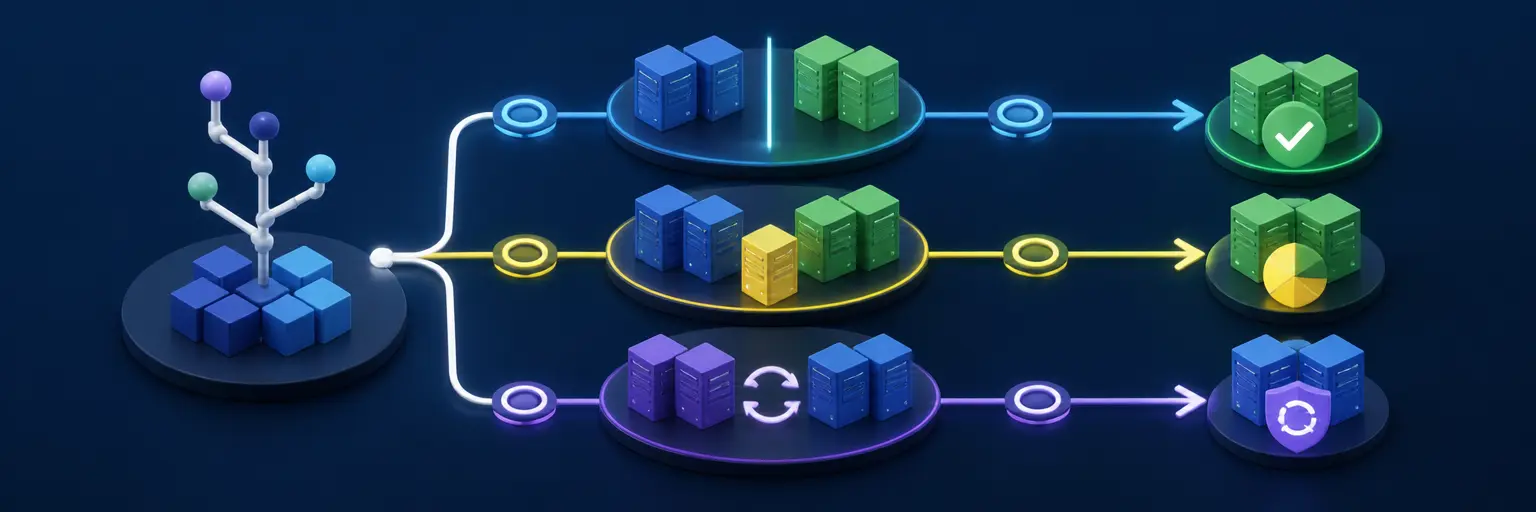
Ship with confidence 🚀 by mastering deployment strategies in Git-driven workflows, including blue/green deployments, canary releases, and reliable rollback strategies. Learn how to automate releases, reduce downtime, manage risk, and deliver faster with safer CI/CD deployments—essential skills for modern DevOps teams and developers.

Master seamless software releases with Git Canary Deployment Strategies. GitAndVersionControlHub.com shows you how to leverage Git for controlled rollouts, minimizing risk and…
Read article
Master automating Git deployment strategies with GitAndVersionControlHub.com's expert guide. Learn best practices for seamless CI/CD integration, boosting efficiency and collaboration in your…
Read article
Choosing the right deployment strategy is crucial. GitAndVersionControlHub.com's guide explores whether Blue/Green Deployment with Git is the optimal solution for your project,…
Read article
Prevent deployment catastrophes! GitAndVersionControlHub.com reveals essential Git rollback strategies for deployment, covering everything from basic undo commands to advanced branching techniques, ensuring…
Read article
Master robust software releases with Git! This Git canary deployments tutorial from GitAndVersionControlHub.com guides you through monitoring and validating deployments for increased…
Read article
Streamline your development workflow with canary deployments integrated directly into your Git process. GitAndVersionControlHub.com shows you how to leverage this powerful technique…
Read article
Master Git deployment automation strategies to revolutionize your release process. GitAndVersionControlHub.com offers expert tutorials, from basic commands to advanced CI/CD pipeline setup,…
Read article
Mastering advanced Git deployment strategies is crucial for efficient workflows. GitAndVersionControlHub.com offers expert tutorials to boost your team's productivity, covering everything from…
Read article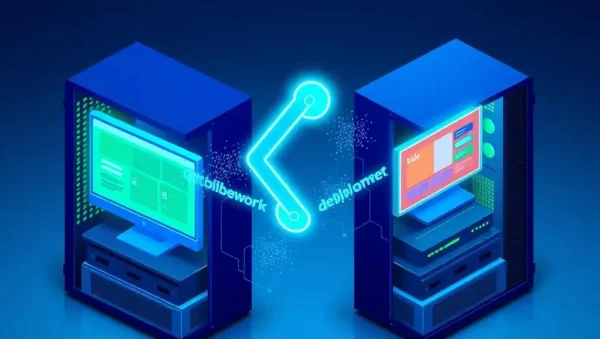
Master Git-based blue/green deployments! This step-by-step Git blue-green deployment tutorial from GitAndVersionControlHub.com automates your releases, minimizing downtime and risk. Learn now!
Read article
Master seamless software updates with Git! GitAndVersionControlHub.com's expert guide on Blue/Green deployments simplifies the process, minimizing downtime and risk. Learn the techniques…
Read article
Master seamless blue/green deployments with Git! GitAndVersionControlHub.com's expert guide simplifies the process, boosting your workflow and minimizing downtime. Learn how Git streamlines…
Read article
Prevent deployment disasters! GitAndVersionControlHub.com shows you how Git rollbacks for deployments offer a crucial safety net, protecting your automated workflows from errors.…
Read articleLearn how blue/green deployments, canary releases, and rollback strategies make Git-based CI/CD pipelines safer, faster, and easier to manage. This subcategory explains practical release automation for reliable software delivery.
Explore how blue/green deployments maintain two production environments so teams can release new versions with minimal downtime. Articles cover traffic switching, environment parity, database considerations, health checks, and automated validation through GitHub Actions or GitLab CI. You will learn how to move users from the stable blue environment to the updated green environment while preserving a fast recovery path if issues appear.
Discover how canary deployments gradually expose a new application version to a small percentage of users, services, or regions before wider release. Guides explain feature flags, traffic splitting, observability, error-rate monitoring, and automated promotion criteria. This approach helps development and DevOps teams detect regressions early, reduce deployment risk, and connect Git commits with measurable production performance during progressive delivery.
Understand how to design reliable rollback procedures for failed builds, broken releases, and unexpected production behavior. Topics include reverting Git commits, redeploying known-good artifacts, using immutable images, restoring configuration, and handling database migrations safely. You will learn why rollback automation, documented runbooks, and tested recovery commands are essential parts of a resilient CI/CD deployment strategy.
Learn how to combine Git branching workflows with automated deployment gates, approvals, tests, and environment checks. Tutorials cover pipeline triggers, protected branches, release tags, artifact promotion, smoke testing, and policy-based deployment controls. These practices help teams create repeatable software delivery workflows in GitHub and GitLab while ensuring that only validated changes progress from development to staging and production.
Effective deployment strategies depend on feedback from automated tests and production monitoring. This section covers health checks, logs, metrics, traces, synthetic tests, and alert thresholds for blue/green and canary releases. You will learn how to connect deployment events to observability tools, define objective success criteria, and trigger an automatic rollback when latency, error rates, or business metrics exceed acceptable limits.
A blue/green deployment uses two production environments: one serving the current version and another running the release candidate. After testing the new environment, traffic is switched to it. If problems occur, teams can quickly redirect traffic to the previous environment, reducing downtime and simplifying rollback.
A canary deployment releases a new version to a limited group of users, hosts, or regions first. Teams monitor performance and application health before expanding the rollout. Because exposure increases gradually, defects can be detected and contained before they affect the entire production environment.
Rollback is appropriate when a release causes critical errors, failed health checks, security issues, data corruption risks, or unacceptable performance degradation. Automated thresholds can initiate recovery, while engineers can also use a documented rollback runbook when business impact requires immediate action.
Yes. GitHub Actions can build artifacts, run tests, deploy environments, perform health checks, shift traffic, and require approval before production promotion. With cloud provider integrations, containers, feature flags, and monitoring APIs, workflows can support automated blue/green switching or gradual canary delivery.
Use backward-compatible, versioned migrations whenever possible. The expand-and-contract pattern allows old and new application versions to work together during deployment. Avoid destructive schema changes until the release is stable, and test restoration procedures so application rollback does not create database inconsistency.