🚀 CI/CD Fundamentals: Continuous Integration, Delivery, and Deployment
Welcome to the CI/CD Fundamentals subcategory on GitAndVersionControlHub.com, your practical resource for automating software workflows with Git. Learn how Continuous Integration (CI), Continuous Delivery (CD), and Continuous Deployment help development teams build, test, release, and maintain reliable software faster. This section explains essential DevOps practices, Git branching strategies, automated testing, deployment pipelines, and integration with platforms such as GitHub Actions and GitLab CI/CD.
🔄 Understanding Continuous Integration
Continuous Integration is a development practice in which developers frequently merge code changes into a shared repository. You will learn how Git commits, pull requests, branch protection, code reviews, and automated builds work together to identify integration problems early. Clear explanations make CI accessible whether you are working on a personal project or contributing to a large team.
Explore how to design an effective CI workflow using automated unit tests, linting, dependency checks, and build verification. Tutorials cover common CI pipeline stages, configuration files, status checks, and techniques for keeping the main branch stable while improving software quality.
📦 Continuous Delivery Explained
Continuous Delivery extends CI by ensuring that tested code is always ready for release. This subcategory shows how teams package applications, manage build artifacts, configure environments, and prepare reliable releases through repeatable automation. You will discover how version control supports traceability from a Git commit to a tested release candidate.
Learn practical strategies for staging environments, approval workflows, release branches, semantic versioning, and deployment preparation. Continuous Delivery reduces release risk by making software deployable at any time, even when production deployment still requires a manual decision.
🌐 Continuous Deployment in Practice
Continuous Deployment automatically releases successfully tested changes to production without requiring a separate manual approval step. Learn how deployment pipelines connect Git repositories to cloud platforms, servers, containers, and infrastructure automation tools. Examples help explain environment variables, deployment permissions, rollback procedures, and production safeguards.
This section also explores how to decide whether continuous deployment is suitable for your project. You will learn about progressive delivery, feature flags, canary releases, blue-green deployments, monitoring, and automated rollback methods that make frequent production releases safer and more controlled.
🛠️ Building Git-Based CI/CD Pipelines
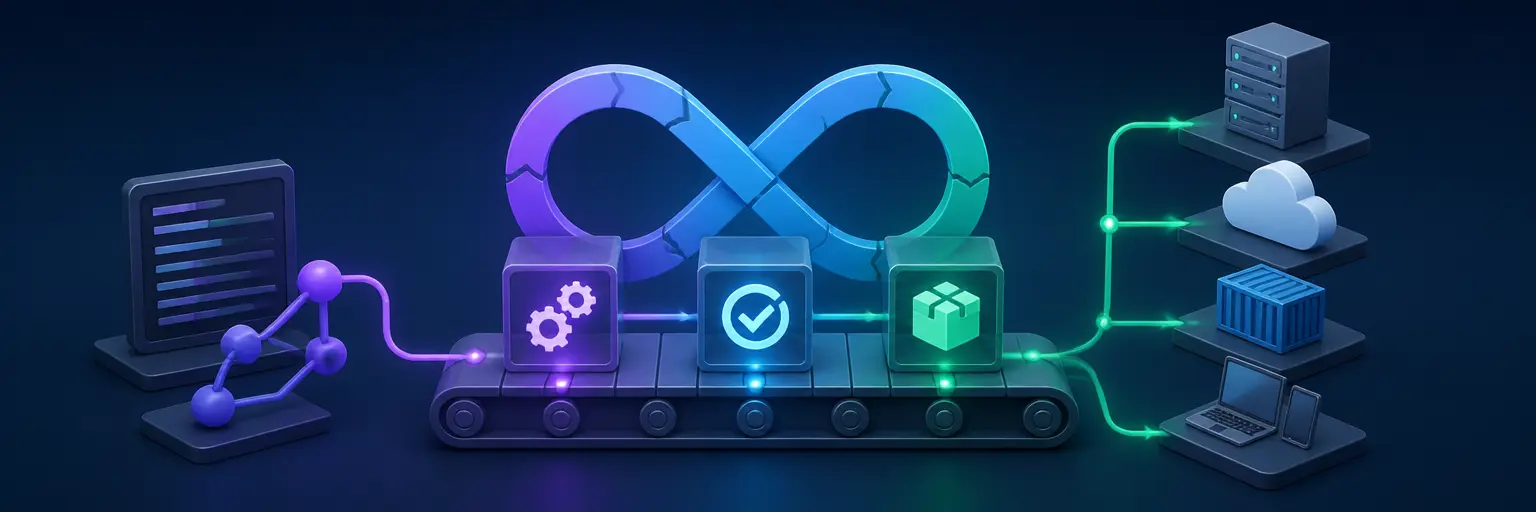
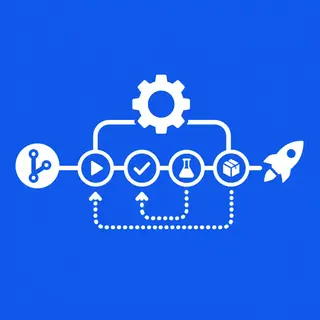
Discover how to plan a complete CI/CD pipeline from code commit to production deployment. Guides explain pipeline triggers, workflow jobs, runners, caching, artifacts, secrets, dependencies, and parallel execution. You will also learn how pull requests and Git events can automatically start validation workflows.
Practical content covers popular tools including GitHub Actions, GitLab CI/CD, Jenkins, and other automation platforms. Learn how to write maintainable pipeline configuration, reuse workflow components, reduce build times, and troubleshoot failed jobs using logs and reproducible test steps.
🧪 Automated Testing and Quality Gates
Reliable CI/CD depends on automated testing. Learn how to include unit tests, integration tests, end-to-end tests, API tests, security scans, and code quality checks in a Git workflow. These practices help teams detect regressions before code reaches users and create measurable quality gates for every change.
You will also learn how to balance test coverage, execution speed, and pipeline reliability. Fast and dependable feedback encourages smaller commits, safer merges, and more efficient collaboration between developers, testers, and operations teams.
🔐 Security, Secrets, and Deployment Reliability
CI/CD pipelines often handle credentials, cloud access, package publishing, and production deployments. This subcategory explains how to protect secrets, apply least-privilege permissions, secure runners, scan dependencies, and avoid exposing sensitive information in logs or repository files.
Explore DevSecOps practices such as secret scanning, software composition analysis, container security, signed commits, protected branches, and audit trails. These techniques help you build secure, compliant, and observable deployment pipelines without slowing down development unnecessarily.
📊 Monitoring, Troubleshooting, and Pipeline Improvement
Successful automation requires more than creating a pipeline. Learn how to investigate failed builds, diagnose flaky tests, resolve dependency conflicts, and analyze deployment errors. Step-by-step troubleshooting guidance helps you understand pipeline logs, job dependencies, runner environments, and configuration mistakes.
Improve delivery performance by tracking metrics such as deployment frequency, lead time for changes, change failure rate, and mean time to recovery. These insights help teams optimize their Git workflow, shorten feedback loops, and continuously improve software delivery.
❓ Frequently Asked Questions About CI/CD Fundamentals
What is the difference between CI, Continuous Delivery, and Continuous Deployment?
Continuous Integration automatically builds and tests code whenever changes are integrated. Continuous Delivery keeps validated software ready for release, usually with a manual production approval. Continuous Deployment automatically releases every change that passes the pipeline’s quality and security checks.
How does Git support CI/CD automation?
Git provides the version history, branches, commits, pull requests, and repository events that trigger CI/CD workflows. A pipeline can run whenever code is pushed, a pull request is opened, or a release tag is created, connecting source control directly to testing and deployment automation.
Which CI/CD tools should beginners learn?
GitHub Actions and GitLab CI/CD are excellent starting points because they are closely integrated with Git repositories. Jenkins, CircleCI, Azure Pipelines, and cloud-native services are also widely used. Begin with one platform and learn core concepts such as jobs, runners, artifacts, secrets, triggers, and deployment environments.
Is Continuous Deployment safe for every project?
No. Continuous Deployment requires dependable automated tests, monitoring, rollback procedures, secure permissions, and a suitable risk profile. Teams working with financial, medical, or highly regulated systems may prefer Continuous Delivery with manual approvals, while feature flags and staged releases can add further protection.
How can I troubleshoot a failed CI/CD pipeline?
Start by reviewing the failed job’s logs and identifying whether the issue involves code, dependencies, tests, credentials, environment configuration, or infrastructure. Reproduce the failure locally when possible, verify recent Git changes, check secret and permission settings, and use smaller pipeline steps to isolate the problem.