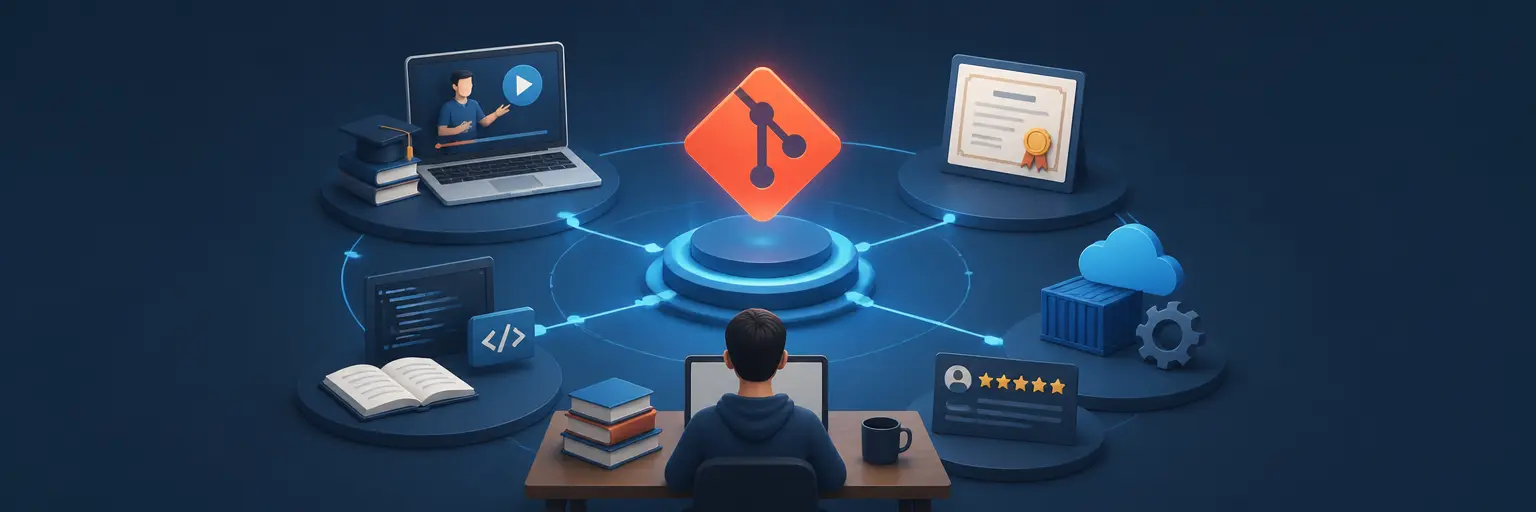
🎓 Learning Platforms to Master Git and DevOps
Discover the best online Git and DevOps learning platforms for building practical version control, collaboration, automation, and cloud engineering skills. This subcategory on Git and Version Control Hub features carefully researched reviews of Git courses, GitHub and GitLab training, DevOps certifications, hands-on bootcamps, CI/CD programs, and learning paths for beginners and experienced developers. Compare course quality, curriculum depth, instructor expertise, practical labs, certification value, pricing, and career outcomes before choosing the right platform for your goals.
🚀 Best Online Courses for Learning Git and Version Control
Find online Git courses that explain essential commands, repositories, commits, branches, merging, rebasing, stashing, tags, remotes, and conflict resolution. Our reviews help learners identify courses that combine clear explanations with hands-on Git practice, realistic projects, quizzes, terminal exercises, and workflows used by professional development teams.
Whether you are learning Git from scratch or improving an existing workflow, expect comparisons of beginner Git tutorials, advanced Git courses, Git branching strategies, and distributed version control training. We also highlight lessons covering GitHub collaboration, pull requests, code reviews, issue tracking, GitLab repositories, and effective team-based development.
⚙️ DevOps Training Platforms and Learning Paths
Explore DevOps learning platforms that connect Git with continuous integration, continuous delivery, infrastructure automation, containerization, monitoring, and cloud deployment. Each review considers whether a program teaches practical tools such as GitHub Actions, GitLab CI/CD, Jenkins, Docker, Kubernetes, Terraform, and popular cloud platforms.
Readers can expect structured guidance for choosing a DevOps roadmap based on experience level and career objectives. Beginner-friendly programs may focus on Linux, Git, scripting, and automation, while advanced paths can include CI/CD pipeline design, infrastructure as code, secure DevOps, release management, and production troubleshooting.
🏆 Git and DevOps Certification Reviews
Certification reviews make it easier to evaluate credentials related to Git, DevOps, cloud engineering, automation, and software delivery. We examine exam objectives, prerequisites, study materials, practice tests, laboratory exercises, renewal policies, and the practical relevance of each certification for developers, system administrators, platform engineers, and DevOps professionals.
Learn how certifications from recognized providers compare with project-based courses and professional bootcamps. A certificate can demonstrate structured knowledge, but real Git repositories, CI/CD projects, automation scripts, and deployment experience often make the strongest impression on employers. Our content helps you balance certification value, learning depth, cost, and career impact.
💻 DevOps Bootcamp Reviews and Career Programs
Compare intensive DevOps bootcamps designed to accelerate practical skills through guided projects, mentor support, live classes, peer collaboration, and career coaching. Reviews cover program duration, weekly workload, technical curriculum, portfolio development, instructor access, job placement claims, and whether students work with realistic development and deployment scenarios.
Bootcamps may be suitable for career changers, junior developers, and IT professionals who want a structured learning environment. Look for programs that teach Git-based workflows, code review, branching models, automated testing, deployment pipelines, containers, cloud services, and monitoring instead of focusing only on theory or tool demonstrations.
🔍 How to Choose the Right Git and DevOps Learning Platform
The best learning platform depends on your current experience, preferred learning style, available time, budget, and target role. Our comparisons help you evaluate self-paced courses, instructor-led classes, interactive coding platforms, certification academies, and full-time bootcamps using practical criteria such as curriculum coverage, lab access, project quality, community support, and feedback.
Before enrolling, check whether the platform teaches current Git and DevOps practices, provides downloadable resources, includes real-world assignments, and updates content as tools evolve. A strong course should help you apply knowledge by creating repositories, managing branches, resolving conflicts, building CI/CD workflows, and documenting projects for a professional portfolio.
🧪 Hands-On Projects for Git, GitHub, GitLab, and CI/CD
Project-based learning is one of the most effective ways to master Git and DevOps. Expect recommendations for courses that include collaborative repositories, feature branch development, pull requests, merge reviews, automated testing, release tags, container builds, and deployment workflows. These projects transform abstract commands into repeatable engineering habits.
Practical assignments can also help you demonstrate skills to employers and prepare for technical interviews. Strong learning platforms encourage students to publish well-organized GitHub or GitLab projects with clear README files, meaningful commit history, documented pipeline configuration, and evidence of automated software delivery.
❓ Frequently Asked Questions About Git and DevOps Learning Platforms
What is the best platform to learn Git online?
The best platform depends on your goals, experience, budget, and preferred format. Beginners should look for an interactive Git course covering repositories, commits, branches, merging, remotes, and conflict resolution. More advanced learners may prefer project-based training focused on GitHub, GitLab, code review, branching strategies, and team workflows.
Can I learn DevOps without professional programming experience?
Yes. Many DevOps programs begin with essential Linux commands, networking concepts, scripting, Git, and software development fundamentals. A gradual learning path with practical exercises can help beginners progress toward CI/CD, Docker, cloud infrastructure, monitoring, and automation.
Are DevOps certifications worth the investment?
DevOps certifications can provide structured study goals and demonstrate familiarity with important concepts, especially when changing careers or meeting employer requirements. However, certification is most valuable when combined with hands-on projects, Git repositories, CI/CD pipelines, cloud labs, and the ability to explain real technical decisions.
How long does it take to learn Git and DevOps?
Basic Git skills can often be developed in a few weeks with consistent practice. Building job-ready DevOps skills usually takes longer because learners must understand Linux, networking, scripting, cloud platforms, containers, automation, testing, and deployment. A steady project-based learning schedule is more important than completing a course quickly.
What should a good Git and DevOps course include?
A high-quality course should include Git fundamentals, branching and merging, GitHub or GitLab collaboration, code review, automated testing, CI/CD pipelines, troubleshooting, and realistic projects. Advanced programs may also cover Docker, Kubernetes, Terraform, cloud deployment, security, monitoring, and infrastructure as code.