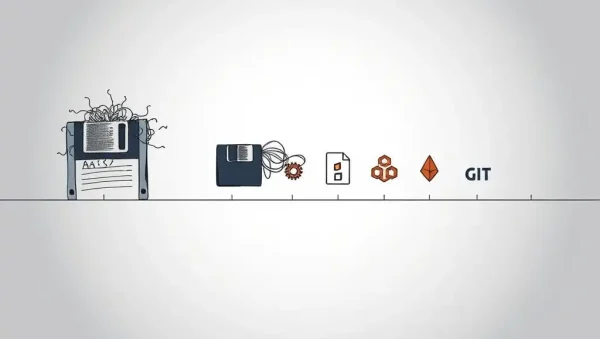
📚 Git and Version Control History: The Evolution of VCS and the History of Git
Explore the complete history of version control systems and discover how modern tools such as Git transformed software development. This subcategory explains the evolution from early source code management methods to distributed version control, including the origins of Git, its relationship with Linux development, and the growth of platforms such as GitHub and GitLab. Whether you are a beginner learning Git or an experienced developer improving your workflow, you will find clear historical context, practical insights, and valuable lessons about collaboration, branching, merging, and release management.
🕰️ The Evolution of Version Control Systems
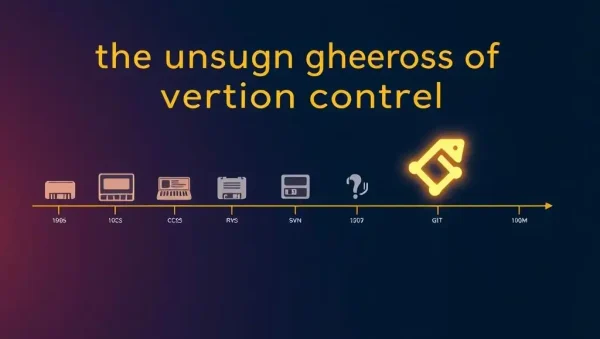
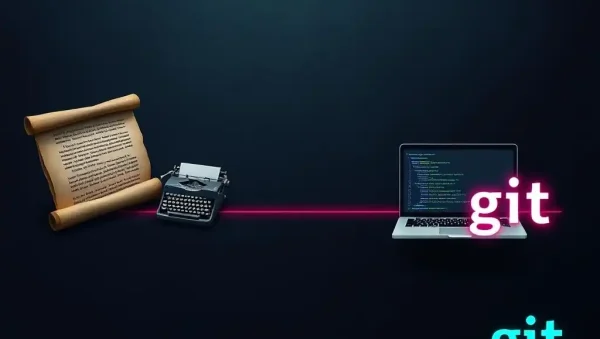
Learn how version control developed from simple file naming and manual backups into reliable systems for tracking source code changes. This section explores early approaches, centralized version control systems, and the challenges developers faced when collaborating on large software projects. Understanding this progression makes it easier to appreciate why modern Git workflows are fast, flexible, and distributed.
Readers can expect explanations of important concepts such as source code management, revision history, file locking, centralized repositories, and change tracking. Articles will show how tools including RCS, CVS, and Subversion influenced software engineering and prepared the foundation for distributed version control systems.
🌐 From Centralized to Distributed Version Control
Discover why the software industry moved from centralized version control toward distributed version control systems, also known as DVCS. Centralized tools depend on a main server, while distributed systems allow developers to maintain complete repositories locally, work offline, create branches quickly, and synchronize changes when convenient.
This section explains the practical benefits of distributed version control, including improved performance, stronger collaboration, flexible branching, local commits, and better support for geographically distributed teams. You will also learn how distributed workflows influenced modern open-source development and professional Git practices.
🐧 The Origin and History of Git
Explore the history of Git, including its creation in 2005 during the development of the Linux kernel. Git was designed to provide speed, scalability, data integrity, and efficient collaboration for one of the world’s largest software projects. Its design decisions continue to influence how developers manage code today.
Readers will learn about Git’s original goals, its object database, distributed architecture, content-addressable storage, and emphasis on lightweight branching. These historical details help explain why Git commands such as git commit, git branch, git merge, and git rebase are central to modern development workflows.
🚀 Git’s Growth in Modern Software Development
Follow Git’s growth from a tool created for kernel development into the dominant version control system used by startups, enterprises, educators, and open-source communities. This section examines how Git became widely adopted across programming languages, operating systems, cloud platforms, and software development teams.
You can expect coverage of Git hosting services, including GitHub, GitLab, and Bitbucket, as well as the development of pull requests, code review, issue tracking, and collaborative repositories. These resources connect Git’s history with practical topics such as team Git workflows, DevOps, CI/CD, and professional software engineering.
🔍 Historical Lessons for Better Git Workflows
Understanding version control history can help developers make better decisions when choosing a branching strategy, organizing commits, and collaborating with teammates. This section turns historical knowledge into practical guidance for using Git effectively in personal projects and team environments.
Articles will highlight best practices for meaningful commit messages, clean repository history, safe rebasing, reliable merging, and long-term project maintenance. By learning why Git was designed in a particular way, readers can build stronger habits and use version control with greater confidence.
❓ Frequently Asked Questions About Git and Version Control History
📌 What is version control?
Version control is a system for recording changes to files over time. It allows developers to review previous versions, compare changes, restore deleted work, create branches, and collaborate safely. Git is one of the most popular modern version control systems.
📌 What is the difference between centralized and distributed version control?
Centralized version control stores the main repository on a central server, while distributed version control gives each user a complete local repository. Git is distributed, which enables local commits, offline work, fast branching, and flexible collaboration.
📌 Why was Git created?
Git was created in 2005 to support the development of the Linux kernel. The project needed a fast, scalable, reliable, and distributed version control system capable of handling a very large codebase and many contributors.
📌 How did Git become so popular?
Git gained popularity because it combines powerful branching, strong data integrity, high performance, and distributed collaboration. Its adoption increased further through GitHub, GitLab, open-source projects, code review workflows, and integration with modern DevOps and CI/CD tools.
📌 Why should developers learn the history of Git?
Learning Git history helps developers understand the reasons behind its architecture and commands. This knowledge makes concepts such as commits, branches, merges, rebases, repositories, and remote collaboration easier to understand and apply correctly in real-world projects.