
Before Git: Exploring the Predecessor Version Control Systems You Should Know

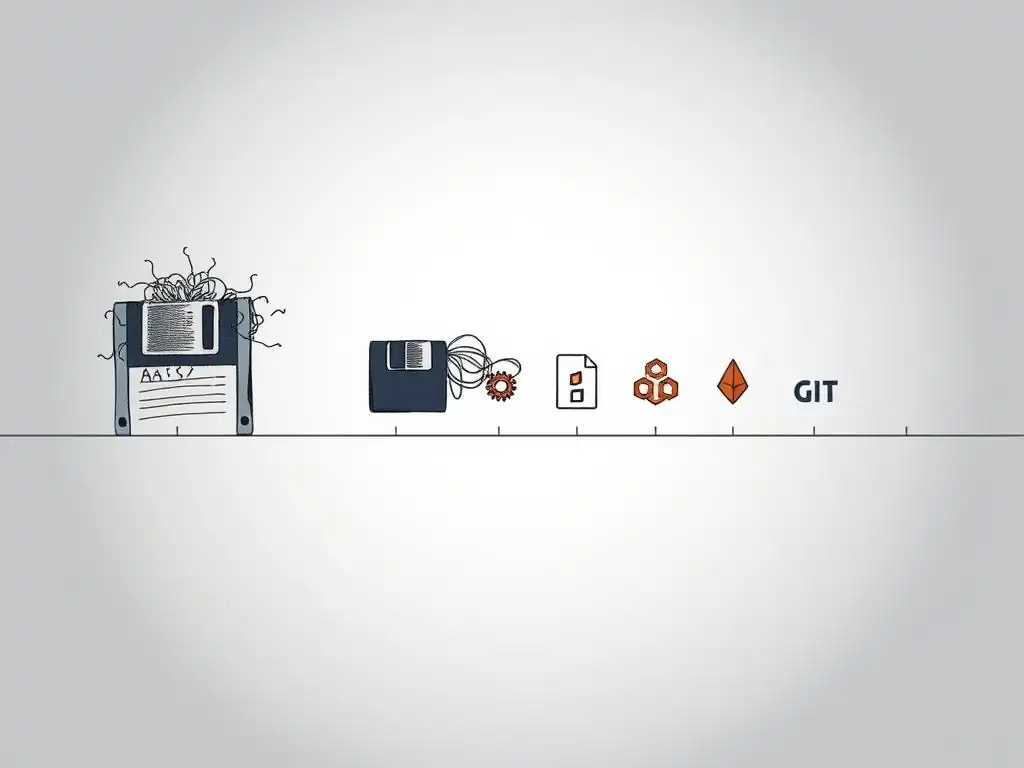
Welcome to Git and Version Control Hub, your go-to resource for mastering the art of code management! Ever wonder how developers collaborated before the ubiquitous Git? Our latest article, "Before Git: Exploring the Predecessor Version Control Systems You Should Know," dives into the fascinating history of version control. Discover the tools and techniques that paved the way for Git, and gain a deeper appreciation for the system you use every day. Ready to unlock the secrets of version control history and enhance your understanding of modern development practices? Let's begin!
Before Git: Exploring Version Control Systems That Paved the Way
- Introduction to Version Control System History: Understanding the Evolution
- Early Version Control Systems: Managing Individual Files
- Centralized Version Control Systems: Collaborative Code Management
- Distributed Version Control Systems (DVCS) Before Git: Decentralized Collaboration
- Key Concepts Introduced by Predecessor Version Control Systems
- Lessons Learned from Predecessor VCS: Shaping Modern Practices
- Why Git Triumphed: Building Upon Past Experiences
- Conclusion: Understanding the VCS Evolution
-
Frequently Asked Questions
- What were some of the key limitations of predecessor version control systems that Git aimed to address?
- How did centralized version control systems like CVS and Subversion manage code repositories differently than Git?
- What is the significance of understanding predecessor version control systems in the context of learning Git?
- Can you name a specific feature offered by Git that was notably absent or poorly implemented in earlier version control systems?
- How did the predecessors handle offline work compared to Git?
- Final Reflection: Echoes of Innovation in Version Control
- Unearth the Secrets of Version Control Pioneers!
Introduction to Version Control System History: Understanding the Evolution
The Importance of Understanding VCS History: Lessons for Modern Development
Understanding the history of version control systems (VCS) provides invaluable context for modern software development practices. By examining the evolution of these systems, developers can gain a deeper appreciation for the tools they use daily, such as Git. Studying predecessor version control systems reveals the problems early developers faced, the ingenious solutions they devised, and the gradual refinement of concepts that are now fundamental to our workflows. This historical perspective not only enriches our understanding of Git but also equips us to make more informed decisions about version control strategies and tool selection in contemporary projects.
Furthermore, exploring the lineage of VCS helps us recognize recurring patterns and challenges in software development. For instance, issues of concurrency control, branching complexity, and efficient storage have been persistent concerns throughout VCS history. Observing how different systems tackled these problems—sometimes successfully, sometimes not—offers crucial lessons in software design and project management. By learning from the successes and failures of past systems, we can avoid reinventing the wheel and instead build upon established best practices, ultimately leading to more robust and efficient development processes.
Setting the Stage: Challenges of Early Software Development
Before the advent of automated version control, software development was a significantly more cumbersome and error-prone process. Imagine teams of developers working on shared codebases with no systematic way to track changes. Early methods for managing code often involved manual file copying, naming conventions, and rudimentary backup systems. This lack of structure led to a plethora of problems, including the risk of overwriting each other's work, difficulty in reverting to previous states, and the near impossibility of effectively managing parallel development efforts.
Collaboration in these early environments was particularly challenging. Developers would often work in isolation, making integration a complex and time-consuming task, frequently resulting in integration hell. Tracking down bugs introduced by specific changes was akin to finding a needle in a haystack. Without a clear history of modifications, understanding the evolution of the codebase was incredibly difficult, hindering debugging, code review, and long-term project maintenance. The inefficiencies and risks inherent in these manual approaches underscored the urgent need for automated systems to manage software revisions, setting the stage for the development of the first version control systems.
Early Version Control Systems: Managing Individual Files
SCCS: Source Code Control System - Tracking Changes in Unix
The Source Code Control System (SCCS), developed at Bell Labs in the early 1970s, stands as one of the earliest formalized version control systems, deeply integrated into the Unix operating system. SCCS operated on individual files, managing their revisions by storing only the deltas, or differences, between successive versions, a revolutionary approach for its time that significantly saved storage space.
It used a concept of "locking" files to prevent concurrent modifications, ensuring that only one developer could edit a file at any given time. This pessimistic concurrency control, while simple, was effective in preventing merge conflicts in a time when network collaboration was less sophisticated and frequent.
SCCS introduced commands like get to retrieve a specific version of a file and delta to record changes and create a new revision. Each revision was uniquely identified by an SCCS Identification string (SID), allowing developers to precisely track and retrieve specific versions. While SCCS was limited in its collaborative capabilities compared to later systems, its principles of delta storage, revision tracking, and controlled access laid a crucial foundation for the future of version control. Its inclusion in Unix made it widely accessible to a generation of developers, influencing subsequent VCS designs and solidifying the importance of automated revision control in software development.
RCS: Revision Control System - A Foundation for Later Systems
Building upon the principles of SCCS, the Revision Control System (RCS) emerged as a significant step forward in version control, primarily developed by Walter F. Tichy in the early 1980s. RCS, like SCCS, focused on managing individual files, but it refined several aspects and gained broader adoption due to its more user-friendly interface and availability outside of Bell Labs' proprietary environment.
A key difference was RCS's storage mechanism: it typically stored the latest version of a file in its entirety and then recorded reverse deltas to reconstruct earlier versions. This approach optimized access to the most current version, which was often the most frequently needed.
RCS introduced commands like ci (check-in) and co (check-out) which became standard terminology in version control. It also improved upon SCCS's locking mechanism, providing both strict locking and relaxed locking options. Furthermore, RCS facilitated branching, albeit in a rudimentary form, allowing developers to create separate lines of development, although merging these branches was less sophisticated than in later systems. RCS's clear command structure, improved usability, and cross-platform availability made it a popular choice in the academic and early open-source communities, serving as a direct predecessor and inspiration for more advanced centralized version control systems like CVS and Subversion.
Centralized Version Control Systems: Collaborative Code Management
CVS: Concurrent Versions System - A Widely Adopted Centralized System
The Concurrent Versions System (CVS), evolving from RCS in the late 1980s and early 1990s, marked a significant shift towards collaborative version control. CVS moved beyond managing individual files to managing entire project repositories, enabling multiple developers to work concurrently on the same codebase. It adopted a client-server architecture, where a central repository stored the project's history, and developers used client software to check out, modify, and commit changes. This centralized model facilitated team-based development by providing a shared, authoritative source of code.
CVS introduced the concept of optimistic concurrency, allowing multiple developers to work on the same file simultaneously and then attempt to merge their changes upon commit. While this approach could lead to merge conflicts, CVS provided tools to assist in resolving these conflicts, often involving manual editing and merging of differing lines of code.
CVS gained immense popularity, particularly in the burgeoning open-source movement, due to its free availability and its ability to support geographically distributed teams. Projects like Debian and many others relied heavily on CVS for collaborative development, demonstrating its practical value and solidifying centralized version control as the dominant paradigm for team-based software engineering for many years.
Subversion (SVN): Addressing CVS's Limitations with Atomic Commits
Subversion (SVN), initiated in 2000 as a direct response to perceived shortcomings in CVS, aimed to be a "better CVS." While retaining the centralized architecture of CVS, SVN addressed several key limitations, most notably the lack of atomic commits. In CVS, a commit operation involving multiple files was not atomic; if a commit failed midway through, the repository could end up in an inconsistent state. SVN introduced atomic commits, ensuring that a commit operation either succeeds completely or fails entirely, maintaining repository integrity even in the face of interruptions or errors.
Beyond atomic commits, SVN brought numerous other improvements, including efficient handling of binary files, renaming and moving of files with history preservation, and a more robust branching and merging model compared to CVS. SVN also offered a more streamlined and user-friendly command-line interface and client libraries. Its adoption was rapid and widespread, with projects like Apache Software Foundation and Google Code migrating to Subversion. SVN became the de facto standard for centralized version control in the early to mid-2000s, offering a more reliable and feature-rich platform for collaborative development than its predecessor, CVS.
Distributed Version Control Systems (DVCS) Before Git: Decentralized Collaboration
BitKeeper: A Proprietary DVCS Influencing Git's Development
BitKeeper, a proprietary Distributed Version Control System (DVCS) developed by BitMover, Inc., played a surprisingly influential role in the history of version control and directly paved the way for Git. Linus Torvalds and the Linux kernel development community adopted BitKeeper in the early 2000s due to its superior performance and distributed nature, which addressed the scalability challenges faced by the increasingly large and geographically dispersed Linux kernel developers. BitKeeper allowed each developer to have a complete copy of the repository, enabling offline work and significantly faster branching and merging operations compared to centralized systems.
BitKeeper's architecture allowed for independent development and staging of changes before pushing them to a central repository, or exchanging changes directly with other developers. This decentralized approach offered greater flexibility and resilience. However, BitKeeper was proprietary software, and when the free-of-charge license for the Linux community was rescinded in 2005 due to disagreements, it spurred Linus Torvalds to create Git. Git's design and many of its core concepts were directly inspired by BitKeeper's strengths, particularly its speed, distributed model, and robust branching capabilities, making BitKeeper a crucial, albeit sometimes overlooked, predecessor in the evolution towards modern DVCS.
Monotone: An Early Open-Source DVCS with Cryptographic Integrity
Monotone, initiated in 2003, stands as a significant early example of an open-source Distributed Version Control System (DVCS), predating Git and showcasing key DVCS concepts. Unlike BitKeeper, Monotone was entirely open-source and focused heavily on cryptographic integrity and security. It used a fully decentralized model where each repository held the complete history, and changes were exchanged between repositories. Monotone employed cryptographic hashing to ensure the integrity of every revision, providing strong guarantees against data corruption and tampering.
Monotone introduced sophisticated branching and merging capabilities, and emphasized a clean, well-defined history. It used a globally unique revision identifier system based on cryptographic hashes, which ensured that revisions could be reliably tracked across different repositories. While Monotone did not achieve the widespread adoption of Git, it was influential within the open-source community and demonstrated the viability and advantages of the distributed version control model. It served as an important proof of concept for open-source DVCS and contributed to the growing understanding and acceptance of decentralized version control approaches before Git's emergence.
Key Concepts Introduced by Predecessor Version Control Systems
Centralized vs. Distributed Architectures: Pros and Cons of Each Approach
Predecessor version control systems prominently showcased two distinct architectural approaches: centralized and distributed. Centralized systems, like CVS and SVN, operate with a single, central repository. The primary advantage of this architecture is simplicity in management and a clear, single source of truth for the project history. Permissions and access control are also typically easier to manage in a centralized setup.
However, centralized systems suffer from several drawbacks. They represent a single point of failure; if the central server is down, collaboration grinds to a halt. Operations like branching and merging can be slower as they require constant communication with the central server. Furthermore, developers are dependent on network connectivity to perform most version control operations.
Distributed Version Control Systems (DVCS), exemplified by BitKeeper and Monotone (and later Git), offer a fundamentally different approach. In a DVCS, every developer has a complete copy of the repository, including the entire project history. This decentralization provides several advantages. Operations are generally much faster as most actions are performed locally without network latency.
DVCS offer greater resilience; the loss of one repository does not impact others, and the distributed nature provides inherent backups. Developers can work offline and commit changes locally, synchronizing later. However, DVCS can be more complex to manage initially, particularly in understanding the distributed workflow and synchronization strategies. The choice between centralized and distributed architectures often depends on project needs, team size, and priorities regarding speed, resilience, and management complexity.
Locking Mechanisms: Managing Concurrent Access in Centralized Systems
In centralized version control systems like SCCS, RCS, CVS, and SVN, managing concurrent access to files was a critical challenge. To prevent conflicting changes, these systems often employed locking mechanisms. Locking is a pessimistic concurrency control strategy where, before a developer can modify a file, they must explicitly "lock" it.
This lock prevents any other developer from making changes to the same file until the lock is released. SCCS and RCS utilized strict locking, where a file had to be explicitly locked before any modification could begin. CVS and SVN, while primarily using optimistic concurrency for editing, also offered locking features for scenarios where strict control was necessary, particularly with binary files or when managing concurrent access to non-mergeable resources.
Locking ensures that only one developer can modify a file at a time, eliminating the possibility of merge conflicts for locked files. This can be advantageous in certain situations, such as when dealing with files that are difficult or impossible to merge automatically, like binary files or complex configuration files. However, locking can also introduce bottlenecks and hinder collaboration.
If a developer forgets to release a lock, or holds a lock for an extended period, it can block other developers from working on that file, slowing down the development process. The overhead of managing locks and the potential for blocking led to the exploration of optimistic concurrency models in systems like CVS and eventually the dominant merge-based conflict resolution strategies in DVCS, aiming for a balance between controlled access and collaborative efficiency.
Branching and Merging: Early Challenges and Solutions
Branching and merging, fundamental concepts in modern version control, were present in predecessor systems, albeit in varying degrees of sophistication and with different challenges. In early systems like RCS and SCCS, branching was possible, but often considered a more advanced or less frequently used feature. Branches in these systems were typically created for major releases or significant parallel development efforts, rather than the lightweight, feature-branching workflows common today. Merging capabilities were also less refined, often requiring significant manual effort and prone to errors.
CVS improved upon branching and merging, making branches more accessible for parallel development and bug fixes. However, CVS's merging could still be complex and error-prone, especially with long-lived branches or significant divergences. Subversion further enhanced branching and merging, introducing features like "merge tracking" to better manage the relationships between branches and facilitate more reliable merges.
Despite these advancements, branching and merging in centralized systems like CVS and SVN often remained a source of complexity and potential conflicts, sometimes leading developers to avoid branching extensively or to adopt simpler branching models to minimize merge challenges. The distributed nature of DVCS like Git fundamentally transformed branching and merging, making them significantly faster, easier, and more robust, encouraging more frequent and flexible use of branching strategies in modern software development workflows.
Lessons Learned from Predecessor VCS: Shaping Modern Practices
The Evolution of Conflict Resolution Strategies: From Manual to Automated
The history of predecessor version control systems showcases a clear evolution in conflict resolution strategies, moving from predominantly manual approaches towards more automated and sophisticated techniques. Early systems like SCCS and RCS, with their file-locking mechanisms, largely aimed to prevent conflicts altogether rather than resolve them after they occurred. When conflicts did arise, resolution was almost entirely manual, requiring developers to compare versions and manually edit files to integrate changes.
CVS, with its optimistic concurrency, introduced the necessity for more robust conflict resolution. While CVS offered basic tools to identify conflicts—marking conflicting sections within files—the actual resolution process still heavily relied on manual editing. Developers had to understand the nature of the conflicting changes and manually decide how to merge them.
Subversion improved upon CVS's conflict handling, providing better conflict detection and some assistance in merging, but manual resolution remained a common and sometimes challenging task. The shift towards more automated conflict resolution gained momentum with the advent of DVCS like Git, which incorporated advanced three-way merge algorithms and sophisticated tools to assist developers in resolving conflicts more efficiently and, in many cases, automatically. This evolution reflects a continuous effort to streamline the development process and reduce the overhead and errors associated with manual conflict resolution.
The Rise of Branching Models: Simple to Complex Branching Strategies
Predecessor version control systems played a crucial role in the evolution of branching models, demonstrating a progression from simple, infrequent branching to more complex and strategic branching practices. Initially, in systems like SCCS and RCS, branching was often viewed as a relatively heavyweight operation, reserved for major releases or significant parallel development efforts. Branching models were typically simple, often involving a main trunk and occasional release branches, with merges being infrequent and sometimes cumbersome.
CVS made branching more accessible and practical for everyday development tasks, leading to the adoption of slightly more complex branching models, such as using branches for bug fixes or minor feature development. However, the challenges associated with merging in CVS often still limited the widespread use of extensive branching.
Subversion further refined branching capabilities and introduced more robust merge tracking, encouraging the adoption of more structured branching models, such as feature branches and release branches, although complex branching strategies were still often approached cautiously due to potential merge complexities. The true explosion in branching model complexity and flexibility came with Git, which made branching and merging so lightweight and efficient that it enabled the widespread adoption of highly sophisticated branching strategies like Gitflow and GitHub Flow, fundamentally changing how developers manage parallel development and releases.
Why Git Triumphed: Building Upon Past Experiences
Git's Innovations: Speed, Scalability, and a Flexible Branching Model
Git's triumph in becoming the dominant version control system is not accidental; it is built upon the lessons learned from its predecessors and introduces key innovations that addressed their limitations. One of Git's most significant advancements is its speed. Operations in Git, particularly branching, merging, and committing, are remarkably fast compared to systems like CVS and SVN.
This speed stems from Git's architecture, which stores data as snapshots and performs most operations locally, minimizing network overhead. Git's scalability is another crucial factor. It can efficiently handle very large projects with extensive histories and numerous branches, a challenge for older systems when dealing with projects of similar size and complexity.
Furthermore, Git's flexible branching model is a game-changer. Branching in Git is incredibly lightweight and fast, encouraging developers to use branches liberally for feature development, bug fixes, and experimentation. This ease of branching, combined with Git's powerful merging capabilities, enables highly parallel and efficient development workflows that were simply not practical with predecessor systems. Git's decentralized nature also contributes to its resilience and flexibility, allowing developers to work offline and collaborate in diverse ways. These innovations—speed, scalability, and a flexible branching model—collectively address major pain points of earlier VCS, contributing significantly to Git's widespread adoption and success.
The Legacy of Predecessor Version Control Systems: A Foundation for Modern Development
The predecessor version control systems, despite their limitations compared to modern tools like Git, have left an indelible legacy and provided the essential foundation for contemporary software development practices. Systems like SCCS, RCS, CVS, and SVN pioneered fundamental concepts such as revision history, branching, merging, and collaborative code management, which are now taken for granted in the software industry. They demonstrated the critical importance of automated version control in managing software projects, improving collaboration, and mitigating the risks associated with manual code management.
These systems also shaped the terminology and workflows that persist in modern version control. Commands like 'commit,' 'checkout,' and 'branch' are direct descendants of commands and concepts introduced in these earlier systems. The evolution from file-based versioning (SCCS, RCS) to project-based versioning (CVS, SVN) and finally to distributed versioning (BitKeeper, Monotone, Git) reflects a continuous progression towards more efficient, scalable, and collaborative development methodologies.
Understanding this historical evolution is crucial for appreciating the sophistication of modern VCS and for making informed decisions about version control strategies in today's complex software development landscape. Git, in many ways, is the culmination of this evolutionary journey, building upon and refining the lessons learned from its predecessors to create a powerful and versatile tool for modern software engineering.
Conclusion: Understanding the VCS Evolution
Git's Influences: Acknowledging the Impact of Earlier Systems
Git, while revolutionary in its own right, did not emerge in a vacuum. It is deeply influenced by the concepts, practices, and even shortcomings of earlier version control systems. Linus Torvalds, in creating Git, explicitly drew inspiration from BitKeeper's distributed architecture and performance, while also learning from the challenges and limitations of systems like CVS. Many of Git's core features and design decisions can be seen as direct responses to issues encountered in predecessor systems. For instance, Git's emphasis on speed and lightweight branching directly addresses the performance bottlenecks and branching complexities present in centralized systems.
Furthermore, Git's adoption of a distributed model reflects a broader trend towards decentralization observed in systems like BitKeeper and Monotone. The very idea of tracking changes, managing revisions, and facilitating collaboration through version control was pioneered and refined by these earlier tools. Acknowledging Git's influences is not to diminish its innovation, but rather to place it within a historical context of continuous improvement and adaptation in software development tools. Understanding this lineage helps developers appreciate the accumulated knowledge and experience embedded in Git and use it more effectively.
Further Exploration: Resources for Learning More About VCS History
For those interested in delving deeper into the fascinating history of version control systems, several resources are available. Exploring historical documentation for systems like SCCS, RCS, CVS, and SVN can provide firsthand insights into their design and operation. Academic papers and historical articles discussing the evolution of software configuration management offer valuable perspectives on the broader context of VCS development. Online archives and repositories of open-source projects that historically used these systems can provide practical examples and real-world use cases.
Books on software engineering history and specific biographies or historical accounts related to Unix, Linux, and open-source development often contain chapters or sections dedicated to the development of version control. Additionally, online communities and forums dedicated to version control and software history can be valuable platforms for discussions and sharing of information. By exploring these resources, developers can gain a richer and more nuanced understanding of the evolution of version control and the enduring impact of predecessor systems on modern software engineering practices.
Frequently Asked Questions
What were some of the key limitations of predecessor version control systems that Git aimed to address?
Predecessor systems often suffered from centralized architectures, making them vulnerable to single points of failure. Additionally, many lacked robust branching and merging capabilities, hindering parallel development.
How did centralized version control systems like CVS and Subversion manage code repositories differently than Git?
Centralized systems relied on a single central repository where developers checked out and committed changes. Git, in contrast, is a distributed version control system, giving each developer a full copy of the repository.
What is the significance of understanding predecessor version control systems in the context of learning Git?
Understanding their limitations provides context for Git's design choices and highlights the advantages of Git's distributed model. It helps you appreciate the evolution of version control.
Can you name a specific feature offered by Git that was notably absent or poorly implemented in earlier version control systems?
Git's branching and merging capabilities are far superior. Predecessor systems often made branching a complex and error-prone process.
How did the predecessors handle offline work compared to Git?
Centralized systems generally required a constant connection to the central server. Git allows developers to work offline and synchronize changes later.
Final Reflection: Echoes of Innovation in Version Control
The journey through the predecessor version control systems reveals more than just historical footnotes; it illuminates the foundational principles upon which modern software development thrives. These systems, often overlooked in the shadow of Git, represent the pioneering spirit of collaboration and the relentless pursuit of efficiency that continues to drive technological advancement today. Understanding their limitations and triumphs provides invaluable context for appreciating the sophistication and power of contemporary tools.
The legacy of these early systems profoundly shapes our current development practices. Recognizing the struggles of managing code before Git underscores the importance of robust version control in fostering collaboration and preventing chaos. Those who cannot remember the past are condemned to repeat it.
- George Santayana. This quote resonates deeply when considering the challenges faced by developers before the advent of distributed version control, reminding us that progress is built upon the lessons learned from past endeavors.
As we reflect on the evolution of version control, consider how these early systems have paved the way for the seamless collaboration and rapid innovation we experience today. Let us not forget the ingenuity and perseverance of those who laid the groundwork, and let us strive to build upon their legacy by embracing best practices and pushing the boundaries of what's possible in the ever-evolving world of software development.
Unearth the Secrets of Version Control Pioneers!
Thanks for delving into the fascinating history of version control! We hope you've gained a newfound appreciation for the innovations that paved the way for Git. Now, it's time to channel that knowledge into action!
Here are a few ways to continue your journey:
- Experiment with RCS (Revision Control System): While it might seem archaic, setting up and using RCS on a small personal project can provide invaluable insight into the foundational concepts of version control. Try to recreate a simple workflow, like tracking changes in a text file.
- Dive Deeper into CVS (Concurrent Versions System) History: Read firsthand accounts from early CVS adopters and developers to understand the challenges and triumphs of collaborative software development in its early days.
- Share this article with a friend who's also learning about Git. Discuss the pros and cons of these historical systems compared to modern solutions.
What's one key lesson from these earlier version control systems that you think Git has best addressed? Share your thoughts in the comments below!