
Implementing Centralized Logging for CI/CD Pipelines: Best Practices

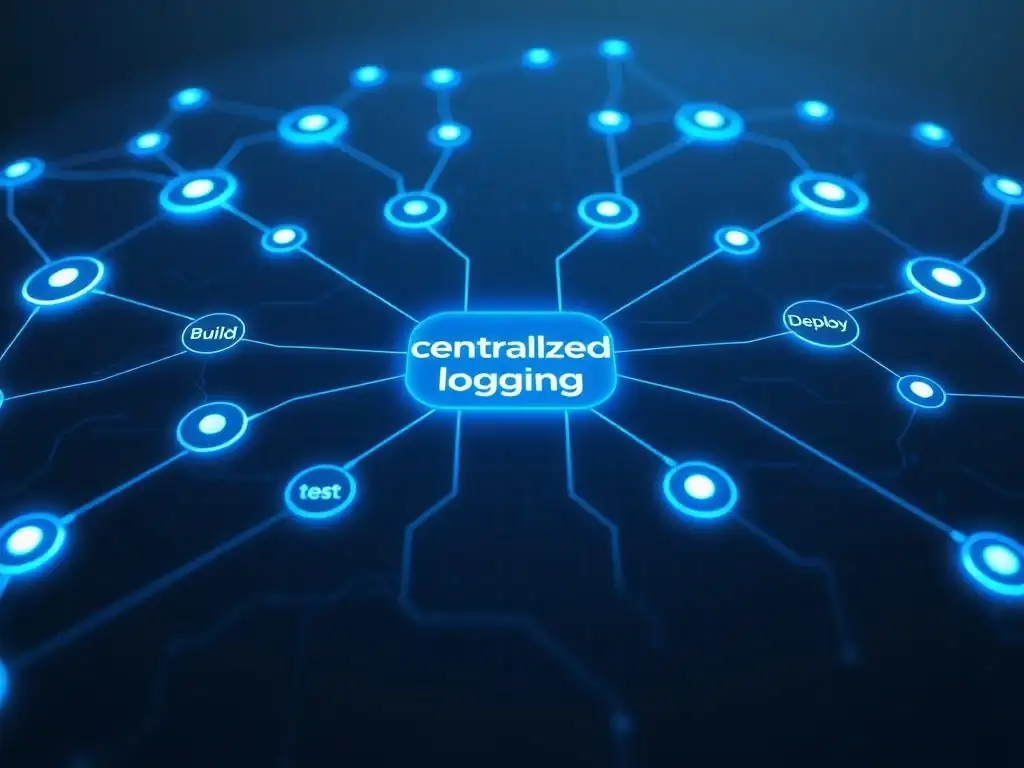
Welcome to Git and Version Control Hub, your comprehensive resource for mastering Git and version control! Ever wondered how to truly streamline your CI/CD process and gain unparalleled insight into your development pipeline? This article delves into the vital practice of centralized logging for CI/CD, unlocking a new level of efficiency and control. Discover how to implement best practices and transform your workflow – keep reading to learn more!
Understanding the Importance of Log Aggregation for CI/CD Pipelines
In modern Continuous Integration and Continuous Delivery (CI/CD) pipelines, the complexity of software deployments has increased exponentially. A single deployment can involve numerous stages, from building and testing to staging and production, often spread across different environments and systems. Each stage generates logs, reflecting the activities and health of the pipeline. Without centralized logging for CI/CD, these logs are scattered across various systems, making it incredibly difficult to gain a holistic view of the pipeline's operation.
This distributed nature of logs hinders effective monitoring, troubleshooting, and performance analysis. Imagine trying to diagnose an issue in a complex microservices deployment where build logs reside on the CI server, test logs on testing environments, and application logs are spread across multiple containers in production. Pinpointing the root cause becomes a time-consuming and error-prone task.
Log aggregation addresses this challenge by consolidating logs from all stages and components of the CI/CD pipeline into a single, accessible platform. This centralized approach is crucial because it provides a unified view of the entire deployment process. Instead of manually sifting through logs in disparate locations, developers and operations teams can access all relevant log data in one place.
This facilitates real-time monitoring of pipeline health, enabling proactive identification of potential issues before they escalate into critical failures. Moreover, centralized logging significantly accelerates troubleshooting by providing a comprehensive context for errors and anomalies, drastically reducing the mean time to resolution (MTTR) for pipeline issues. By providing a clear, consolidated picture of CI/CD operations, log aggregation becomes an indispensable component for efficient and reliable software delivery.
- What is centralized logging in the context of CI/CD pipelines?
- Why is centralized logging important for CI/CD pipelines?
- What are some best practices for implementing centralized logging?
- How can centralized logging improve collaboration within a development team?
- What are some common tools used for implementing centralized logging in CI/CD pipelines?
Frequently Asked Questions
What is centralized logging in the context of CI/CD pipelines?
Centralized logging involves consolidating logs from various stages of your CI/CD pipeline into a single, accessible location. This provides a unified view for easier monitoring and troubleshooting.
Why is centralized logging important for CI/CD pipelines?
It improves visibility and debugging by providing a single source of truth for all pipeline activities. This helps identify and resolve issues quickly, leading to faster development cycles.
What are some best practices for implementing centralized logging?
Some key practices include using a structured logging format, such as JSON, and selecting a reliable logging service, like Elasticsearch or Splunk, for efficient storage and analysis.
How can centralized logging improve collaboration within a development team?
Centralized logging enables easier sharing of logs among team members, facilitating collaborative troubleshooting and problem-solving. This enhances communication and reduces bottlenecks.
What are some common tools used for implementing centralized logging in CI/CD pipelines?
Popular tools include the ELK stack (Elasticsearch, Logstash, Kibana), Splunk, and cloud-based logging services like AWS CloudWatch Logs. These tools offer robust log collection, storage, and analysis capabilities.
Final Reflection: The Unseen Backbone of Continuous Delivery
The journey through implementing centralized logging for CI/CD pipelines reveals more than just technical best practices; it unveils a fundamental principle of modern software development: visibility. In today's fast-paced world, where continuous delivery is the norm, the ability to quickly diagnose and resolve issues is paramount. Without a robust centralized logging system, we are essentially operating in the dark, hindering our ability to deliver reliable and high-quality software.
This topic has profoundly influenced how we approach software development, shifting the focus from simply building features to ensuring their stability and performance in production. The ability to trace a single request through the entire CI/CD pipeline, from code commit to deployment, provides invaluable insights and empowers teams to proactively address potential problems. You can't fix what you can't see.
This simple truth underscores the critical importance of centralized logging in building resilient and efficient software delivery pipelines.
As you move forward, consider how you can champion the adoption of centralized logging within your own organization. It's not just about implementing a technical solution; it's about fostering a culture of transparency, accountability, and continuous improvement. Embrace the power of visibility, and you'll unlock new levels of efficiency, reliability, and ultimately, success in your software development endeavors.
Okay, here's a CTA tailored for an article titled "Implementing Centralized Logging for CI/CD Pipelines: Best Practices" on the website "Git and Version Control Hub" (GitAndVersionControlHub.com):
Unlock Deeper Insights: Start Logging Smarter Today!
Thank you for exploring best practices for centralized logging in your CI/CD pipelines! We hope you've gained valuable insights into improving your monitoring and troubleshooting workflows. Now, let's put that knowledge into action.
Here are a few steps you can take to further enhance your logging strategy:
- Implement a centralized logging solution in your CI/CD pipeline this week. This is the single most impactful step you can take to improve visibility and debugging.
- Share this article with your DevOps team to encourage a collaborative approach to logging implementation.
- Explore uncommon log analysis techniques, such as using machine learning to detect anomalies in your CI/CD pipeline logs.
What centralized logging tool are you planning to integrate into your CI/CD pipeline, and what benefits are you most excited to see?