
Git Deployment Mastery: Blue/Green, Canary, and Rollback Secrets Revealed

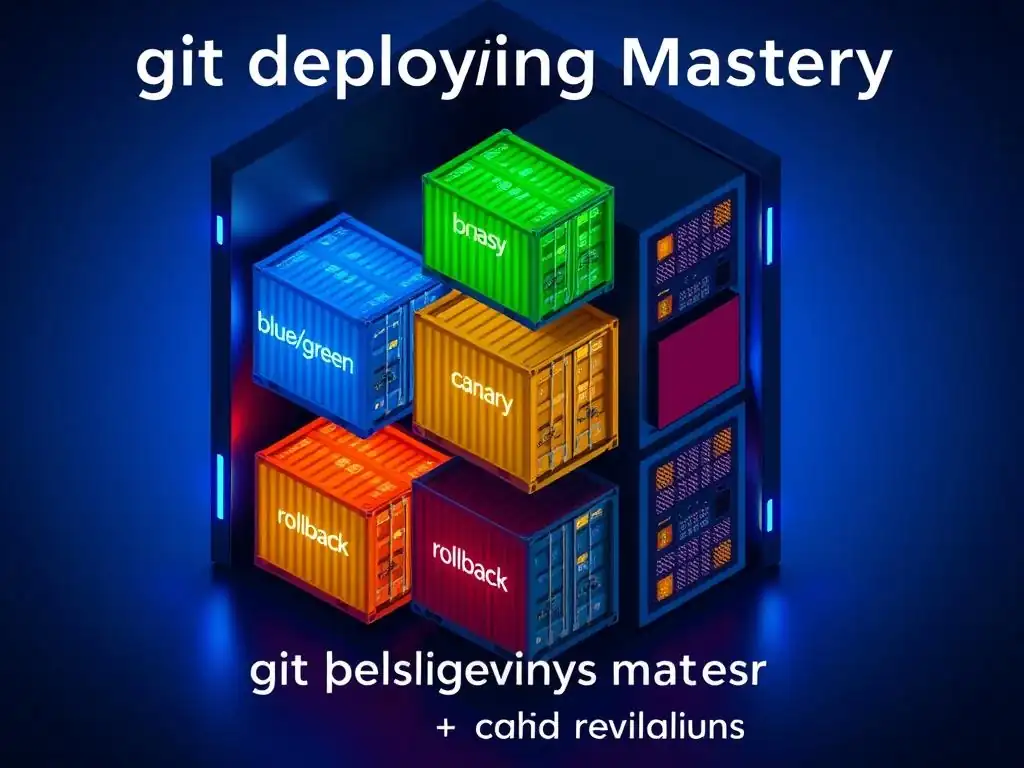
Welcome to the Git and Version Control Hub, your compass in the ever-evolving world of collaborative code! Are you ready to unlock the full potential of your Git workflow? This site is your guide, whether you're just starting out or looking to refine your expert skills.
Dive in to our latest deep dive, " Git Deployment Mastery: Blue/Green, Canary, and Rollback Secrets Revealed," where we demystify Git deployment strategies explained. Learn how to seamlessly integrate these powerful techniques into your projects and dramatically reduce deployment risks. But that's just the beginning! Explore our extensive library of tutorials and articles to enhance your understanding of Git and version control, and discover how to build robust and reliable CI/CD pipelines. What secrets will you uncover today?
Git Deployment Mastery: Blue/Green, Canary, and Rollback Secrets Revealed
- Introduction to Git Deployment Strategies Explained
-
Frequently Asked Questions
- What are the main Git deployment strategies discussed in the article?
- How does a Blue/Green deployment strategy work?
- What is the core idea behind Canary deployments?
- What is the importance of having a rollback strategy in Git deployment?
- How can Git facilitate implementing these deployment strategies?
- Final Reflection: Embracing the Evolution of Deployment
- Embrace Git's Power: Master Your Deployment Strategy!
Introduction to Git Deployment Strategies Explained
Why Mastering Git Deployment is Crucial for Modern Development
In today's fast-paced software development landscape, the ability to deploy code changes rapidly and reliably is no longer a luxury but a necessity. Mastering Git deployment strategies is crucial because it directly impacts the speed and stability of software releases. Consider a scenario where a critical bug fix is implemented; a well-defined Git deployment process ensures that this fix reaches users swiftly, minimizing disruption and potential negative impact. Without efficient deployment strategies, development teams face bottlenecks, increased risk of errors in manual deployments, and longer lead times for delivering value to end-users.
Furthermore, modern development methodologies like Agile and DevOps emphasize continuous integration and continuous delivery (CI/CD). Git, as the backbone of version control, plays a pivotal role in these methodologies. A robust Git deployment strategy facilitates the automation of deployment pipelines, enabling teams to release updates more frequently and with greater confidence.
For instance, companies adopting microservices architectures often rely heavily on automated Git-based deployments to manage the complexity of deploying and updating numerous independent services. Mastering Git deployment, therefore, is not just about pushing code; it's about enabling a culture of rapid iteration, continuous improvement, and ultimately, faster delivery of high-quality software.
Understanding Different Git Deployment Approaches: Blue/Green, Canary, and Feature Flag
Git deployment strategies encompass a range of techniques designed to minimize downtime, reduce risk, and enable controlled software releases. Among the most prominent are Blue/Green deployments, Canary deployments, and Feature Flags. Blue/Green deployment involves maintaining two identical production environments, 'blue' and 'green'. While one environment ('blue', for example) is live and serving traffic, the new version of the application is deployed to the 'green' environment. Once the 'green' environment is thoroughly tested and verified, traffic is switched from 'blue' to 'green', making the new version live instantaneously. This approach offers near-zero downtime and a quick rollback mechanism.
Canary deployments, on the other hand, are about gradual rollout. A new version of the application, the 'canary', is deployed to a small subset of servers or users. Real-time monitoring of the canary's performance and user feedback helps identify any potential issues in a controlled environment.
If the canary performs as expected, the deployment is gradually rolled out to more users until it reaches full production. This strategy significantly reduces the blast radius of a faulty deployment. Feature Flags, though not strictly a deployment strategy in themselves, are often used in conjunction with deployment strategies.
They allow developers to deploy code changes to production but keep them disabled until they are ready to be released to users. This decouples deployment from release, enabling features to be tested in production environments without impacting users and allowing for controlled feature rollouts and A/B testing. Understanding these different approaches is key to choosing the right strategy for specific project needs and risk tolerance.
Frequently Asked Questions
What are the main Git deployment strategies discussed in the article?
The article focuses on three key Git deployment strategies: Blue/Green deployments, Canary deployments, and strategies for rollback procedures. Understanding these strategies is crucial for smooth and reliable deployments.
How does a Blue/Green deployment strategy work?
In a Blue/Green deployment, you maintain two identical environments: one live (e.g., Blue) and one staging (e.g., Green). New code is deployed to the staging environment, tested, and then switched to live, while the old live environment becomes the new staging environment.
What is the core idea behind Canary deployments?
Canary deployments involve releasing a new version of your code to a small subset of users or servers. This allows you to monitor performance and identify issues in a real-world environment before a full rollout.
What is the importance of having a rollback strategy in Git deployment?
A rollback strategy is critical because it enables you to quickly revert to a previous, stable version of your application if problems arise after a deployment. It's a crucial safety net for minimizing downtime and impact.
How can Git facilitate implementing these deployment strategies?
Git enables efficient deployment by allowing you to manage different versions of your code through branching and tagging. These features simplify the process of deploying specific versions to different environments and reverting to earlier states when needed.
Final Reflection: Embracing the Evolution of Deployment
The journey through Git deployment strategies, as explored in this article, underscores a fundamental truth: successful software delivery hinges on adaptability and resilience. In today's rapidly evolving technological landscape, mastering Blue/Green deployments, Canary releases, and robust rollback mechanisms isn't just a best practice; it's a necessity for maintaining a competitive edge and ensuring a seamless user experience.
The influence of these strategies extends far beyond the technical realm, shaping the very culture of development teams. The ability to iterate quickly, experiment safely, and recover gracefully fosters a sense of confidence and innovation. This, in turn, empowers developers to push boundaries and deliver exceptional value. The only constant is change.
- Heraclitus. This ancient wisdom resonates deeply with the principles of modern deployment, reminding us that continuous adaptation is the key to long-term success.
Now, armed with a deeper understanding of Git deployment strategies, consider how you can apply these principles within your own projects and organizations. Embrace the power of experimentation, prioritize resilience, and never underestimate the importance of a well-defined rollback plan. By doing so, you can transform your deployment process from a source of anxiety into a catalyst for innovation and growth.
Embrace Git's Power: Master Your Deployment Strategy!
Thank you for exploring the secrets of Git deployment with us! You've now unlocked valuable insights into Blue/Green, Canary, and Rollback strategies to elevate your development workflow. Ready to put your newfound knowledge into action?
Here are a few ways to start:
- Dive into a hands-on project: Dedicate this week to implementing a Blue/Green deployment strategy on a personal or existing project to solidify your understanding.
- Explore the uncharted territory: Research and experiment with integrating these deployment techniques with your CI/CD pipeline for automated efficiency.
- Share your knowledge: Contribute to the community by writing a short tutorial or guide on a specific aspect of Git deployment you found particularly helpful.
What specific Git deployment strategy are you most eager to implement in your next project?