
Reusable Workflows in GitHub Actions: Streamline Your CI/CD Configurations

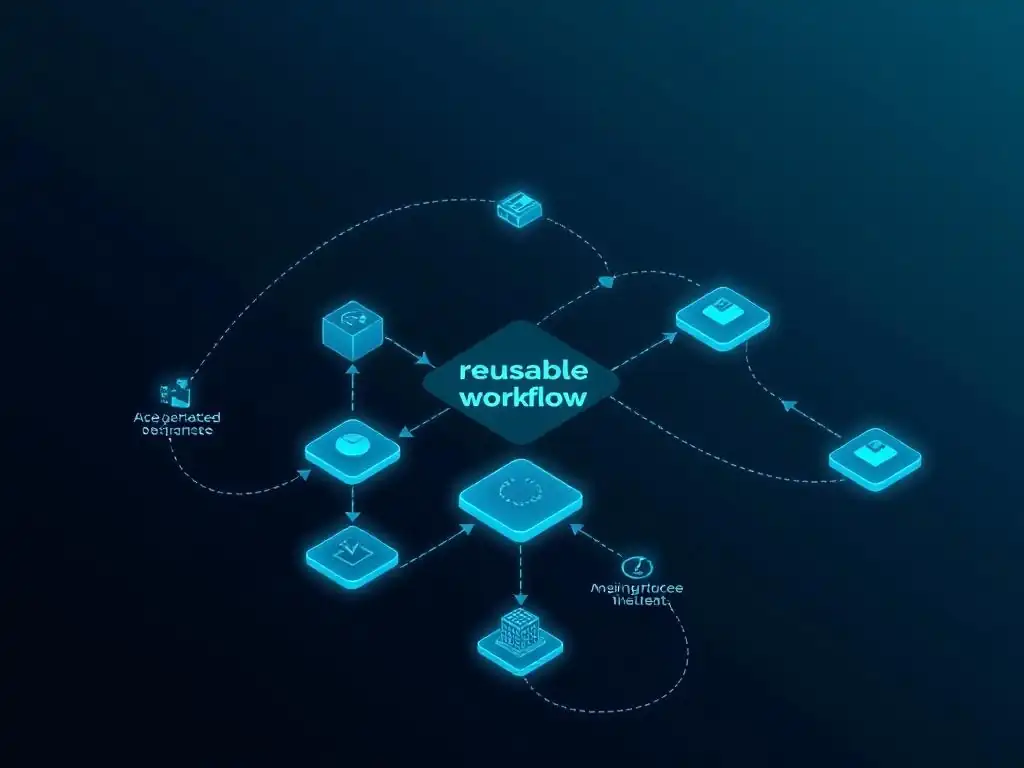
Welcome to Git and Version Control Hub, your central resource for mastering Git and related technologies!
Are you tired of repeating the same CI/CD configurations across multiple repositories? Dive into our latest article and discover how to leverage GitHub Actions reusable workflows to streamline your development process. Unlock the power of code reusability, reduce redundancy, and supercharge your automation. Ready to learn how to build more efficient and maintainable pipelines? Let's get started!
Reusable Workflows in GitHub Actions: Streamline Your CI/CD Configurations
Introduction to GitHub Actions Reusable Workflows
What are GitHub Actions Workflows?
GitHub Actions workflows are automated processes that you can set up in your GitHub repository to build, test, deploy, and automate any software development task directly within GitHub. Essentially, they are configurable automated pipelines defined by YAML files that live in your repository under the .github/workflows directory. Each workflow is triggered by specific events, such as a push to a branch, a pull request being opened, or even scheduled times. These events initiate a series of jobs that run on virtual machines, known as runners, provided by GitHub or self-hosted. Within these jobs, you define steps that execute individual tasks, which can range from compiling code and running tests to deploying applications and sending notifications.
Workflows are composed of several key components that work together to automate your software development lifecycle. These components include: events that trigger workflows, jobs which are sets of steps that run on the same runner, steps that are individual tasks executed within a job, and actions which are reusable units of code that automate tasks in your workflow.
Actions can be created by the GitHub community, or you can create your own custom actions tailored to your specific needs. The flexibility of GitHub Actions allows developers to create sophisticated CI/CD pipelines tailored to the unique requirements of their projects, automating everything from simple tasks to complex deployment strategies.
The Power of Reusability in CI/CD
Reusability is a cornerstone of efficient and scalable software development, and it becomes particularly crucial in Continuous Integration and Continuous Delivery (CI/CD) pipelines. In the context of CI/CD, reusability refers to the practice of creating modular and reusable components for common tasks, allowing them to be easily incorporated across multiple projects or workflows. This approach significantly reduces redundancy and promotes consistency, saving valuable development time and resources. Imagine having to rewrite the same testing script or deployment configuration for every single project – it would be inefficient, error-prone, and a maintenance nightmare.
By embracing reusability in CI/CD, development teams can build robust and maintainable automation pipelines. Reusable components, whether they are scripts, configurations, or entire workflow segments, can be developed, tested, and refined in isolation. Once perfected, these components can be readily reused across various projects, ensuring uniformity and reliability. This modular approach simplifies the management of complex CI/CD setups, as changes or updates to a reusable component automatically propagate to all workflows that utilize it. This centralized management not only streamlines maintenance but also ensures that best practices and standardized processes are consistently applied across the organization's software development landscape.
Frequently Asked Questions
What are GitHub Actions reusable workflows?
Reusable workflows are pre-defined workflows that can be called from other workflows, allowing you to avoid duplication and maintain consistency in your CI/CD configurations. They act like functions for your GitHub Actions.
Why should I use reusable workflows in GitHub Actions?
Using reusable workflows promotes code reuse, simplifies workflow maintenance, and ensures consistency across your projects. This leads to a more efficient and less error-prone CI/CD process.
How do I create a reusable workflow in GitHub Actions?
You create a reusable workflow using the workflow_call trigger. This trigger allows other workflows to invoke your workflow and pass inputs for customization.
How do I call a reusable workflow from another workflow?
You call a reusable workflow using the uses keyword in your workflow definition. You'll need to specify the repository and path to the reusable workflow file.
What are the benefits of using reusable workflows in a team environment?
Reusable workflows promote collaboration and standardization within a team. They ensure that everyone follows the same processes and best practices, reducing inconsistencies and improving overall quality.
Final Reflection: Embracing Efficiency Through Automation
The journey through reusable workflows in GitHub Actions underscores a fundamental truth: efficiency is paramount in modern software development. What began as a technical exploration of YAML configurations and CI/CD pipelines culminates in a powerful realization of how automation can liberate developers from repetitive tasks, allowing them to focus on innovation and creativity. The ability to define and reuse workflows across multiple repositories isn't just a convenience; it's a strategic advantage in today's fast-paced development landscape.
This concept of modularity and reuse extends far beyond the realm of code. It speaks to a broader need for streamlined processes and collaborative efforts across all aspects of our digital lives. The principles of DRY (Don't Repeat Yourself) apply not only to code but also to how we approach problem-solving and knowledge sharing. The best code is no code at all.
This sentiment, often attributed to various programming gurus, perfectly encapsulates the essence of reusable workflows: minimizing redundancy and maximizing impact.
Now, consider how you can apply this principle of reusability to your own workflows, both in your professional and personal life. Ask yourself: where are you repeating tasks? Where can you create modular solutions that can be applied across multiple contexts? Embrace the power of automation, not just in your CI/CD pipelines, but in every aspect of your life, and unlock new levels of efficiency and creativity. The future belongs to those who can streamline and optimize, and the tools to do so are already at your fingertips.
Unlock Efficiency: Implement Reusable Workflows Today!
Thanks for exploring reusable workflows in GitHub Actions! You've learned how they streamline CI/CD and boost team productivity. Ready to apply this knowledge and save time?
Here's how to get started:
- Begin by refactoring your most complex GitHub Actions workflow into reusable components. This is the quickest way to see the benefits.
- Explore GitHub's documentation on reusable workflows and experiment with different configurations to fully understand their capabilities.
- Share your knowledge! Post on social media or your team's communication channel about how reusable workflows are improving your efficiency.
What's the first workflow you'll refactor, and what challenges do you foresee? Share your thoughts below!