
Git Repository Security Risks: What Every Developer Should Know

Welcome to Git and Version Control Hub!
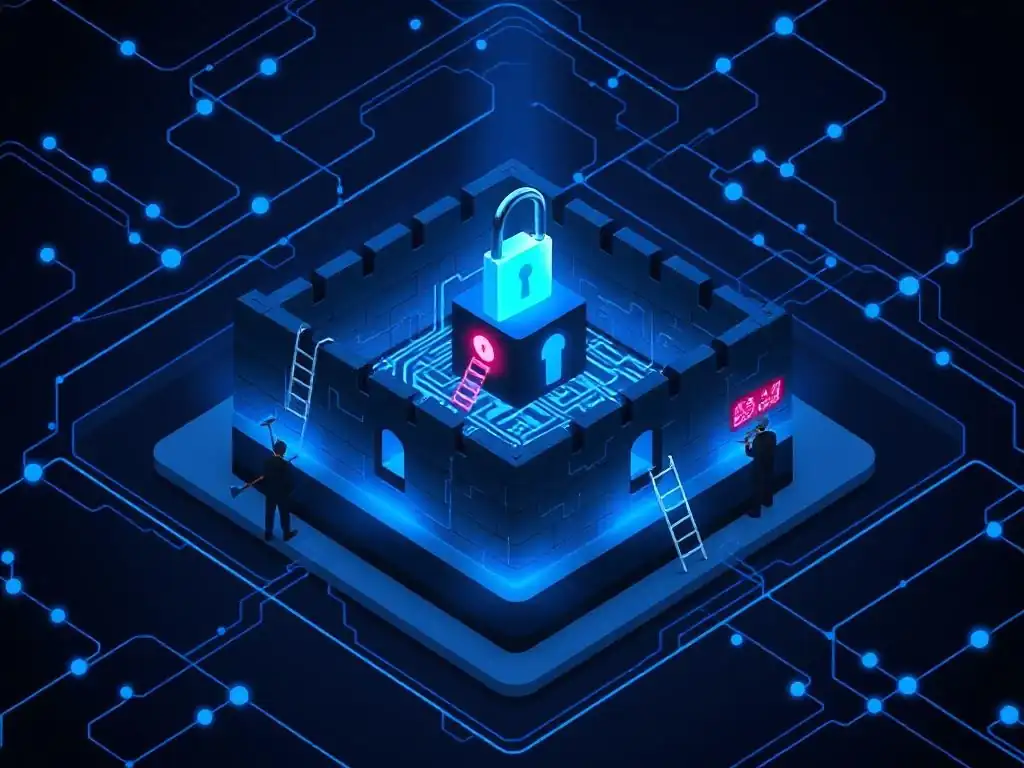
Are you truly confident in your Git repository security? Dive into Git Repository Security Risks: What Every Developer Should Know and uncover critical vulnerabilities lurking within your version control system. Learn how to fortify your projects against potential threats and implement Git repository security best practices that safeguard your code and collaborative workflow. Ready to elevate your Git security knowledge? Let's begin!
- Common Git Repository Vulnerabilities
-
Frequently Asked Questions
- What are some common Git repository security risks?
- How can I prevent committing sensitive data to my Git repository?
- What is the best way to manage dependencies in my Git repository to ensure security?
- How can I secure access to my Git repository, especially in a team environment?
- What steps should I take if I accidentally commit sensitive data to my Git repository?
- Final Reflection: Safeguarding the Digital Foundation
- Secure Your Git Repositories: Take Action Today!
Common Git Repository Vulnerabilities
Branching and Merging Vulnerabilities
Branching and merging are fundamental aspects of Git workflows, enabling parallel development and feature integration. However, these powerful features can also introduce security vulnerabilities if not managed carefully. One primary risk arises during feature integration when code from different branches is merged. If a feature branch contains vulnerabilities or malicious code, merging it into a more stable branch, like main or develop, can propagate these issues into the codebase, potentially impacting production environments. For example, consider a scenario where a developer working on a feature branch introduces a subtle cross-site scripting (XSS) vulnerability in a JavaScript file. If this branch is merged without proper code review and security checks, the vulnerability can be deployed to the live website, exposing users to potential attacks. In 2021, a major e-commerce platform experienced a security incident where a vulnerability introduced in a feature branch slipped through the development pipeline and was deployed to production, leading to unauthorized access to customer data. This case highlights the critical need for vigilance during branching and merging processes.
Furthermore, vulnerabilities can stem from the merging process itself, particularly when dealing with complex merge conflicts or fast-forward merges. Developers might inadvertently introduce security gaps while resolving conflicts, especially if they lack a comprehensive understanding of the code changes being merged. Fast-forward merges, while seemingly straightforward, can bypass certain review processes if not carefully considered within a security context. Imagine a situation where a developer quickly merges a hotfix branch into main without a thorough security review to expedite deployment. This fast-tracked merge could inadvertently include a regression or a previously undetected vulnerability from the hotfix branch, compromising the security of the main branch. Therefore, a well-defined and secure branching strategy, coupled with rigorous code review practices, is crucial to mitigate these risks and ensure the integrity of the codebase across all branches.
Preventing Security Issues During Feature Integration
Preventing security issues during feature integration necessitates a multi-layered approach that combines proactive measures and reactive safeguards. A cornerstone of secure feature integration is mandatory code reviews for all merge requests. Before any feature branch is merged into a protected branch like develop or main, at least two reviewers, ideally with security awareness, should scrutinize the code changes. These reviews should not only focus on functionality but also explicitly look for potential security vulnerabilities, such as injection flaws, authentication weaknesses, or insecure dependencies. Statistics indicate that code reviews can catch up to 85% of defects in software development, and a significant portion of these defects can be security-related. For instance, a study by Coverity found that code reviews are highly effective in identifying security vulnerabilities like buffer overflows and format string bugs, which are often missed by automated tools alone.
In addition to code reviews, automated security checks should be integrated into the feature integration workflow. This includes running static analysis security testing (SAST) tools on feature branches before they are merged. SAST tools can automatically scan code for known vulnerability patterns and coding errors that could lead to security issues.
Furthermore, incorporating unit and integration tests that specifically target security aspects can help identify vulnerabilities early in the development cycle. For example, developers can write tests to ensure proper input validation, authorization checks, and secure handling of sensitive data within their feature branches. By combining human code reviews with automated security checks, organizations can significantly reduce the risk of introducing vulnerabilities during feature integration and maintain a robust security posture for their Git repositories.
Implementing Secure Branching Strategies Like Gitflow
Implementing secure branching strategies like Gitflow is paramount for maintaining code integrity and minimizing security risks throughout the development lifecycle. Gitflow, a popular branching model, provides a structured approach to managing feature development, releases, and hotfixes. Its core branches – main, develop, feature, release, and hotfix – each serve a specific purpose and contribute to a more organized and secure workflow. For instance, the main branch represents the production-ready state, and only thoroughly tested and reviewed releases are merged into it. Feature development happens in isolated feature branches, preventing unstable or potentially vulnerable code from directly impacting the main codebase. This isolation is crucial for containing risks and ensuring that only vetted code reaches production. Companies adopting Gitflow, such as Spotify and ING, have reported improved code quality and reduced incidents due to clearer separation of development stages and enforced review processes within the branching model.
Furthermore, Gitflow encourages the use of pull requests and code reviews as mandatory steps for merging branches. For example, when a feature branch is ready for integration, a pull request is created to merge it into the develop branch. This triggers a code review process, ensuring that at least one other developer examines the changes for security vulnerabilities and code quality before the merge occurs. Similarly, release branches in Gitflow provide a dedicated phase for final testing and stabilization before merging into main. This dedicated phase allows for thorough security testing, including penetration testing and vulnerability scanning, on a pre-release version, further mitigating risks before deployment. By adhering to a structured branching strategy like Gitflow and enforcing its associated processes, development teams can establish a more secure and controlled environment for managing code changes and reducing the likelihood of security breaches stemming from branching and merging activities.
Frequently Asked Questions
What are some common Git repository security risks?
Common risks include accidentally committing sensitive data, such as API keys or passwords, and vulnerabilities in dependencies used within the project. Also, unauthorized access due to weak authentication or compromised credentials is a significant concern.
How can I prevent committing sensitive data to my Git repository?
Use a .gitignore file to exclude sensitive files from being tracked. You can also utilize tools like git-secrets or pre-commit hooks to scan for secrets before commits. Always be mindful of what you are staging.
What is the best way to manage dependencies in my Git repository to ensure security?
Regularly update dependencies to the latest versions to patch security vulnerabilities. Employ a dependency management tool like npm or pip, and use a vulnerability scanner to identify potential issues in your project's dependencies.
How can I secure access to my Git repository, especially in a team environment?
Enforce strong authentication methods, such as multi-factor authentication (MFA). Implement role-based access control to limit access based on user roles. Also, regularly review and audit access permissions.
What steps should I take if I accidentally commit sensitive data to my Git repository?
Immediately remove the sensitive data from the repository's history using tools like git filter-branch or BFG Repo-Cleaner. Rotate any compromised credentials and inform relevant parties about the potential security breach.
Final Reflection: Safeguarding the Digital Foundation
The vulnerabilities inherent in Git repositories, as explored throughout this article, are not merely theoretical concerns; they represent tangible threats to the integrity and security of our digital infrastructure. In today's interconnected world, where software underpins nearly every aspect of our lives, neglecting Git repository security best practices is akin to leaving the front door of a digital fortress wide open. The potential consequences, ranging from data breaches to intellectual property theft, demand immediate and sustained attention from every developer.
The ongoing influence of Git on software development is undeniable, making the security of these repositories paramount. Our collective responsibility as developers is to ensure that the tools we rely on are not turned against us. This requires a shift in mindset, from viewing security as an afterthought to embedding it as a core principle in our development workflows. Security is not a product, but a process.
- Bruce Schneier. This quote perfectly encapsulates the continuous effort required to stay ahead of evolving threats and maintain the integrity of our codebases.
Now, consider the power you hold as a developer. You are the gatekeeper of your code, the guardian of your data. Let the insights shared in this article serve as a catalyst for change. Embrace Git repository security best practices, not as a burden, but as an opportunity to strengthen the foundation upon which our digital world is built. Take the knowledge you've gained and apply it diligently, fostering a culture of security within your teams and organizations. The future of secure software development rests, in part, in your hands.
Secure Your Git Repositories: Take Action Today!
You've learned about critical Git repository security risks. Now, let's turn that knowledge into proactive protection for your projects.
Start by auditing your repositories for exposed secrets like API keys and passwords. This is your first line of defense. Then, consider implementing pre-commit hooks to automatically scan for vulnerabilities before code is committed. Finally, share this information with your team and discuss adopting these best practices. A secure team is a strong team.
What concrete steps will you take today to improve your Git repository security? Share your plans in the comments below!