
Were There Version Control Concepts Before Computers? A Surprising Look Back

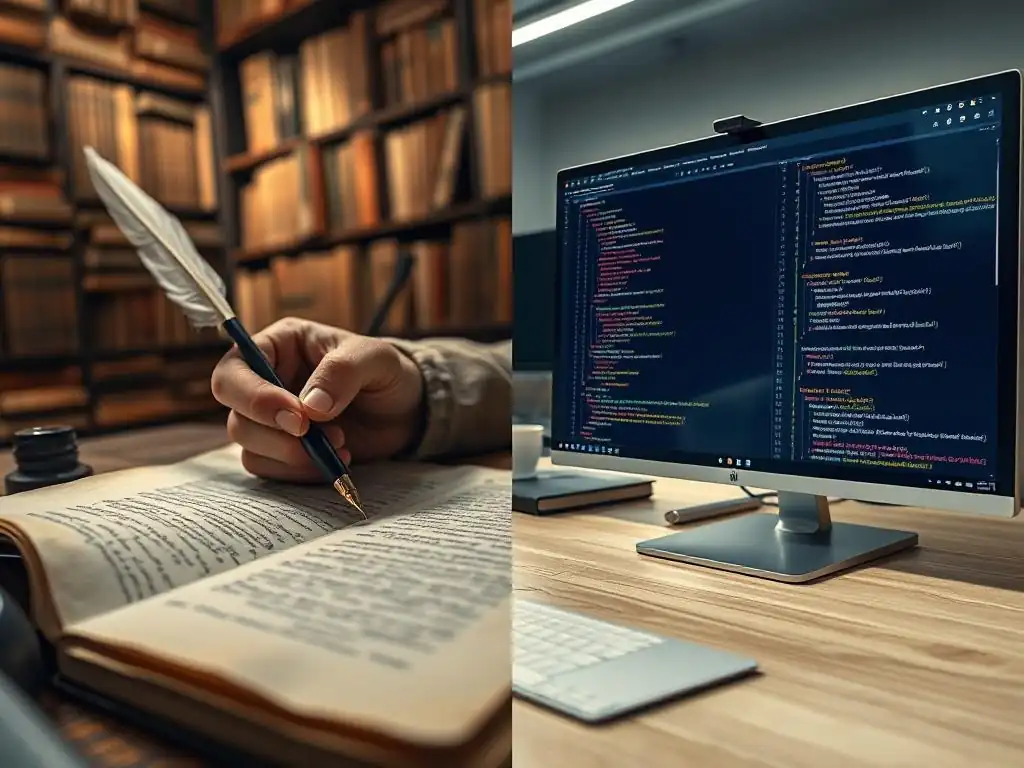
Welcome to Git and Version Control Hub, your central resource for mastering the art of version control!
Ever wondered how developers managed code changes before the digital age? Our article, "Were There Version Control Concepts Before Computers? A Surprising Look Back," delves into the fascinating history of version control systems, revealing unexpected origins that predate modern technology. Prepare to be amazed as we uncover the ingenious methods used to track and manage revisions long before Git and GitHub existed. Discover the roots of this essential practice and gain a deeper appreciation for its evolution. Ready to explore a side of software development you've never seen before?
Were There Version Control Concepts Before Computers? A Surprising Look Back
- Introduction: Version Control's Ancient Roots - Beyond Digital Systems
- The Need for Change Tracking: A Timeless Problem
- Early Examples of Versioning and Collaboration:
- The Printing Press Revolution and its Impact on Textual Versioning
- Legal and Governmental Applications: Version Control in Record Keeping
- Architectural Blueprints and Engineering Drawings: Versioning for Physical Structures
- The Evolution of Filing Systems and Archiving Practices
- Parallels Between Historical Practices and Modern Version Control Systems
- Lessons Learned from Pre-Computer Version Control
- Conclusion: Appreciating the Enduring Relevance of Version Control Principles
-
Frequently Asked Questions
- What is the main focus of GitAndVersionControlHub.com?
- What skill levels does GitAndVersionControlHub.com cater to?
- What does the article "Were There Version Control Concepts Before Computers? A Surprising Look Back" explore?
- Besides Git, what other related topics does GitAndVersionControlHub.com cover?
- Why is understanding the history of version control important for developers?
- Final Reflection: Echoes of Collaboration Across Time
- Rediscover the Past: Apply Ancient Wisdom to Modern Version Control!
Introduction: Version Control's Ancient Roots - Beyond Digital Systems
Version control, in its essence, is the practice of tracking and managing changes to a set of information. While we often associate it with software development and digital files, the fundamental need for version control is far from a modern invention. Long before computers and lines of code, humans grappled with the challenge of managing revisions, collaborating on documents, and preserving accurate records.
This article delves into the fascinating history of version control concepts, revealing how societies throughout history developed ingenious methods to address the very problems that modern version control systems solve today. We will explore diverse examples from ancient libraries to legal systems and architectural practices to demonstrate that the principles of version control are deeply rooted in human history and predate the digital age by millennia.
The Need for Change Tracking: A Timeless Problem
The Evolution of Document Management and the Quest for Accurate Records
The desire to maintain accurate and reliable records is a cornerstone of organized societies. From the earliest forms of written communication, the challenge of managing documents and their revisions has been ever-present. Consider ancient civilizations relying on clay tablets or papyrus scrolls; the physical nature of these mediums inherently presented version control challenges.
Early forms of document management were crucial for administrative tasks, legal proceedings, and the preservation of knowledge. The evolution of these systems reveals a continuous effort to improve accuracy and prevent loss or corruption of information. For instance, the development of standardized formats for legal documents in ancient Mesopotamia, around 3000 BCE, can be seen as an early form of version control, aiming to ensure consistency and clarity across records.
Preserving Knowledge: The Importance of Tracking Changes Through History
Beyond mere record-keeping, the preservation of knowledge across generations has always necessitated some form of change tracking. As texts were copied and re-copied, variations and errors inevitably crept in. Ancient scholars and institutions understood the importance of identifying and managing these changes to maintain the integrity of knowledge.
The meticulous work of medieval scribes in monasteries, copying and illuminating manuscripts, was not just about replication but also about attempting to preserve the text accurately. They often included notations about sources and variations found in different manuscripts, demonstrating an awareness of textual versions and their potential divergence. This dedication to preserving the original intent, while acknowledging and managing changes, underscores the timeless importance of version control in the history of knowledge.
Early Examples of Versioning and Collaboration:
Ancient Libraries and the Preservation of Texts: The Library of Ashurbanipal
The Library of Ashurbanipal, established in Nineveh in the 7th century BCE, stands as a remarkable example of early library science and, surprisingly, elements of version control. This vast collection of clay tablets, estimated to contain tens of thousands of texts, was more than just a repository; it was an archive meticulously organized and cataloged. Scribes at the library didn't just collect tablets; they also created copies of older or damaged texts.
These copies were often marked with colophons, which functioned as early metadata, including details like the original text's source, the scribe who copied it, and sometimes even the date of copying. This practice allowed librarians to distinguish between original and copied tablets and to track the lineage of texts, representing a rudimentary form of version tracking for ancient literature.
Scribes and the Copying Process: Managing Errors and Variations
The process of manual transcription by scribes, prevalent in many ancient and medieval societies, inherently involved versioning challenges. Each time a text was copied by hand, there was a risk of introducing errors or variations. To mitigate this, scribes employed various methods that resemble version control practices.
They would often compare multiple existing copies of a text when creating a new one, attempting to reconcile discrepancies and produce the most accurate version. Marginal notes and corrections were common, indicating a conscious effort to track changes and improvements. Furthermore, the practice of citing sources and acknowledging previous authors is akin to referencing earlier versions in modern version control, giving credit and context to the evolution of the text.
The Role of Annotations and Marginalia: Tracking Interpretations and Modifications
Annotations and marginalia found in ancient and medieval manuscripts serve as compelling evidence of early forms of version control focused on interpretation and modification. Scholars and readers would frequently add notes, comments, and interpretations directly onto manuscripts. These annotations, often spanning centuries and multiple readers, created layers of commentary and evolving understanding around the core text.
This practice effectively documented the history of interpretation and intellectual engagement with the text, representing a form of versioning not of the text itself, but of its understanding and application. Think of it as a historical "branch" of interpretations growing alongside the "main branch" of the original text, each annotation representing a commit in the evolving understanding.
The Printing Press Revolution and its Impact on Textual Versioning
The Rise of Mass Production and the Need for Standardization
The invention of the printing press in the 15th century revolutionized the dissemination of information and brought about a new set of challenges related to version control. Mass production of books meant that errors introduced during typesetting or printing could be replicated across hundreds or thousands of copies. This necessitated a greater emphasis on standardization and quality control.
Printers began to develop practices to catch and correct errors during the printing process, sometimes even stopping the press to make corrections for later copies within the same "edition." This nascent form of quality assurance in mass production can be viewed as a response to the version control challenges introduced by the printing press.
Identifying Different Editions: Early Forms of Version Identification
With the printing press, the concept of "editions" emerged as a crucial way to differentiate versions of a printed work. Publishers began to mark editions with Roman numerals or descriptive phrases like "Second Edition, Revised and Enlarged." These edition markers served as version identifiers, allowing readers to distinguish between different states of a book and understand its publishing history. The practice of noting editions on title pages provided a readily accessible form of version information, much like commit messages in modern version control, allowing users to quickly grasp the lineage and potential changes in a text.
The printing press also fostered new forms of collaboration in the creation of texts, involving authors, editors, and printers. This collaborative workflow required mechanisms for managing changes and ensuring everyone was working on the correct version of the manuscript. Authors would revise their texts, editors would make suggestions, and printers would implement these changes in the typesetting. Correspondence and proofreading cycles became essential parts of the publishing process, representing a pre-digital workflow for managing contributions and revisions from multiple individuals, mirroring the collaborative aspects of modern version control systems.
Legal and Governmental Applications: Version Control in Record Keeping
Land Records and Deeds: Ensuring Accuracy and Preventing Fraud
The accurate and reliable recording of land ownership and property rights has been crucial for legal systems for centuries. Pre-computer systems for managing land records, such as deed books and registers, demonstrate sophisticated version control concepts aimed at preventing fraud and ensuring clarity. Changes in ownership, mortgages, or property boundaries were meticulously recorded as amendments to existing records.
These amendments were often cross-referenced to previous entries, creating a traceable history of transactions. This system of layered records, with clear indications of updates and modifications, served as a form of version control to maintain the integrity and legal validity of land ownership information. The meticulous record-keeping in historical land registries highlights the critical need for version control in contexts where accuracy and legal enforceability are paramount.
Legal Contracts: Tracking Amendments and Revisions
Legal contracts, even before the digital age, were subject to revisions and amendments. The process of drafting and finalizing contracts involved multiple iterations and negotiations. Lawyers and scribes developed methods to track these changes.
Amendments were often added as separate clauses or attached documents, clearly referencing the original contract and specifying the modifications. Initialed and dated changes provided a form of authentication and version tracking, indicating when and by whom changes were made. This practice of documenting amendments and revisions directly within or alongside legal documents demonstrates a clear understanding of version control principles in the context of legally binding agreements.
The Importance of Audit Trails in Pre-Computer Systems
The concept of an "audit trail," crucial for accountability and transparency in modern systems, also has historical precedents in pre-computer record-keeping. In legal, governmental, and financial contexts, maintaining a clear record of actions and changes was essential. For example, in medieval exchequer rolls (financial records of the English crown), entries were often made with notations indicating who made the entry and when.
Corrections were not simply overwritten but struck through, with the correction and the identity of the person making the correction noted alongside. This practice of preserving the original entry while clearly marking changes and attributing them to specific individuals created a rudimentary audit trail, ensuring accountability and enabling retrospective review of records, mirroring the audit log functionality in modern version control systems.
Architectural Blueprints and Engineering Drawings: Versioning for Physical Structures
The Challenges of Managing Complex Designs
Designing and constructing complex structures, from cathedrals to bridges, has always presented significant version control challenges. Architectural blueprints and engineering drawings are essentially instructions for building, and any errors or inconsistencies can have serious consequences. Before CAD software, these drawings were created manually, often on large sheets of parchment or paper. Managing revisions to these complex designs required careful methods to ensure that everyone involved in the construction process was working with the most up-to-date plans.
Using Physical Markups and Revisions to Update Plans
Architects and engineers employed physical markups and revision systems to update drawings. Changes were often made directly on the original drawings using different colored inks or pencils. These markups, along with annotations describing the changes, served as visual indicators of revisions.
In some cases, sections of drawings were physically cut out and replaced with revised sections. These methods, while manual, allowed for the tracking of modifications to the design. Furthermore, a system of revision blocks or tables was sometimes included on drawings, documenting the revision number, date, and a brief description of the changes, mirroring the commit history in modern version control.
The Consequences of Errors and the Need for Accurate Documentation
The consequences of errors in architectural and engineering drawings could be severe, ranging from construction delays and cost overruns to structural failures and safety hazards. This high-stakes environment underscored the critical importance of accurate documentation and effective version control. Historical examples of building collapses or structural weaknesses often reveal issues stemming from errors in design or miscommunication of design changes. The need to avoid such disasters drove the development of increasingly rigorous methods for managing and versioning architectural and engineering plans, emphasizing the practical and safety-critical aspects of version control in physical construction projects.
The Evolution of Filing Systems and Archiving Practices
Organizing Documents for Easy Retrieval and Version Tracking
The evolution of filing systems and archiving practices is intrinsically linked to the need for version control, albeit in a broader sense of managing document lifecycles and relationships. Ancient archives and record rooms were not just repositories of documents but also systems designed for organization and retrieval. Documents were categorized, stored in specific locations, and sometimes cross-referenced. These organizational structures, while not explicitly version control in the software sense, facilitated the management of document versions over time by making it easier to locate and retrieve related documents, including older versions or supporting materials.
Early Methods of Indexing and Cross-Referencing
Early methods of indexing and cross-referencing played a vital role in making large collections of documents manageable and in implicitly supporting version tracking. Libraries and archives developed catalogs, indexes, and finding aids to locate specific documents. Cross-referencing, where one document would explicitly refer to another related document, created links between different pieces of information. These indexing and cross-referencing systems allowed users to navigate complex document sets and understand the relationships between different records, including potentially different versions or related documents pertaining to the same subject matter.
Physical Archives as a Form of Version Control Repository
Physical archives themselves can be viewed as a form of version control repository on a larger scale. Archives preserve documents across time, creating a historical record of activities, decisions, and knowledge. By systematically collecting, organizing, and preserving documents, archives ensure that past versions of information are not lost. The archival process, including cataloging, preservation, and access control, contributes to the long-term management of information and provides a historical record of changes and developments, functioning as a kind of macro-level version control system for societal knowledge and records.
Parallels Between Historical Practices and Modern Version Control Systems
Identifying Commits: Comparing Ancient Version Identifiers to Commit Hashes
Modern version control systems use commit hashes as unique identifiers for each change. While pre-computer systems lacked cryptographic hashes, they utilized analogous methods for version identification. Edition numbers on printed books, revision numbers on architectural drawings, and dates and initials on legal amendments all served as version identifiers. These identifiers, though not as technically sophisticated as commit hashes, fulfilled the same fundamental purpose: to uniquely distinguish and reference specific versions of a document or design. They provided a way to point to a particular state in the history of changes, allowing for clear communication and referencing of specific versions.
Branching and Merging: Recognizing Different Versions and Integrations
The concepts of branching and merging, central to modern version control, also have parallels in historical practices. Consider different manuscript traditions of ancient texts. As texts were copied in different geographical locations or by different schools of thought, variations emerged, creating distinct "branches" of textual tradition. Scholars would then compare these different manuscript branches to try and reconstruct a more original or authoritative version, akin to "merging" different branches to resolve divergences and create a unified version. Similarly, in legal systems, amendments and precedents could be seen as branches and merges in the evolution of legal documents and interpretations.
Conflict Resolution: Addressing Discrepancies in Historical Records
Conflict resolution, dealing with conflicting changes, is a critical aspect of version control. Historically, discrepancies in records were addressed through various methods. When scribes found variations in different manuscripts, they would compare them, analyze the sources, and make judgments about which version was more likely to be accurate.
In legal disputes involving land records or contracts, legal processes served as a form of conflict resolution, examining evidence and testimonies to determine the authoritative version of events or agreements. These historical methods of resolving discrepancies, though often more subjective and less automated than modern conflict resolution tools, address the same fundamental challenge of reconciling conflicting versions of information.
Lessons Learned from Pre-Computer Version Control
The Importance of Clear Documentation and Communication
One of the enduring lessons from pre-computer version control practices is the paramount importance of clear documentation and communication. Whether it was scribes adding colophons to tablets, architects annotating drawings, or lawyers initialing amendments, the success of these systems relied on explicit and understandable documentation of changes. Clear communication about versions, revisions, and modifications was essential to ensure everyone was on the same page and working with the correct information. This lesson remains highly relevant today; even with sophisticated digital tools, clear commit messages, well-documented branches, and effective communication within teams are crucial for successful version control.
The Need for Robust Archiving and Retrieval Systems
Historical examples highlight the need for robust archiving and retrieval systems to effectively manage versions over time. Ancient libraries, archives, and record rooms were not just about creating documents but also about ensuring their long-term preservation and accessibility. Organized filing systems, indexes, and catalogs were developed to facilitate retrieval.
The physical materials used for documents, like parchment or clay tablets, were chosen for their durability. These historical efforts underscore the importance of not just tracking changes but also of ensuring that past versions are securely archived and can be reliably retrieved when needed, a principle that is just as critical for modern digital version control repositories.
Understanding the Human Element in Version Control
Finally, studying pre-computer version control reveals the significant human element inherent in these systems. Scribes, librarians, architects, and legal professionals played crucial roles in creating, managing, and interpreting versions. Their skills, judgment, and attention to detail were essential for the effectiveness of these systems. While modern version control tools automate many tasks, the human element remains vital. Developers still need to write meaningful commit messages, resolve conflicts thoughtfully, and collaborate effectively. Understanding the historical human-centric approach to version control reminds us that technology is only as effective as the people who use it and the processes they establish.
Conclusion: Appreciating the Enduring Relevance of Version Control Principles
From ancient scribes meticulously copying texts to modern developers managing complex codebases, the fundamental need for effective change management remains constant. Across millennia and technological shifts, humans have grappled with the challenge of tracking revisions, collaborating on documents, and preserving accurate records. The historical examples explored in this article demonstrate that the principles of version control are not a recent invention but rather a reflection of enduring human needs and problem-solving strategies. The ingenuity and dedication evident in pre-computer version control practices offer valuable insights and underscore the timeless relevance of these principles.
The Legacy of Version Control: Shaping How We Work and Collaborate Today
The legacy of version control, in its broadest sense, extends far beyond software development. It has shaped how we organize information, manage knowledge, and collaborate across various domains, from law and governance to architecture and publishing.
By recognizing the historical roots of version control concepts, we gain a deeper appreciation for their fundamental importance in human endeavors. Understanding the evolution of version control from ancient libraries to modern Git repositories allows us to see it not just as a technical tool but as a reflection of our ongoing quest for accuracy, collaboration, and effective management of change, principles that will continue to be essential in the future.
Frequently Asked Questions
What is the main focus of GitAndVersionControlHub.com?
The site's primary focus is to help developers master Git and version control systems. It offers tutorials for both individual and team projects. It also covers integration with platforms like GitHub and GitLab.
What skill levels does GitAndVersionControlHub.com cater to?
The site is designed for developers of all skill levels, from beginners learning basic commands to experienced users exploring advanced concepts like rebasing. The goal is to improve workflow and collaboration.
What does the article "Were There Version Control Concepts Before Computers? A Surprising Look Back" explore?
The article delves into the history of version control systems, specifically examining if any concepts existed before the invention of computers. It provides a surprising look back at earlier practices.
The website also explores integration with platforms like GitHub and GitLab, as well as setting up CI/CD pipelines using version control systems. This helps improve the development workflow.
Why is understanding the history of version control important for developers?
Understanding the history provides context and perspective on why current systems are designed the way they are. It can also inspire new approaches to managing changes and collaboration within software development.
Final Reflection: Echoes of Collaboration Across Time
The exploration of pre-computer version control, as we've seen, reveals that the human need to track changes and collaborate effectively transcends technological limitations. The ingenuity displayed in fields like architecture, music, and even culinary arts, long before the advent of digital systems, underscores a fundamental truth: version control is not merely a product of computing, but a reflection of our inherent desire to build upon the past and improve upon existing creations.
This journey through history highlights how deeply ingrained the principles of version control are in our collective creative process. It reminds us that innovation is rarely a solitary act, but rather a continuous conversation with those who came before us. The meticulous annotations on musical scores, the carefully preserved architectural blueprints, all speak to a shared understanding of the importance of documenting evolution. The best way to predict the future is to invent it,
as Alan Kay famously said. And to invent, we must first understand and build upon what already exists, a process fundamentally reliant on the principles of version control.
Now, consider the implications of this historical perspective. How can we, as creators and collaborators in the digital age, learn from the ingenuity of those who came before us? Let us embrace the spirit of meticulous documentation and collaborative refinement, ensuring that our own contributions are not only innovative but also built upon a solid foundation of understanding and respect for the past. Let us strive to create systems that are not only efficient but also reflect the inherent human desire to build, improve, and collaborate across time.
Rediscover the Past: Apply Ancient Wisdom to Modern Version Control!
Thanks for exploring the pre-computer origins of version control – hopefully, you've gained a new perspective on the enduring principles guiding change management, even today. Now, let's connect history with practice!
Here are some ways you can act now:
- Mentor a junior developer: Dedicate time to guiding a less experienced colleague in Git and version control best practices. Share your expertise and help them avoid common mistakes.
- Document your reasoning: In your commit messages, explain not only the changes made but also why those changes were necessary. Provide detailed descriptions justifying your solutions.
- Share this article: Spark a team discussion about how historical practices can improve modern workflows and potentially inspire innovative solutions to version control challenges.
How can you integrate the collaborative spirit and knowledge-sharing ethos of traditional crafts into your daily version control routines?