
Forking vs. Branching in Open Source: Choosing the Right Git Strategy

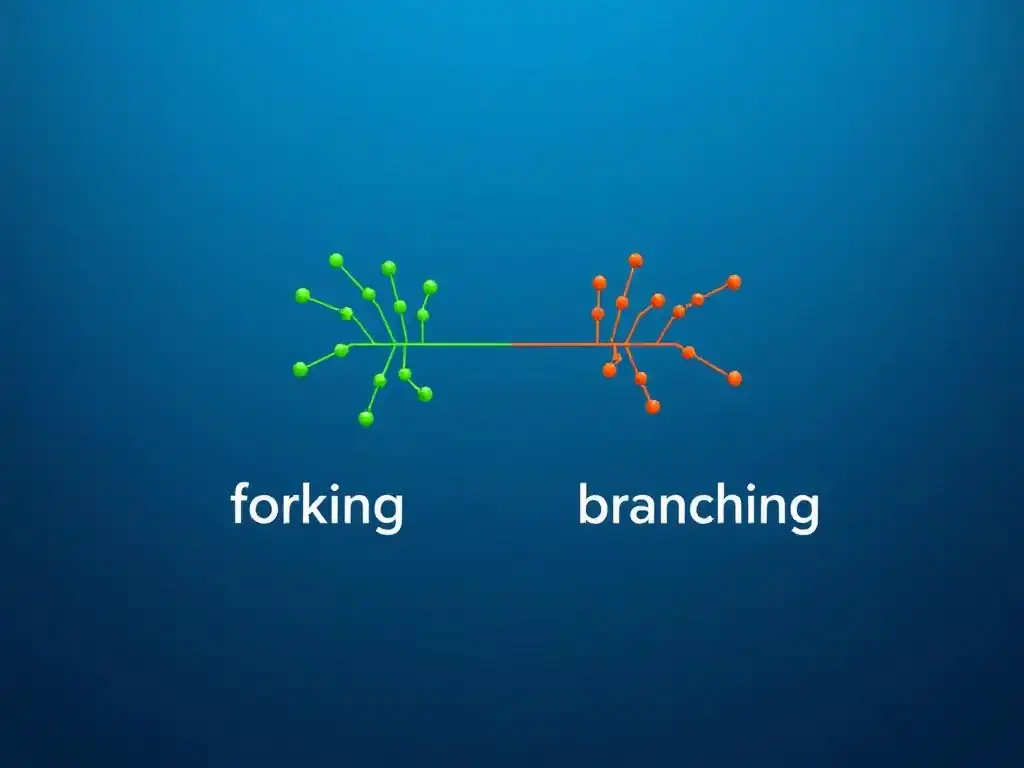
Welcome to the Git and Version Control Hub, your comprehensive resource for mastering Git and version control! Are you navigating the complexities of open-source contributions and team collaboration? In this article, we'll dive deep into the crucial decision of choosing between a forking vs. branching Git strategy. Understanding the nuances of each approach is vital for seamless collaboration and efficient project management. Ready to unravel the mysteries and optimize your workflow? Let's begin!
Forking vs. Branching in Open Source: Choosing the Right Git Strategy
- Introduction: Understanding Git Strategies for Open Source Contribution
- Git Branching: Collaboration Within a Repository
- Git Forking: Contributing to Open Source Without Direct Write Access
- Forking vs. Branching: A Detailed Comparison Table
- Practical Examples: Real-World Scenarios for Forking and Branching
- Choosing the Right Git Strategy: Key Considerations
- Conclusion: Mastering Git for Open Source Success
-
Frequently Asked Questions
- What is the key difference between forking and branching in Git, and when should I use each?
- When is it appropriate to use forking instead of branching, particularly in open-source projects?
- How does branching contribute to a more streamlined workflow in a team environment?
- Can you explain the process of submitting changes back to the original repository after forking?
- What are the main benefits of using a branching strategy like Gitflow in a real-world project?
- Final Reflection: Navigating the Collaborative Landscape
- Unearth Your Git Potential: Branch Out or Forge Ahead?
Introduction: Understanding Git Strategies for Open Source Contribution
- Briefly introduce Git as a version control system essential for open-source collaboration.
- Highlight the importance of choosing the right Git strategy: forking vs. branching.
- Mention the article's focus: clarifying the differences and helping developers make informed decisions.
Git has become the backbone of modern software development, especially within the vibrant world of open source. Its distributed nature and powerful version control capabilities enable countless developers worldwide to collaborate on projects, regardless of geographical boundaries. Understanding Git is crucial for anyone looking to contribute to open source, and at the heart of effective collaboration lies choosing the right Git strategy.
Two fundamental strategies often come into play when contributing to open source projects: forking and branching. While both are Git mechanisms for managing code changes, they serve distinct purposes and are employed in different contexts. This article aims to clarify the nuances between forking vs branching Git strategy, providing a comprehensive guide to help you choose the most appropriate approach for your open source contributions, ensuring a smooth and effective collaboration experience.
Git Branching: Collaboration Within a Repository
What is Git Branching? A Collaborative Workflow Explained
- Define Git branching as creating parallel lines of development within a single repository.
- Explain its use for feature development, bug fixes, and experimentation.
- Emphasize that branches are typically merged back into the main branch.
Git branching is a fundamental concept in version control that allows developers to diverge from the main line of development and work on features, bug fixes, or experiments in isolation. Think of it as creating a new pathway from the main road; this pathway is your branch. Within a Git repository, branches are lightweight and quick to create, making them an ideal tool for managing parallel development efforts without disrupting the stability of the main codebase, often referred to as main or master.
Branches are primarily used for developing new features, addressing bugs, or experimenting with new ideas. When working on a new feature, for example, a developer would create a dedicated branch to contain all the changes related to that feature. This isolates the new code from the main branch, preventing potential conflicts or instability in the primary codebase.
Once the feature is complete and thoroughly tested, the branch is typically merged back into the main branch, integrating the new functionality into the project. This merge operation brings the changes from the branch back onto the main development path, ensuring everyone benefits from the updates.
Advantages of Branching for Open Source Projects (When you have write access)
- Discuss the benefits of branching for collaborative development within a project you have write access to.
- Highlight improved code organization and reduced risk of disrupting the main codebase.
- Mention the ability to isolate and test changes before integration.
When you possess write access to an open source project's repository, branching becomes an incredibly powerful tool for collaborative development. It allows multiple developers to work on different aspects of the project concurrently and efficiently. By utilizing branches, each developer can work on their assigned tasks in isolation, significantly improving code organization. This isolation is crucial as it minimizes the risk of introducing bugs or breaking changes directly into the shared main branch, ensuring the overall stability and health of the project.
Furthermore, branching provides a dedicated space to thoroughly test and validate changes before they are integrated into the main codebase. Imagine a team of five developers working on different features for a new software release. Each developer can create their own feature branch, develop and test their code independently. Once a feature branch is ready, it can be reviewed and tested in isolation before being merged into the main branch. This process of isolation and testing dramatically reduces the chances of introducing regressions or conflicts and ensures that only well-vetted code makes its way into the primary development line.
Best Practices for Using Branches in Open Source Contributions (with write access)
- Outline naming conventions for branches (e.g., feature/new-feature, bugfix/issue-123).
- Explain the importance of keeping branches up-to-date with the main branch.
- Briefly touch on code review processes for branches before merging.
To maximize the effectiveness of branching in open source projects, especially when collaborating with write access, adhering to best practices is essential. One key aspect is adopting clear and consistent naming conventions for branches. Commonly used prefixes include feature/ for new features, bugfix/ or fix/ for bug resolutions, and hotfix/ for urgent fixes. For example, a branch addressing issue number 123 might be named bugfix/issue-123, or a branch adding user authentication could be named feature/user-authentication. These conventions make it easy for team members to understand the purpose of each branch at a glance.
Another crucial practice is regularly keeping branches up-to-date with the main branch. As the main branch evolves with contributions from other developers, your feature or bugfix branch can fall behind. To avoid potential merge conflicts and ensure your changes are based on the latest codebase, it is vital to periodically merge or rebase your branch with the main branch. This synchronization process keeps your branch aligned with the project's current state.
Finally, implementing code review processes for branches before merging is highly recommended. Before integrating a branch into the main branch, having another developer review the code can catch potential errors, improve code quality, and ensure adherence to project standards. Tools like pull requests on platforms like GitHub and GitLab facilitate this review process seamlessly.
Git Forking: Contributing to Open Source Without Direct Write Access
What is Git Forking? Creating a Personal Copy
- Define Git forking as creating a complete copy of a repository under your own account.
- Explain that it allows you to make changes without directly affecting the original project.
- Emphasize that forking is typically used when you don't have write access to the original repository.
Git forking is a powerful mechanism for contributing to open source projects, particularly when you lack direct write access to the project's main repository. Forking essentially creates a personal, independent copy of the entire repository under your own account on platforms like GitHub or GitLab. This copy, often referred to as a "fork," mirrors the original repository's codebase, history, and branches, providing you with a safe space to experiment and make changes without directly affecting the original project.
The key advantage of forking is that it allows you to contribute to projects where you are not a designated maintainer or contributor with write permissions. Since you are working within your own forked repository, any changes you make are confined to your personal copy. This isolation is crucial because it prevents accidental or unintended modifications to the original project's codebase. Forking acts as a gateway for external contributors to propose changes to open source projects, offering a structured and controlled way to submit contributions for review and potential integration by the project maintainers.
Advantages of Forking for Open Source Contributions (When you don't have write access)
- Discuss the benefits of forking for contributing to projects where you lack direct write access.
- Highlight the ability to experiment freely and propose changes through pull requests.
- Mention its role in contributing to projects with strict contribution guidelines.
Forking shines when you want to contribute to an open source project but do not possess direct write access. It empowers you to experiment freely and make significant changes without the fear of disrupting the original project. Within your forked repository, you have complete control. You can try out new ideas, refactor code, or implement entirely new features without needing immediate approval or write permissions from the project maintainers. This sandbox environment is invaluable for exploring different approaches and developing your contributions.
Furthermore, forking is the foundation for the pull request contribution model, which is prevalent in open source. Once you have made your desired changes in your forked repository, you can propose these changes to the original project maintainers through a pull request. A pull request is essentially a formal request to merge your changes from your fork into the original repository.
This mechanism allows maintainers to review your contributions, discuss them, and decide whether to incorporate them into the project. Forking also plays a crucial role in contributing to projects with strict contribution guidelines. Many large open source projects have established workflows that mandate forking as the primary method for external contributions, ensuring a consistent and manageable contribution process.
The Forking Workflow: From Local Changes to Pull Requests
- Explain the typical forking workflow:
- Fork the repository.
- Clone the forked repository to your local machine.
- Create a branch in your local repository.
- Make your changes.
- Commit and push your changes to your forked repository.
- Create a pull request to the original repository.
The forking workflow is a structured and widely adopted process for contributing to open source projects when you don't have write access. It begins with forking the original repository. This is typically done through a button on the project's page on platforms like GitHub or GitLab, creating a copy of the repository in your personal account. Next, you clone your forked repository to your local machine using Git. This downloads the forked repository to your computer, allowing you to work on it locally.
Once cloned, it is best practice to create a new branch within your local repository for your contribution. This keeps your changes organized and isolated. After creating a branch, you make your desired code changes, whether it's fixing a bug, adding a new feature, or improving documentation. After making your changes, you commit them locally, recording each step of your work.
Then, you push these commits to your forked repository on the remote server. Finally, you create a pull request from your forked repository to the original repository. This pull request notifies the maintainers of the original project about your proposed changes, initiating the review and potential merging process.
Forking vs. Branching: A Detailed Comparison Table
Key Differences: Access Rights, Workflow, and Collaboration Style
- Present a table comparing forking and branching based on:
- Access rights (write access vs. no write access).
- Workflow (direct contribution vs. pull request).
- Collaboration style (direct collaboration vs. proposal-based).
- Repository separation (same repository vs. separate repository).
| Feature | Forking | Branching |
|---|---|---|
| Access Rights | Typically used without write access | Requires write access to the repository |
| Workflow | Contribution via Pull Request | Direct contribution and merging |
| Collaboration Style | Proposal-based contribution | Direct and collaborative development |
| Repository Separation | Changes in a separate, forked repository | Changes within the same repository |
Use Cases: When to Choose Forking and When to Choose Branching
- Outline specific scenarios where forking is preferable:
- Contributing to a project you don't have write access to.
- Proposing significant changes or new features.
- Experimenting with major refactoring.
- Outline scenarios where branching is preferable:
- Collaborating directly with other developers on a project you have write access to.
- Working on bug fixes or small feature enhancements.
- Participating in internal project development.
Forking is the preferred Git strategy when you are contributing to an open source project to which you do not have write access. This is the most common scenario for external contributors. Furthermore, forking is well-suited for proposing significant changes or entirely new features.
When your contribution involves substantial modifications or a new direction for the project, forking allows you to develop and test these changes in isolation before presenting them for consideration. Experimenting with major refactoring or architectural changes is another excellent use case for forking. It provides a safe environment to explore and validate large-scale code modifications without risking the stability of the main project.
Branching, on the other hand, is the ideal choice when you are actively collaborating with other developers on a project and have write access to the repository. This is typical within a team working on an open source project where members are trusted contributors. For tasks like working on bug fixes or small feature enhancements, branching is often the more efficient and direct approach.
These smaller, focused changes can be developed and integrated relatively quickly using branches. Branching is also the standard workflow for internal project development within an organization or core team where developers have established trust and shared goals.
Practical Examples: Real-World Scenarios for Forking and Branching
Example 1: Contributing a Bug Fix (Branching Scenario)
- Describe a scenario where a developer fixes a bug in a project they have write access to using a branch.
- Illustrate the steps involved: creating a branch, fixing the bug, submitting a pull request (if necessary within the team).
Imagine you are a core maintainer of an open-source library and discover a minor bug in the code that affects how the library handles edge cases in user input. Since you have write access to the repository, the most efficient approach is to use branching. First, you would create a new branch directly in the main repository, perhaps named bugfix/input-validation. Next, within this branch, you would modify the code to address the bug in input validation. After fixing the bug and writing a unit test to ensure the fix works as expected and to prevent regressions, you would commit your changes to the bugfix/input-validation branch.
In a team setting, even with write access, it's often good practice to still use a pull request for code review. You might then create a pull request from your bugfix/input-validation branch to the main branch. Another core team member could then review your fix, ensuring it's correct and doesn't introduce any new issues. Once approved, the branch is merged into the main branch, and the bug fix is integrated into the project. This branching workflow allows for a quick and controlled way to address bugs within a collaborative environment where developers have write access.
Example 2: Contributing a New Feature (Forking Scenario)
- Describe a scenario where a developer proposes a new feature to a project they don't have write access to using a fork.
- Illustrate the steps involved: forking the repository, developing the feature in a branch, and submitting a pull request.
Consider you are a developer who wants to contribute a new feature, say, "dark mode support," to a popular open-source text editor project. You are not a maintainer and do not have write access to the project's repository. In this scenario, forking is the appropriate Git strategy. First, you would fork the text editor's repository to your own GitHub account. This creates a copy of the repository under your control. Next, you would clone your forked repository to your local machine.
After cloning, you would create a new branch within your local repository, perhaps named feature/dark-mode. Within this branch, you would implement the dark mode feature, making changes to the code, styles, and potentially UI elements. Once you have completed the implementation and thoroughly tested the dark mode feature in your forked repository, you would commit and push your changes to your feature/dark-mode branch in your fork. Finally, you would create a pull request from your feature/dark-mode branch in your fork to the main branch of the original text editor project. The project maintainers would then review your pull request, evaluate the dark mode feature, and decide whether to merge it into the main project, making your contribution available to all users.
Choosing the Right Git Strategy: Key Considerations
Assessing Your Access Rights and Contribution Goals
- Emphasize the importance of understanding your access rights to the repository.
- Consider your contribution goals: are you making small changes or proposing major new features?
- Evaluate the project's contribution guidelines and community norms.
When deciding between forking vs branching Git strategy, the first and foremost consideration is your access rights to the open source repository. Do you have write access, or are you an external contributor without direct write permissions? If you have write access, branching is likely the more suitable approach for collaborative development within the project. If you lack write access, forking becomes the necessary gateway to contribute through pull requests.
Beyond access rights, your contribution goals play a significant role in determining the optimal strategy. Are you planning to make a small bug fix, or are you proposing a substantial new feature or a major refactoring? For minor changes and bug fixes, branching within a repository you have write access to, or forking followed by a pull request if you don't, are both viable. However, for significant changes or new features, forking and submitting a well-developed pull request is generally preferred, even if you have write access, as it allows for more structured review and discussion.
Finally, always take the time to carefully evaluate the project's contribution guidelines and community norms. Many open source projects explicitly state their preferred contribution workflow, including whether forking or branching is typically used for different types of contributions. Adhering to these guidelines ensures a smoother and more welcome contribution experience.
Impact on Team Collaboration and Workflow
- Discuss how forking and branching can affect team collaboration and workflow.
- Consider the overhead of managing pull requests vs. direct contributions.
- Emphasize the importance of clear communication and coordination.
Forking and branching, while both Git strategies, have different impacts on team collaboration and workflow, particularly in open source settings. Branching, when used by a team with write access, fosters direct and tightly coupled collaboration within a single repository. Changes are often more iterative and integrated frequently.
However, this approach requires a high degree of trust and coordination among team members to avoid conflicts and maintain code quality. Forking and pull requests, on the other hand, introduce a more proposal-based and review-centric workflow. While forking can add some overhead in terms of managing pull requests and coordinating contributions from external developers, it provides a more structured and controlled contribution process, especially for larger open source projects with diverse contributor bases.
The overhead of managing pull requests needs to be considered. For maintainers, reviewing and merging numerous pull requests can be time-consuming. However, this overhead is often offset by the improved code quality and reduced risk of regressions that come with a thorough review process.
Regardless of whether you choose forking or branching, clear communication and coordination are paramount for successful open source collaboration. Using platforms like GitHub or GitLab for issue tracking, discussions, and pull request management is essential. Establishing clear communication channels and workflows helps streamline the contribution process and ensures that everyone is aligned on project goals and contribution strategies.
Conclusion: Mastering Git for Open Source Success
- Reiterate the importance of understanding the differences between forking and branching.
- Encourage developers to choose the Git strategy that best aligns with their access rights, contribution goals, and the project's guidelines.
- Promote continued learning and exploration of Git and version control best practices at GitAndVersionControlHub.com.
Understanding the nuanced differences between forking vs branching Git strategy is crucial for anyone seeking to contribute effectively to open source projects. Branching offers a powerful mechanism for direct collaboration within a repository when you have write access, enabling efficient development and iteration. Forking, conversely, provides the necessary pathway for contributing to projects without write access, facilitating a proposal-based contribution model through pull requests.
Ultimately, the choice between forking and branching depends on a careful assessment of your access rights to the repository, your specific contribution goals – whether you're fixing a typo or proposing a major architectural change – and the project's established contribution guidelines and community norms. By thoughtfully considering these factors and mastering both forking and branching workflows, you can navigate the open source landscape with confidence and contribute meaningfully to the projects you care about.
For continued learning and deeper exploration of Git and version control best practices, visit GitAndVersionControlHub.com, your dedicated resource for mastering the tools and techniques of modern software development collaboration.
Frequently Asked Questions
What is the key difference between forking and branching in Git, and when should I use each?
The core difference lies in where the changes occur. Forking creates a copy of a repository on your own account, suitable for contributing to open-source projects. Branching creates a separate line of development within the same repository, ideal for feature development.
When is it appropriate to use forking instead of branching, particularly in open-source projects?
Forking is typically used when you don't have direct write access to the original repository. It allows you to freely experiment and propose changes via pull requests, offering a contribution mechanism to the project.
How does branching contribute to a more streamlined workflow in a team environment?
Branching allows multiple developers to work on different features or bug fixes simultaneously without interfering with the main codebase. This leads to a more organized and efficient development process, ensuring stability.
Can you explain the process of submitting changes back to the original repository after forking?
After making changes in your forked repository, you submit them to the original repository by creating a pull request. The maintainers then review your changes and, if approved, merge them into the main branch.
What are the main benefits of using a branching strategy like Gitflow in a real-world project?
Gitflow provides a structured approach to managing releases, hotfixes, and feature development. It promotes clear separation of concerns and easier collaboration, ensuring a stable and predictable release cycle for your project.
The distinctions between forking and branching, as explored throughout this article, are not merely technical nuances; they represent fundamentally different approaches to collaboration. Understanding these differences is crucial in today's open-source ecosystem, where effective teamwork and contribution are paramount to innovation. Choosing the right Git strategy directly impacts project accessibility, maintainability, and ultimately, its success.
The power of open source lies in its ability to harness collective intelligence, and the choice between forking and branching profoundly shapes how that intelligence is channeled. Personally, I've witnessed firsthand how a well-defined branching strategy fosters a sense of ownership and shared responsibility within a team, while a strategic fork can ignite entirely new avenues of development. The best way to predict the future is to create it.
- Peter Drucker. This quote encapsulates the spirit of open source, and the decisions we make about forking and branching are instrumental in shaping that future.
As you navigate your own open-source endeavors, remember that the choice between forking and branching is not a one-size-fits-all solution. Consider your project's goals, the size of your team, and the level of collaboration you wish to foster. Let this understanding guide you in selecting the Git strategy that best empowers your team to contribute, innovate, and ultimately, build something truly remarkable.
Unearth Your Git Potential: Branch Out or Forge Ahead?
Thanks for exploring the nuances of forking and branching! We hope this article helped you understand the best Git strategy for your open-source projects. Now, let's put that knowledge into action and contribute to the open-source world.
Here are a few ways to get started:
- Begin contributing to a project by either forking or branching a repository on GitHub, then opening a pull request to give back to the project.
- Explore interesting projects on GitAndVersionControlHub.com and use the newfound understanding to strategically analyze their workflow and propose optimizations to the process.
- Share this article with your fellow developers and spark a discussion about their preferred Git workflows and how you can collaborate more effectively.
What unique strategies have you used to manage changes in your open-source projects, and how have they impacted your workflow?