
Monorepo for Beginners: A Simple Explanation of Centralized Git

Welcome to Git and Version Control Hub!
Are you ready to unlock the power of a monorepo? This tutorial provides a straightforward, centralized Git approach, perfect for understanding how to manage large projects efficiently. Dive in to discover how a monorepo can streamline your workflow and improve collaboration. Let's explore the world of centralized Git with our monorepo centralized Git tutorial and see how it can revolutionize your development process!
Introduction to Monorepos and Centralized Version Control with Git
What is a Monorepo? Understanding the Basics
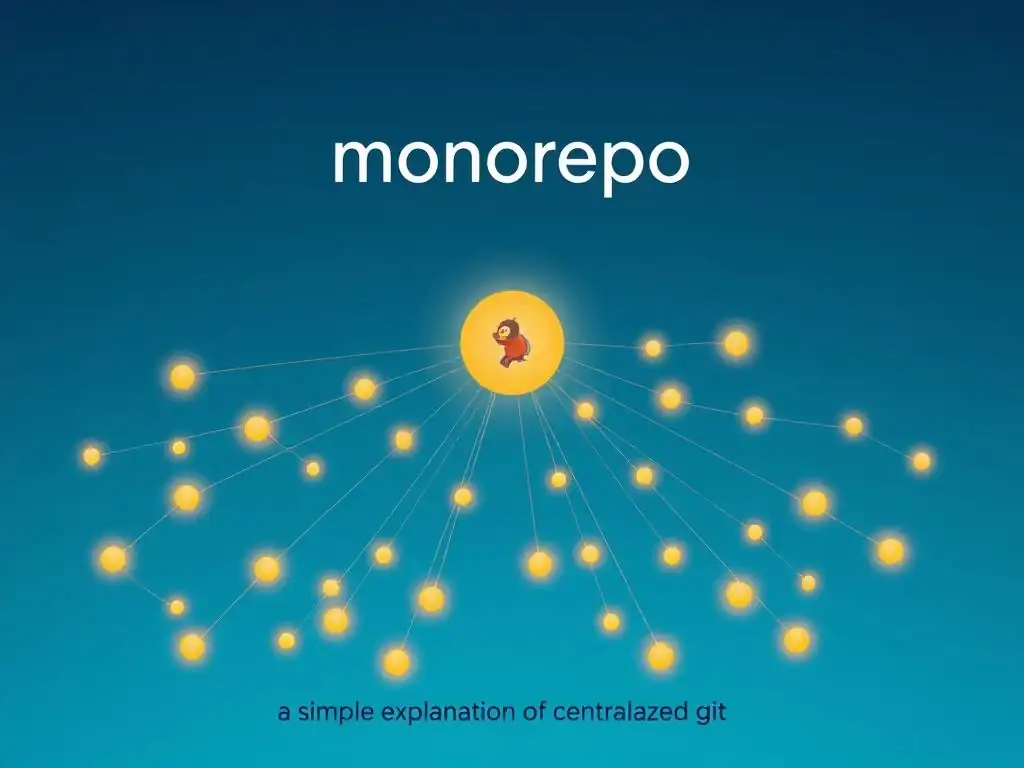
A monorepo, derived from "mono" (single) and "repo" (repository), is a version control strategy where all the code for many projects or components is stored in a single repository. Imagine a large company with multiple products – instead of having separate Git repositories for each product, a monorepo houses the code for all of them, often along with shared libraries, infrastructure configurations, and even documentation. This is in contrast to the traditional approach of multirepos, where each project or service resides in its own, distinct repository.
The core idea behind a monorepo is centralization. It's about bringing everything together under one roof. Think of it as moving from individual houses (multirepos) to a large apartment building (monorepo). While each apartment is self-contained (like a project), they all share the same building infrastructure (the single repository). This centralized approach in version control can drastically change how development teams collaborate and manage their codebase, especially when leveraging a powerful version control system like Git.
Centralized Version Control in a Monorepo Architecture
Git, while distributed in nature, often operates in a centralized workflow, particularly when used within a monorepo context. In a monorepo, Git acts as the single source of truth for all projects. Developers still work on branches and perform merges, but all of this activity happens within the context of one massive repository. This contrasts with a fully distributed Git workflow where repositories might be more independent and synchronization can be more complex across multiple repositories.
The strength of Git in a monorepo lies in its ability to handle large repositories and complex histories efficiently. Features like branching and merging, which are fundamental to Git, become even more powerful in a monorepo setting. For example, creating a feature branch affects the entire codebase within the monorepo, allowing for atomic changes that span across multiple projects. Furthermore, Git's commit history provides a unified timeline of all changes, making it easier to track modifications and understand the evolution of the entire system.
Why Choose a Monorepo Approach with Git?
Adopting a monorepo strategy with Git offers several compelling advantages, particularly for organizations dealing with interconnected projects and large development teams. One primary driver is code sharing and reusability. With all code in one place, it becomes significantly easier to discover and reuse components across different projects. Imagine a scenario where multiple services need to use the same authentication library. In a monorepo, this library is readily accessible and consistently updated for all projects that depend on it, reducing duplication and ensuring uniformity.
Another key benefit is simplified dependency management. In a multirepo setup, managing dependencies between projects can become a complex web of versioning and compatibility issues. A monorepo streamlines this process by allowing dependencies to be managed within the same repository. When a shared library is updated, all projects within the monorepo can be updated atomically to use the new version in a single commit, eliminating dependency hell and ensuring consistent versions across the entire codebase. This centralized approach fostered by a monorepo architecture, especially when paired with Git's robust version control, leads to more efficient and cohesive software development.
Frequently Asked Questions
What is a monorepo and how does it relate to centralized Git?
A monorepo is a single repository containing multiple projects or components. In a centralized Git tutorial context, it showcases how to manage several projects under one unified Git environment, rather than distributed across multiple repositories.
How does a monorepo differ from a traditional multi-repo setup?
Unlike multi-repo, where each project has its own repository, a monorepo consolidates everything. This centralizes version control and dependency management, but can require careful organization to avoid conflicts.
What are the benefits of using a monorepo with centralized Git?
A monorepo simplifies code sharing and dependency management across projects. It also enables atomic changes spanning multiple components, promoting a more cohesive development workflow.
Are there any drawbacks to using a monorepo?
Monorepos can become large and complex, potentially slowing down Git operations like cloning or checking out. Careful planning and tooling are crucial for managing this complexity.
How does this monorepo centralized Git tutorial help beginners?
The tutorial simplifies the concept of monorepo management within a centralized Git workflow. It provides clear, step-by-step instructions to help newcomers understand and implement this structure.
Final Reflection: Embracing Centralized Collaboration
The journey into the world of monorepos, as we've explored, is ultimately a journey towards enhanced collaboration and streamlined development. While the technical aspects of centralized Git management can seem daunting initially, the benefits – improved code sharing, simplified dependency management, and a unified view of the project – are increasingly vital in today's complex software landscape.
The adoption of monorepos isn't just a technical trend; it represents a fundamental shift in how we approach software development, fostering a culture of shared ownership and collective responsibility. This approach, while demanding initial adjustments, ultimately empowers teams to build more robust and interconnected systems. Coming together is a beginning, staying together is progress, and working together is success.
- Henry Ford. This quote encapsulates the essence of the monorepo philosophy, highlighting the power of unified effort.
Now, as you stand at the threshold of potentially adopting a monorepo strategy, I encourage you to reflect on the principles we've discussed. Consider how a centralized Git approach could transform your team's workflow, break down silos, and ultimately, lead to more innovative and impactful software. The future of collaborative development is here; are you ready to embrace it?
Okay, I will craft a Call to Action (CTA) for the end of the "Monorepo for Beginners: A Simple Explanation of Centralized Git" article, keeping in mind it's for GitAndVersionControlHub.com.
Unleash the Power of Your Monorepo Today!
Thanks for exploring the world of monorepos with us! We hope you now have a clear understanding of how they can streamline your Git workflow. Now, let's put that knowledge into action!
Here are a few steps you can take to further your monorepo journey:
- Start small: Experiment with converting a smaller project into a monorepo structure to experience the benefits firsthand.: This will allow you to learn the ropes without disrupting your entire development process.
- Share your insights! Have you used monorepos before? Tell us about your experiences – the good, the bad, and the quirky – in the comments below. Sharing your wisdom helps the whole community!
- Dive Deeper: Research specific monorepo tools (like Bazel or Lerna) to further optimize your new structure. Consider building a CI/CD pipeline on GitAndVersionControlHub with the monorepo tool of your choice.
What's one small change you can make today to get one step closer to monorepo mastery? Share your plans below!