
Securing Your Codebase with Effective Git Branching Strategies

Welcome to Git and Version Control Hub!
Unlock the secrets to streamlined development and collaborative coding. In today's fast-paced environment, effective Git branching strategies are no longer optional – they're essential. Dive in to discover how to secure your codebase, improve workflow, and minimize those dreaded merge conflicts. Are you ready to level up your Git game and build more resilient software? Let's explore the power of branching!
Understanding Git Branching Fundamentals for Secure Development
What is Git Branching and Why is it Crucial for Code Security?
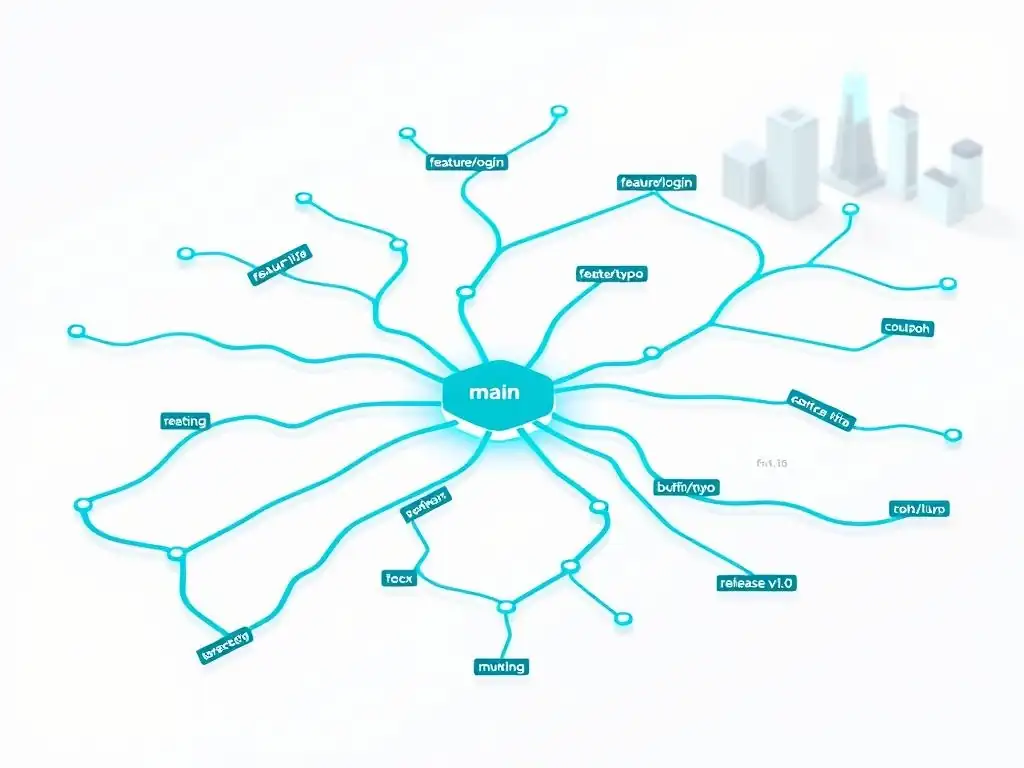
Git branching is a fundamental feature of Git that allows developers to diverge from the main line of development and work in isolation. Think of it as creating parallel universes of your codebase, each representing a distinct path of changes. These branches are lightweight and quick to create, enabling teams to work on new features, bug fixes, or experiments without directly impacting the stable codebase. This isolation is paramount for code security because it prevents unstable or potentially vulnerable code from being introduced directly into the production-ready version.
Imagine a scenario where a developer introduces a security flaw while working on a new feature. Without branching, this flaw could immediately be pushed to the main codebase, potentially exposing the application to vulnerabilities. Branching acts as a safety net, allowing for thorough testing and security checks in isolation before changes are merged into the main branch.
The crucial role of Git branching in code security stems from its ability to facilitate controlled integration. By segregating development efforts into branches, teams gain the opportunity to implement rigorous security measures at various stages of the development lifecycle. For instance, feature branches allow for focused code reviews where security vulnerabilities can be identified and addressed before integration.
Release branches provide a dedicated space to conduct final security audits and penetration testing before deploying a new version. Hotfix branches enable rapid patching of critical security flaws in production without disrupting ongoing development efforts. In essence, Git branching is not just about code management; it’s a cornerstone of a secure development workflow, enabling teams to build and maintain software with greater confidence and resilience against security threats.
Benefits of Implementing a Robust Branching Model
Implementing a robust branching model offers a multitude of benefits that directly contribute to enhanced code security. One of the primary advantages is the isolation of risk. By developing new features or fixing bugs in separate branches, you minimize the risk of introducing vulnerabilities into the stable, production-ready codebase.
This segregation ensures that only thoroughly reviewed and tested code makes its way into the main branch, significantly reducing the attack surface of your application. Consider the impact of a critical security vulnerability found in a feature under development. With feature branching, the vulnerability is confined to that branch, allowing the team to address it without affecting the live application or disrupting other ongoing development streams.
Furthermore, a well-defined branching model facilitates structured code reviews, a critical security practice. When changes are submitted as branches (e.g., through pull requests or merge requests), it becomes easier to conduct focused and effective code reviews, specifically looking for security vulnerabilities. Tools integrated with Git platforms like GitHub and GitLab provide sophisticated code review workflows that can highlight potential security issues, enforce coding standards, and ensure that at least two pairs of eyes have reviewed the code before it's merged.
This proactive approach to security, enabled by branching, helps catch vulnerabilities early in the development process, reducing the cost and complexity of remediation later on. Moreover, branching models that incorporate release branches and hotfix branches streamline the process of deploying secure updates and patches, ensuring that security fixes are rolled out quickly and efficiently to protect users and systems.
Frequently Asked Questions
What is Git branching and why is it important?
Git branching allows you to create separate lines of development from your main codebase. This is crucial for isolating new features, bug fixes, and experiments without disrupting the stable version.
What are some common Git branching strategies?
Common strategies include Gitflow, GitHub Flow, and GitLab Flow. They each define specific branch naming conventions and workflows for managing features, releases, and hotfixes, ensuring a structured development process.
How does branching help with collaboration in a team environment?
Branching enables multiple developers to work on different features simultaneously without conflicts. Each developer can work on their own branch and then merge their changes back into the main branch when ready.
What is the difference between merging and rebasing branches?
Merging creates a new commit that integrates the changes from one branch into another, preserving the original history. Rebasing, on the other hand, rewrites the commit history to make it appear as if the changes were made directly on the target branch.
How do CI/CD pipelines integrate with Git branching strategies?
CI/CD pipelines can be configured to automatically build, test, and deploy code from specific branches. This allows for automated testing and deployment of new features or bug fixes as they are merged into the appropriate branches, enhancing workflow efficiency.
Final Reflection: Embracing the Power of Branching
The principles outlined in this article, detailing effective Git branching strategies, are not merely theoretical exercises. They represent a critical foundation for modern software development, directly impacting project stability, team collaboration, and the overall quality of delivered software. In today's fast-paced development landscape, where agility and rapid iteration are paramount, a well-defined branching strategy is no longer a luxury, but an absolute necessity for success.
This topic has profoundly shaped the way software is built, fostering a culture of experimentation and collaboration while mitigating the risks associated with direct commits to the main codebase. My own experiences have shown me how a clear branching model can transform a chaotic project into a streamlined, manageable process, empowering developers to work with confidence and minimizing the dreaded merge conflicts. The best code is both well-structured and easy to understand. Branching strategies, when implemented correctly, contribute significantly to both.
- Unknown.
As you navigate your own development journey, I encourage you to reflect on the principles discussed here and consider how you can implement or refine your own branching strategies. Embrace the power of branching to foster a more collaborative, resilient, and ultimately, more successful development process. The future of software development hinges on our ability to manage complexity, and effective Git branching strategies are a vital tool in achieving that goal.
Unleash Your Git Potential!
Thanks for diving into the world of Git branching! We hope this article has given you a clearer understanding of how strategic branching can dramatically improve your development workflow and safeguard your codebase. Now it's time to put that knowledge into action.
Here are some immediate steps you can take to elevate your Git game:
- Implement a branching strategy in your next project. Don't just stick with
main! Try Gitflow or GitHub Flow. - Share your newfound knowledge! Discuss branching strategies with your team and collaborate on a plan that fits your specific needs.
- Explore advanced Git features like
git rebase -iorgit cherry-pickon a sandbox branch to deepen your understanding of conflict resolution.
What's one Git branching strategy you're most excited to experiment with in your next project? Let us know in the comments below!