
Git Branching Strategy for Microservices: Independent Deployments

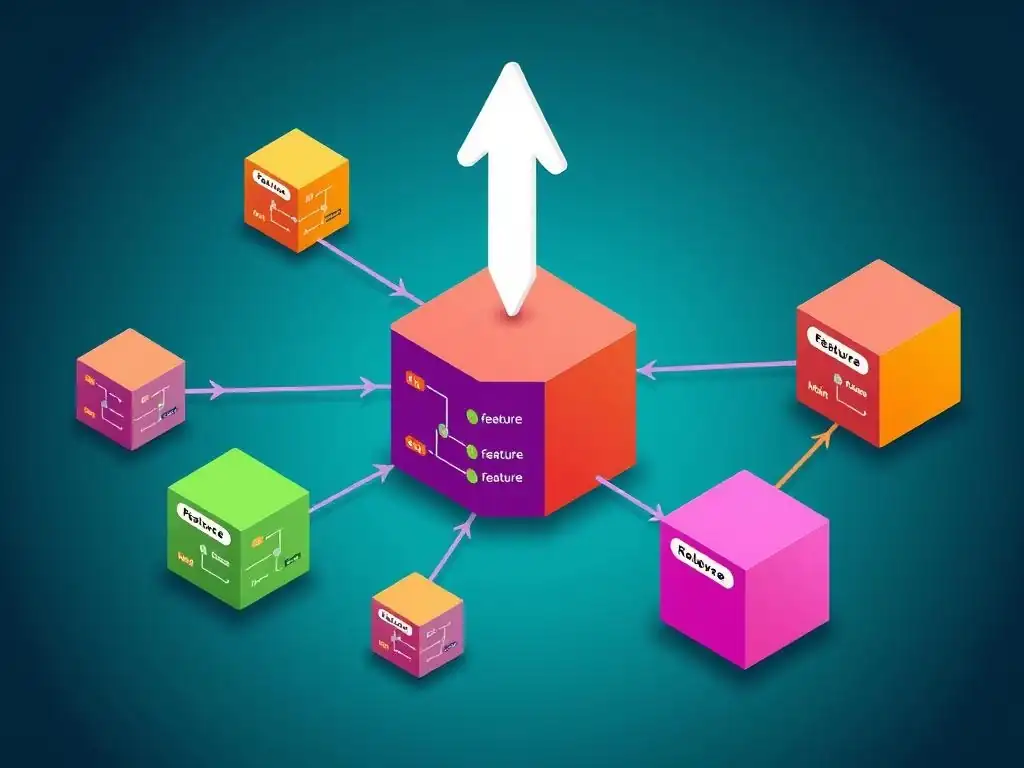
Welcome to Git and Version Control Hub, your central resource for mastering the art of version control! Dive into the world of collaborative development and streamlined workflows. Ever wondered how to effectively manage code changes in a microservices architecture? Our latest article explores a powerful Git branching strategy for microservices, specifically designed to facilitate independent deployments. Discover the secrets to keeping your microservices agile and your deployments efficient – let's unlock the power of organized version control together!
Git Branching Strategy for Microservices: Independent Deployments
- Understanding Git Branching for Microservices Architecture
-
Frequently Asked Questions
- What is a Git branching strategy and why is it important for microservices?
- How does a Git branching strategy support independent deployments of microservices?
- What are some popular Git branching strategies suitable for microservices architectures?
- How can I handle merge conflicts effectively when using Git with microservices?
- What role does Continuous Integration/Continuous Deployment (CI/CD) play in a Git branching strategy for microservices?
- Final Reflection: Embracing Branching Independence
- Unlock the Power of Independent Deployments!
Understanding Git Branching for Microservices Architecture
Microservices and Branching Importance
Microservices architecture, by its very nature, promotes independent deployability and scalability of individual services. This architectural style breaks down a monolithic application into smaller, self-contained services that can be developed, deployed, and scaled independently. Git branching plays a pivotal role in enabling this independence. Effective branching strategies allow development teams to work on different microservices concurrently without stepping on each other's toes. Furthermore, branching facilitates the management of different versions of each microservice, ensuring that updates and bug fixes can be rolled out in a controlled and isolated manner, minimizing the risk of impacting other parts of the system.
In a microservices environment, each service often has its own repository, or at least its own designated space within a monorepo. This separation necessitates a branching strategy that supports parallel development streams and independent release cycles. Imagine a scenario where an e-commerce platform has separate microservices for user authentication, product catalog, and payment processing.
Each of these services might require different development timelines and release cadences. A well-defined Git branching strategy allows the teams responsible for each microservice to manage their code changes, experiment with new features, and deploy updates without being blocked or slowed down by dependencies on other teams or services. Branching becomes the backbone for managing these independent workflows.
Challenges of Traditional Branching Strategies
While traditional branching strategies like Gitflow have proven effective for monolithic applications, they often present challenges in the context of microservices. Gitflow, with its develop, release, and hotfix branches, introduces a level of complexity that can become cumbersome when managing numerous independent microservices. The overhead of constantly merging and managing multiple long-lived branches across many repositories can slow down development cycles and increase the risk of merge conflicts, especially when teams are working on related services concurrently.
For example, in a Gitflow workflow, feature branches are merged into the develop branch, which then accumulates changes for the next release. In a microservices architecture, where services are ideally deployed independently and frequently, waiting for a collective release cycle to deploy a single microservice update is inefficient and contradicts the core principles of microservices. The long-lived develop branch in Gitflow can also become a source of integration issues in a microservices environment. As teams work on different services and merge their changes into a shared develop branch (if a monorepo approach is used, or conceptually across repositories), the risk of integration conflicts and unexpected dependencies increases, hindering the desired independent deployability of each microservice. This complexity can lead to slower release cycles and increased operational overhead, diminishing the benefits of adopting a microservices architecture in the first place.
Key Considerations for Microservices Git Branching
When designing a Git branching strategy for microservices, several key considerations become paramount to ensure efficient development and deployment workflows. The primary focus should be on enabling independent deployments. This implies that each microservice should ideally be deployable without requiring a coordinated release with other services. The branching strategy should support this by allowing teams to merge and deploy changes to individual services rapidly and autonomously.
Another crucial aspect is team autonomy. Microservices are often organized around small, independent teams responsible for specific services. The branching strategy should empower these teams to manage their own development and release cycles without being overly constrained by a centralized or rigid branching model.
This means choosing a strategy that is simple and easy to understand, minimizing the need for complex coordination or approvals across teams. Furthermore, the frequency of releases plays a significant role. Microservices often benefit from frequent, smaller releases to deliver value quickly and iterate rapidly.
The chosen branching strategy must support this cadence, avoiding strategies that introduce significant overhead or delays in the release process. Finally, the strategy should be adaptable to the specific needs of the organization and the nature of the microservices being developed. There is no one-size-fits-all approach, and the best strategy will often be a pragmatic adaptation of existing models tailored to the unique context of the project.
Frequently Asked Questions
What is a Git branching strategy and why is it important for microservices?
A Git branching strategy defines how developers manage code changes within a Git repository. It's crucial for microservices because it facilitates independent deployments and minimizes conflicts between teams working on different services.
How does a Git branching strategy support independent deployments of microservices?
Effective branching allows teams to deploy individual microservices without impacting others. This is achieved by isolating changes in separate branches and merging them strategically to avoid introducing breaking changes into other services.
What are some popular Git branching strategies suitable for microservices architectures?
Some popular strategies include Gitflow, GitHub Flow, and Trunk-Based Development. The best choice depends on the team size, deployment frequency, and complexity of the microservices ecosystem.
How can I handle merge conflicts effectively when using Git with microservices?
Merge conflicts are inevitable, especially with concurrent development. Strategies include frequent merging, small pull requests, and clear communication between teams to resolve conflicts quickly and avoid integration issues.
What role does Continuous Integration/Continuous Deployment (CI/CD) play in a Git branching strategy for microservices?
CI/CD automates the testing and deployment processes based on Git branches. This allows teams to validate changes automatically and deploy microservices rapidly and reliably after successful integration and testing.
Final Reflection: Embracing Branching Independence
The intricacies of Git branching strategies, particularly within the context of microservices, might seem purely technical, but they are fundamentally about enabling autonomy and accelerating innovation. In today's rapidly evolving software landscape, the ability to deploy microservices independently is no longer a luxury, but a necessity for businesses striving to remain competitive. A well-defined Git branching strategy is the bedrock upon which this agility is built, allowing teams to iterate quickly, experiment fearlessly, and deliver value to users with unprecedented speed.
The impact of a robust branching strategy extends far beyond the code repository. It shapes team dynamics, fosters a culture of ownership, and ultimately influences the quality and reliability of the software we create. My own experience has shown me that a clear and consistent branching model can dramatically reduce merge conflicts, streamline the release process, and empower developers to focus on building great software, rather than wrestling with version control. The goal is to automate yourself out of a job, so you can move onto the next problem.
- Ward Cunningham. This quote perfectly encapsulates the spirit of optimizing our workflows, and a solid Git branching strategy is a crucial step in that direction.
Now, consider how you can apply these principles within your own development environment. Are your branching practices truly supporting independent deployments and fostering team autonomy? Take a moment to reflect on your current workflow, identify areas for improvement, and embrace the power of a well-defined Git branching strategy to unlock the full potential of your microservices architecture. The future of software development lies in embracing agility and independence, and the journey starts with a single, well-managed branch.
Unlock the Power of Independent Deployments!
Thanks for diving into the world of Git branching strategies for microservices! We hope you've gained valuable insights into how to streamline your independent deployments and boost your team's agility. Now, let's put that knowledge into action.
Here's how you can take the next step:
- Implement a feature branching strategy tailored to your specific microservice architecture. Focus on keeping branches short-lived and merging frequently to avoid integration headaches.
- Explore using Git hooks to automate common tasks, such as running tests before pushing or enforcing code style guidelines.
- Share this article with your team and spark a discussion about your current branching strategy – could it be improved?
Ready to revolutionize your microservice deployments with a smarter Git strategy?