
Migrating to Multirepo: Breaking Down a Monolith into Separate Repositories

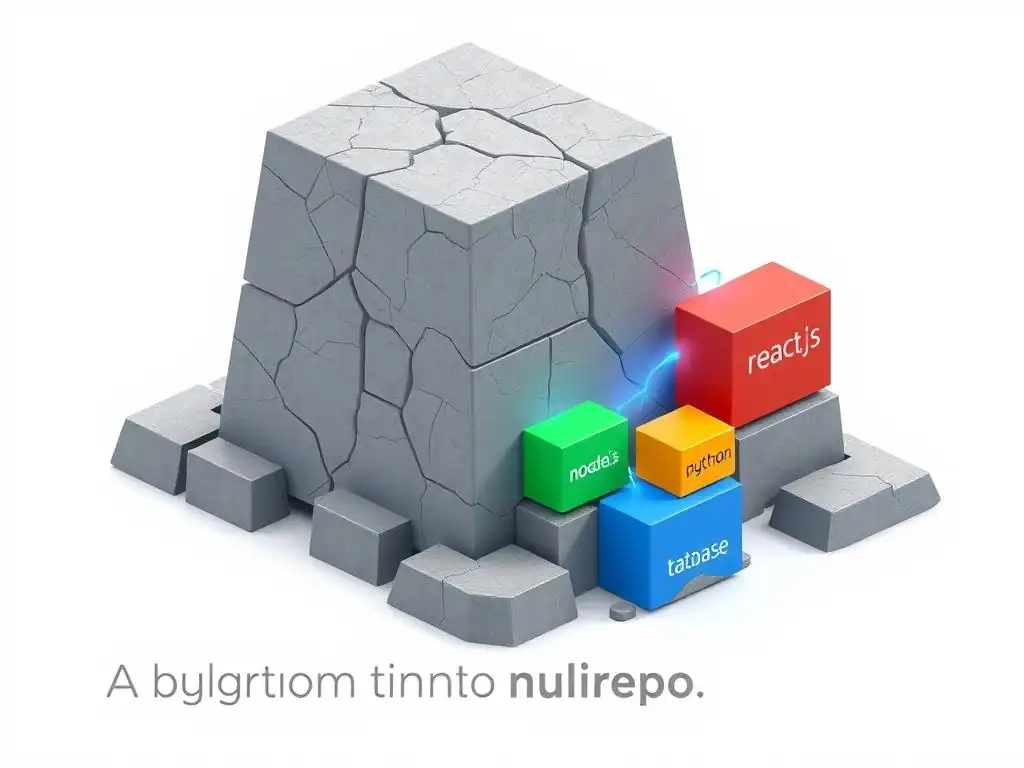
Welcome to Git and Version Control Hub!
Are you wrestling with a monolithic repository and considering a move to a multirepo architecture? Discover practical multirepo migration strategies to streamline your development workflow and enhance team collaboration. This article dives deep into the considerations, challenges, and best practices for breaking down a large codebase into manageable, independent repositories. Ready to untangle your project and unlock the benefits of a modular approach? Let's get started!
Migrating to Multirepo: Breaking Down a Monolith into Separate Repositories
- Introduction: Understanding Multirepo Migration Strategies
- Assessing Your Monolith: Preparing for Repository Splitting
- Choosing a Multirepo Migration Strategy: Gradual vs. Big Bang
- Implementing the Multirepo Migration: Step-by-Step Guide
- Post-Migration: Maintaining and Evolving Your Multirepo Architecture
- Multirepo Migration Best Practices: Tips and Recommendations
- Conclusion: Embracing a Multirepo Architecture for Scalability and Agility
-
Frequently Asked Questions
- How does migrating to a multirepo architecture benefit development teams?
- What are the main challenges involved in migrating from a monolith to multiple repositories?
- What are some common multirepo migration strategies?
- How can I ensure consistency and avoid dependency conflicts when using multiple repositories?
- What role does Git play in a successful multirepo migration?
- Final Reflection: Embracing the Decentralized Future
- Unlock Your Repository's Potential: Embrace the Multirepo Advantage!
Introduction: Understanding Multirepo Migration Strategies
- Why migrate from a monolith to multiple repositories (multirepo)?
- Benefits of a multirepo architecture for large projects
- Overview of the challenges involved in multirepo migration
Monolithic repositories, where all project code resides in a single repository, can become unwieldy as projects grow in size and complexity. Organizations often find themselves considering a shift to multiple repositories, or multirepo architecture, as a way to manage this increasing complexity. This migration is often driven by the need to improve development velocity, enhance code maintainability, and foster greater team autonomy.
Imagine a large e-commerce platform initially built as a single application. As features are added – product catalog, order management, payment processing, user accounts – the codebase swells. This growth can lead to slower build times, increased merge conflicts, and difficulty in understanding the entire system, making a multirepo migration a strategic consideration.
Migrating to a multirepo architecture involves breaking down a large monolithic codebase into smaller, independent repositories. This approach offers several potential benefits, particularly for large projects and development teams. By segmenting the codebase into logical units, such as services or modules, teams can work more independently, reducing inter-team dependencies and accelerating development cycles.
For example, if our e-commerce platform separates into repositories for "Product Catalog", "Order Service", and "Payment Gateway", each team can focus on their specific domain, leading to faster feature delivery and reduced risk of changes in one area impacting others. However, this migration is not without its challenges, requiring careful planning and execution to avoid disruption and ensure a smooth transition.
Assessing Your Monolith: Preparing for Repository Splitting
Identifying Bounded Contexts within Your Monolith
- Defining bounded contexts for logical separation
- Analyzing dependencies between modules
- Tools for mapping dependencies in a monolithic codebase
Before embarking on a multirepo migration, a crucial first step is to understand the logical boundaries within your monolithic application. Identifying bounded contexts, a concept from Domain-Driven Design, is key to determining how to effectively split your codebase. Bounded contexts represent specific areas of the domain with their own models, rules, and language.
For instance, in our e-commerce example, "Order Management" and "Inventory" are likely distinct bounded contexts. Carefully defining these contexts ensures that each new repository will encapsulate a cohesive and independent part of your system, reducing the chances of creating a distributed monolith – a common pitfall where dependencies are merely shifted across repositories instead of being properly decoupled.
Once you have a preliminary understanding of potential bounded contexts, it's essential to analyze the dependencies between modules within your monolith. This involves tracing how different parts of your codebase interact and rely on each other. High dependencies between modules that are intended to be separated into different repositories can become a major obstacle in a multirepo migration.
Imagine if the "Product Catalog" service is heavily dependent on the "User Authentication" module, but they are planned for separate repositories. This tight coupling would require significant refactoring to decouple these dependencies, perhaps through well-defined APIs or event-driven communication, before a successful split can occur. Tools like dependency structure matrices (DSMs) or code analysis plugins in IDEs can be invaluable in visualizing and understanding these complex relationships within a large codebase.
Evaluating Code Ownership and Team Structure
- Aligning repository ownership with team structure
- Identifying key stakeholders for each repository
- Determining access control and permissions
A successful multirepo migration isn't solely a technical endeavor; it's deeply intertwined with your team structure and organizational dynamics. A critical step is to evaluate your existing team structure and consider how it will map to the new repository boundaries. Ideally, repository ownership should align with team responsibilities. If you have teams dedicated to specific domains, such as a "Payments Team" and a "Catalog Team," then splitting your repository along these domain lines makes logical sense. This alignment fosters a sense of ownership and autonomy within each team, allowing them to manage their codebase independently and iterate more quickly.
Identifying key stakeholders for each potential repository is also crucial. These stakeholders are the individuals or teams who will be primarily responsible for the code within each repository. They should be involved in the migration planning process to ensure the proposed repository splits make sense from both a technical and organizational perspective.
Furthermore, defining access control and permissions for each repository is essential for security and maintainability. In a multirepo setup, you need to carefully consider who should have read and write access to each repository, ensuring that teams can collaborate effectively within their domains while maintaining appropriate boundaries and preventing unauthorized modifications. For instance, the "Payments Team" should have full access to the "Payment Gateway" repository, while other teams might only have read access for integration purposes.
Defining Clear Migration Goals and Metrics
- Setting measurable goals for the multirepo migration
- Defining key performance indicators (KPIs) for success
- Establishing a rollback plan in case of unforeseen issues
Before initiating the technical migration, it's imperative to define clear and measurable goals for the multirepo migration. What are you hoping to achieve by splitting your monolith? Are you aiming to improve build times, reduce merge conflicts, accelerate feature delivery, or enhance team autonomy? Setting specific goals, such as "reduce average build time by 20%" or "decrease the number of merge conflicts by 30%", provides a tangible benchmark against which to measure the success of the migration. Vague goals like "improve agility" are difficult to quantify and assess, making it challenging to determine if the migration was truly beneficial.
To track progress and measure the achievement of your goals, define key performance indicators (KPIs) relevant to your migration objectives. KPIs might include metrics like build and deployment frequency, lead time for changes, number of production incidents, team velocity, and developer satisfaction. Establishing baseline measurements for these KPIs before the migration is crucial to accurately assess the impact of the multirepo architecture after the transition. For example, tracking build times before and after the migration will directly indicate if the split has improved build efficiency.
Finally, a critical part of planning is establishing a rollback plan. Multirepo migrations are complex undertakings, and unforeseen issues can arise. Having a well-defined rollback strategy, outlining the steps to revert to the monolithic state if necessary, provides a safety net and mitigates the risk of prolonged disruptions.
Choosing a Multirepo Migration Strategy: Gradual vs. Big Bang
Gradual Migration: A Phased Approach to Repository Separation
- Benefits of a gradual migration strategy
- Implementing feature toggles for controlled release
- Using branch-by-abstraction to decouple modules
When considering multirepo migration strategies, a gradual approach is often favored due to its lower risk and reduced disruption. A gradual migration involves splitting the monolith incrementally, module by module, over time. This phased approach allows teams to learn and adapt as they progress, mitigating the risks associated with a large, all-at-once change. The primary benefit of a gradual migration is its reduced impact on ongoing development.
Teams can continue to deliver features while the migration is underway, minimizing disruption to the product roadmap. Furthermore, a gradual approach allows for iterative validation and course correction. If issues arise during the migration of a specific module, they can be addressed and lessons learned before proceeding with the next module, leading to a smoother overall transition.
To facilitate a gradual migration, techniques like feature toggles and branch-by-abstraction are invaluable. Feature toggles allow you to release new features in a decoupled manner, even when the underlying services are still being migrated. For instance, a new feature might be developed and deployed as a separate service in a new repository, but initially toggled off in the monolith. Once the migration is complete and the new service is fully integrated, the toggle can be flipped to enable the feature for users.
Branch-by-abstraction is another powerful technique for decoupling modules during a gradual migration. It involves creating an abstraction layer or interface between modules that are being separated. This abstraction allows the modules to evolve independently while maintaining compatibility through the defined interface, making the transition smoother and reducing the risk of breaking changes.
Big Bang Migration: A One-Time Repository Split
- When a big bang migration might be appropriate
- Risks and challenges of a big bang approach
- Minimizing downtime during the migration process
In contrast to a gradual approach, a big bang migration involves splitting the entire monolith into multiple repositories in a single, coordinated effort. While less common and riskier, a big bang strategy might be considered appropriate in specific situations. For example, if a monolith is relatively small, well-understood, and has clearly defined boundaries, a big bang migration could be faster and less complex than a prolonged gradual migration.
Another scenario where a big bang might be considered is when the monolith is nearing the end of its lifecycle and a complete rewrite or major architectural overhaul is planned anyway. In such cases, splitting the repository as part of the rewrite might be more efficient than a phased approach.
However, the risks and challenges of a big bang migration are substantial. It requires a significant upfront investment in planning and coordination, and it carries a higher risk of introducing major disruptions and regressions. A big bang split often necessitates a period of downtime or reduced functionality while the entire system is migrated and tested in the new multirepo environment.
This downtime can be unacceptable for many businesses, especially those with critical, always-on applications. Minimizing downtime during a big bang migration is paramount.
Strategies to achieve this include thorough pre-migration testing in a staging environment that mirrors production, optimizing the code extraction and repository setup process, and having a well-rehearsed rollback plan in place to quickly revert to the monolith if critical issues arise post-migration. Despite these mitigation efforts, a big bang migration remains inherently riskier than a gradual approach and should only be undertaken with careful consideration and when the benefits clearly outweigh the potential drawbacks.
Implementing the Multirepo Migration: Step-by-Step Guide
Step 1: Creating New Repositories for Each Bounded Context
- Setting up new Git repositories for each module
- Configuring initial repository settings and permissions
- Establishing a consistent branching strategy across repositories
The first concrete step in implementing a multirepo migration is creating the new Git repositories that will house the separated modules or bounded contexts. For each identified bounded context, a new, empty repository needs to be initialized. This can be done on platforms like GitHub, GitLab, or Bitbucket, depending on your organization's preferred version control hosting solution. The naming of these repositories should be clear and descriptive, reflecting the bounded context they represent. For example, repositories might be named "product-catalog-service," "order-management-api," or "user-authentication-service."
Once the repositories are created, initial configuration is crucial. This includes setting up repository descriptions, choosing the appropriate visibility settings (public or private), and configuring access control and permissions. As discussed earlier, permissions should align with team structure and ownership, granting appropriate access levels to relevant teams and individuals.
Furthermore, establishing a consistent branching strategy across all new repositories is vital for maintainability and workflow consistency. Adopting a strategy like Gitflow or GitHub Flow from the outset ensures that teams are working with a unified approach to branching, merging, and releasing code, even though they are operating in separate repositories. Consistency in branching strategies simplifies collaboration and reduces confusion across the multirepo landscape.
Step 2: Extracting Code from the Monolith to Individual Repositories
- Using
git filter-branchor similar tools for code extraction - Maintaining commit history during the extraction process
- Addressing potential conflicts during the code split
The next challenging step is extracting the relevant code for each bounded context from the monolith and transferring it into its corresponding new repository. Tools like git filter-branch, git subtree split, or specialized migration scripts are commonly used for this purpose. git filter-branch, while powerful, should be used with caution as it rewrites commit history, which can have implications if not handled carefully. These tools allow you to selectively extract files and directories based on path prefixes or other criteria, effectively isolating the code belonging to each bounded context.
Maintaining commit history during the extraction process is generally desirable, as it preserves the valuable context and traceability provided by Git's version control. Tools like git filter-branch are designed to retain commit history for the extracted code, ensuring that you don't lose valuable information about the evolution of each module. However, code extraction is rarely a clean and straightforward process. Potential conflicts can arise, especially if the modules within the monolith were tightly coupled. These conflicts might require manual resolution, involving code refactoring or adjustments to ensure that the extracted code functions correctly in its new, independent repository. Thorough testing after code extraction is essential to identify and address any issues introduced during the split.
Step 3: Managing Dependencies Between Repositories
- Choosing a dependency management strategy (e.g., package managers)
- Establishing a clear process for versioning and releasing packages
- Implementing automated dependency updates
Once the code is split into separate repositories, managing dependencies between them becomes a critical aspect of maintaining a functional system. In a monolith, modules often interact directly within the same codebase. In a multirepo architecture, these interactions need to be formalized and managed through explicit dependency mechanisms. Choosing an appropriate dependency management strategy is crucial.
Options include using package managers like npm, Maven, or pip, depending on your technology stack. These package managers allow you to define dependencies between repositories and manage their versions. For example, the "Order Service" repository might declare a dependency on a specific version of the "Product Catalog Service" package.
Establishing a clear process for versioning and releasing packages is essential for maintaining compatibility and stability across repositories. Semantic versioning (SemVer) is a widely adopted convention for versioning packages, providing a clear indication of the type of changes introduced in each release (major, minor, or patch). Automating the dependency update process is also highly recommended.
Tools like Dependabot or Renovate can automatically detect outdated dependencies and create pull requests to update them, reducing the manual effort and risk of using vulnerable or incompatible versions. Effective dependency management ensures that your multirepo system remains cohesive and that changes in one repository are properly propagated and managed in dependent repositories.
Step 4: Updating Build and Deployment Pipelines
- Modifying CI/CD pipelines to support multiple repositories
- Automating the build and deployment process for each repository
- Ensuring consistency across deployment environments
Migrating to a multirepo architecture necessitates a significant overhaul of your build and deployment pipelines. CI/CD pipelines need to be adapted to handle multiple independent repositories instead of a single monolith. This involves modifying your CI/CD configuration to trigger builds and deployments for each repository separately. For example, a change in the "Product Catalog Service" repository should trigger a build and deployment pipeline specifically for that service, without necessarily affecting other repositories.
Automating the build and deployment process for each repository is crucial for maintaining efficiency and consistency. Each repository should have its own automated pipeline that handles tasks like building, testing, packaging, and deploying the code. This automation reduces manual effort, minimizes errors, and ensures that deployments are consistent and repeatable. Furthermore, maintaining consistency across deployment environments (development, staging, production) is vital in a multirepo setup. Configuration management tools and practices should be employed to ensure that each repository is deployed consistently across all environments, reducing the risk of environment-specific issues and simplifying troubleshooting.
Step 5: Testing and Validation in a Multirepo Environment
- Implementing integration tests across repositories
- Conducting thorough testing to ensure functionality
- Monitoring performance and stability
Testing and validation become more complex in a multirepo environment due to the distributed nature of the system. While unit tests within each repository remain essential, integration tests that span across repositories become even more critical. Integration tests verify that the different services or modules in separate repositories interact correctly and function together as expected. These tests might involve simulating API calls between services, testing message queues, or validating data flows across repository boundaries. Thorough integration testing is crucial for ensuring that the system as a whole remains functional after the multirepo migration.
Beyond integration tests, comprehensive end-to-end testing and performance testing are also necessary to validate the multirepo architecture. End-to-end tests simulate real user workflows across multiple services, ensuring that the entire system delivers the intended user experience. Performance testing helps identify potential bottlenecks and performance issues that might arise in a distributed environment.
Finally, continuous monitoring of performance and stability in the production environment is essential after the migration. Monitoring tools should be used to track key metrics like response times, error rates, and resource utilization for each service, enabling early detection and resolution of any issues that may emerge in the multirepo architecture.
Post-Migration: Maintaining and Evolving Your Multirepo Architecture
Establishing Clear Guidelines for Code Contribution
- Defining contribution workflows for each repository
- Implementing code review processes
- Enforcing code quality standards
After successfully migrating to a multirepo architecture, maintaining and evolving it effectively requires establishing clear guidelines for code contribution. With multiple repositories, it's important to define contribution workflows for each repository, outlining the steps for submitting changes, creating pull requests, and merging code. These workflows should be documented and communicated clearly to all development teams to ensure a consistent and efficient contribution process.
Implementing robust code review processes is also crucial for maintaining code quality in a multirepo setup. Code reviews help catch potential bugs, enforce coding standards, and promote knowledge sharing across teams. Define clear code review guidelines and ensure that all code changes are reviewed by appropriate team members before being merged into the main branch.
Furthermore, enforcing code quality standards consistently across all repositories is essential for long-term maintainability. Tools like linters, static analyzers, and automated code quality checks should be integrated into the CI/CD pipelines to ensure that code adheres to defined standards and best practices, preventing code quality degradation over time.
Monitoring Repository Health and Performance
- Tracking repository size and commit activity
- Identifying potential performance bottlenecks
- Using Git analytics to improve workflow
Ongoing monitoring of repository health and performance is crucial for proactively identifying and addressing potential issues in your multirepo architecture. Tracking repository size and commit activity can provide insights into the growth and evolution of each module. Unusually large repositories or rapidly increasing commit activity might indicate areas that require further attention or potential refactoring. Monitoring tools can be used to collect these metrics and visualize trends over time.
Identifying potential performance bottlenecks within the Git repositories themselves can also be important, especially for very large or actively developed repositories. Git operations like cloning, branching, and merging can become slow in large repositories. Monitoring Git performance metrics can help identify repositories that might be experiencing performance issues. Furthermore, utilizing Git analytics tools can provide valuable insights into team workflows, collaboration patterns, and potential areas for improvement. Analyzing commit frequency, branch usage, and merge request statistics can help optimize development processes and identify areas where teams might be facing bottlenecks or inefficiencies in their Git workflows.
Refactoring and Improving Codebase Structure in a Multirepo Setup
- Identifying opportunities for further code separation
- Refactoring code to improve maintainability
- Continuously improving the multirepo architecture
A multirepo migration is not a one-time project but rather a continuous process of refinement and improvement. After the initial migration, it's important to continuously evaluate the architecture and identify opportunities for further code separation and refactoring. As your system evolves and new requirements emerge, you might discover new bounded contexts or areas where further decoupling can improve maintainability and scalability. Regularly reviewing the codebase and identifying potential areas for separation ensures that your multirepo architecture remains aligned with your evolving business needs.
Refactoring code to improve maintainability is an ongoing effort in any software project, and it's especially important in a multirepo setup. As services evolve independently, it's crucial to refactor code within each repository to maintain clarity, reduce complexity, and improve testability. This might involve applying design patterns, improving code modularity, or simplifying complex logic.
Continuously improving the multirepo architecture is a key aspect of long-term success. Regularly review your architecture, gather feedback from development teams, and adapt your approach as needed to ensure that your multirepo setup continues to meet your evolving needs and provides the benefits of scalability, agility, and maintainability that motivated the migration in the first place.
Multirepo Migration Best Practices: Tips and Recommendations
- Documenting the migration process thoroughly
- Communicating changes effectively to the development team
- Automating as much of the process as possible
- Monitoring and iterating on the multirepo architecture
Documenting the entire multirepo migration process thoroughly is paramount. Detailed documentation serves as a valuable resource for the development team during the migration and for future maintenance and onboarding. Documentation should include the rationale for the migration, the chosen strategy, the steps involved, the repository structure, dependency management guidelines, and any lessons learned. Clear and comprehensive documentation reduces confusion, facilitates knowledge sharing, and ensures that the migration process is well-understood by everyone involved.
Effective communication with the development team throughout the migration is crucial for minimizing disruption and ensuring a smooth transition. Keep teams informed about the migration plan, timelines, and any changes that might affect their workflows. Regular updates, meetings, and communication channels should be established to address questions, concerns, and feedback from the team. Open and transparent communication fosters collaboration and helps ensure that everyone is aligned and working towards a successful migration.
Automating as much of the migration process as possible is highly recommended to reduce manual effort, minimize errors, and accelerate the transition. Automation can be applied to various aspects of the migration, including code extraction, repository setup, dependency management, and CI/CD pipeline updates. Leveraging scripting, configuration management tools, and CI/CD automation platforms streamlines the migration process and reduces the risk of human error.
Finally, remember that multirepo migration is an iterative process. Continuously monitor the performance and health of your multirepo architecture, gather feedback from teams, and be prepared to adapt and iterate on your approach. Regularly review your architecture, identify areas for improvement, and make adjustments as needed to ensure that your multirepo setup continues to deliver the desired benefits and supports your evolving business needs.
Conclusion: Embracing a Multirepo Architecture for Scalability and Agility
- Summarizing the benefits of migrating to a multirepo architecture
- Highlighting the importance of careful planning and execution
- Encouraging continuous improvement and adaptation
Migrating to a multirepo architecture presents a significant undertaking, yet the benefits for large and complex projects are substantial. By breaking down a monolithic codebase into smaller, independent repositories, organizations can achieve improved scalability, enhanced agility, and increased team autonomy. Multirepo architectures facilitate faster development cycles, reduce merge conflicts, and enable teams to work more independently, ultimately leading to quicker innovation and faster time-to-market for new features and products.
However, the success of a multirepo migration hinges on careful planning and meticulous execution. Thorough assessment of the monolith, identification of bounded contexts, strategic repository splitting, and robust dependency management are all critical factors. Choosing the right migration strategy, whether gradual or big bang, and implementing it with precision is essential to avoid disruption and ensure a smooth transition.
The journey doesn't end with the initial migration; it's crucial to embrace continuous improvement and adaptation. Regularly monitor the health and performance of your multirepo architecture, gather feedback from development teams, and be prepared to refactor, refine, and evolve your setup to meet the ever-changing demands of your business and technology landscape. Embracing a multirepo architecture, when implemented thoughtfully and maintained diligently, can unlock significant advantages for organizations striving for scalability and agility in their software development endeavors.
Frequently Asked Questions
How does migrating to a multirepo architecture benefit development teams?
A multirepo approach can improve code ownership and reduce build times. This can lead to faster development cycles and increased team autonomy.
What are the main challenges involved in migrating from a monolith to multiple repositories?
Challenges include managing dependencies across repositories, coordinating releases, and maintaining a consistent development workflow. Careful planning is essential.
What are some common multirepo migration strategies?
Common strategies include gradual extraction, where components are moved one at a time, and big bang migration, where the entire monolith is split at once. Each has its own risk vs. reward profile.
How can I ensure consistency and avoid dependency conflicts when using multiple repositories?
Employ versioning strategies and dependency management tools to track and manage dependencies between repositories. Consider using a package manager or similar system.
What role does Git play in a successful multirepo migration?
Git provides the version control infrastructure for managing code across multiple repositories. Features like branching and merging are crucial for coordinating changes.
Final Reflection: Embracing the Decentralized Future
The journey of migrating from a monolithic repository to a multirepo architecture, as we've explored, is far more than just a technical undertaking; it's a fundamental shift in how we approach software development. The principles of modularity, autonomy, and focused ownership that underpin successful multirepo migrations are increasingly vital in today's rapidly evolving technological landscape. As teams grow and projects become more complex, the ability to break down monolithic structures into manageable, independent units is no longer a luxury, but a necessity for sustained innovation and agility.
The impact of this architectural shift extends beyond code organization, profoundly influencing team dynamics and the overall culture of an organization. Witnessing the empowerment of smaller, focused teams, each owning their own codebase and release cycles, is a testament to the power of decentralization. This autonomy fosters a sense of ownership and accountability, leading to increased efficiency and higher quality code. The best architectures, requirements, and designs emerge from self-organizing teams.
- Agile Manifesto. This quote perfectly encapsulates the spirit of multirepo, where teams are empowered to take ownership and drive innovation within their specific domains.
As you consider the potential of multirepo migration strategies for your own organization, I encourage you to look beyond the immediate technical challenges and embrace the transformative potential of this approach. Reflect on how breaking down your monolith could unlock new levels of agility, empower your teams, and ultimately drive innovation. The future of software development is decentralized, and by embracing multirepo, you can position your organization to thrive in this dynamic landscape.
Unlock Your Repository's Potential: Embrace the Multirepo Advantage!
Thanks for exploring the world of multirepo migration! You've gained valuable knowledge about overcoming the challenges of monolithic repositories and harnessing the power of modularity and independent deployments. Now, let's put this knowledge into practice.
Here's how to proceed:
- Start by identifying a low-risk module within your monolith and plan its migration as a pilot project. This allows you to test your workflow and refine your approach.
- Share this article with your team! Help them understand the advantages and potential difficulties of a multirepo architecture, encouraging a collaborative migration process.
- Explore alternative versioning strategies, such as using git submodules or git subtree, to manage dependencies between your new repositories.
What module will you target first for your multirepo migration, and what challenges do you foresee? Share your plans in the comments below!