
CI/CD Platforms Demystified: Choosing the Right Tool for Your Development Workflow

Welcome to Git and Version Control Hub, your central resource for mastering Git and version control!
Ever wondered which CI/CD platform is the best for your specific development needs? This article dives deep into the world of best CI/CD platforms for developers, offering a clear guide to help you streamline your workflow and boost your team's collaboration. We'll unpack the key features, benefits, and considerations, empowering you to make an informed decision. Ready to unlock the power of continuous integration and delivery? Let's get started!
- Understanding CI/CD and its Importance for Modern Development
-
Frequently Asked Questions
- What is CI/CD, and why is it important for developers?
- How do I choose the best CI/CD platform for my needs?
- What are some popular CI/CD platforms mentioned on GitAndVersionControlHub.com?
- Can I use CI/CD for personal projects or is it only for team environments?
- How does integrating CI/CD with Git improve my workflow?
- Final Reflection: Embracing Continuous Evolution
- Supercharge Your Development: Get Started Today!
Understanding CI/CD and its Importance for Modern Development
What is Continuous Integration and Continuous Delivery (CI/CD)?
Continuous Integration (CI) and Continuous Delivery (CD) represent a set of practices that streamline the software development lifecycle, particularly in Git-based projects. CI focuses on the frequent merging of code changes from multiple developers into a shared repository. This practice is typically followed by automated build and testing processes to detect integration errors early and ensure that the codebase remains in a healthy state.
Think of it as a quality control checkpoint that happens multiple times a day, rather than waiting until the end of a development cycle. For instance, imagine a team of developers working on different features; with CI, each time a developer pushes their code, automated tests run to verify that the new code integrates seamlessly with the existing codebase, preventing integration nightmares down the line.
Continuous Delivery (CD) builds upon CI by automating the release process. It ensures that code changes that have passed the automated tests are prepared for release to production. This doesn't necessarily mean every change is immediately deployed to end-users, but rather that the process to deploy is automated and reliable.
CD can extend to Continuous Deployment, where changes are automatically released to production without explicit approval, provided they pass all stages of the pipeline. A practical example of CD is when a software company releases updates to its application frequently, perhaps weekly or even daily. This rapid release cycle is made possible by automated pipelines that handle building, testing, and deploying the software, significantly reducing manual effort and the risk of human error.
Why CI/CD Matters for Git-Based Projects
Git, as a distributed version control system, inherently encourages collaboration and frequent code changes through branching and merging. CI/CD complements Git's workflow perfectly by providing the automation needed to manage these frequent changes effectively. In a Git-centric development environment, developers are constantly creating branches, committing code, and merging their work. Without CI/CD, manually building, testing, and deploying these changes becomes a bottleneck and a source of errors. The manual approach is not only time-consuming but also prone to inconsistencies and human mistakes, especially as project complexity and team size increase.
CI/CD pipelines automate these crucial steps, ensuring that every code change is validated and ready for release in a consistent and repeatable manner. For example, consider a web development team using Git and GitHub. They might use feature branches for each new functionality.
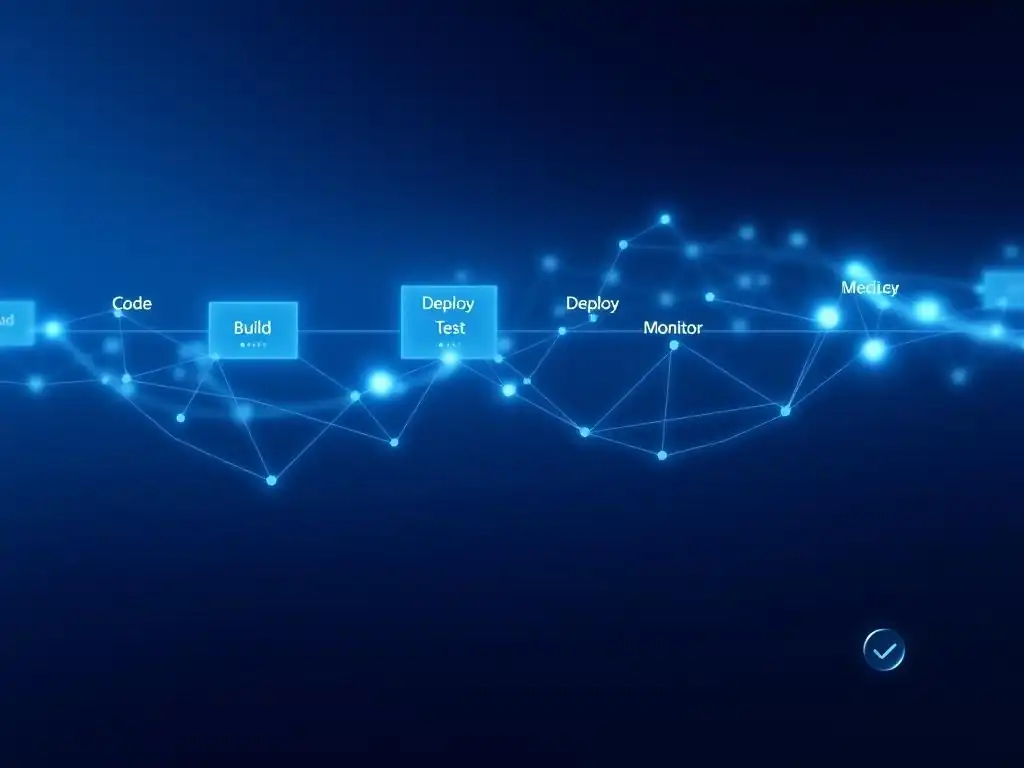
With a CI/CD pipeline configured, whenever a developer merges a feature branch back into the main branch, the pipeline automatically builds the application, runs unit and integration tests, and even deploys the updated application to a staging environment for further testing. This automation not only saves developers valuable time but also ensures higher software quality and faster release cycles, which are vital for staying competitive in today's fast-paced software industry.
The Benefits of Automating Your Development Pipeline with CI/CD
Automating the development pipeline with CI/CD offers a multitude of benefits that significantly impact software development teams and the overall success of projects. One of the primary advantages is faster feedback loops. By automating testing early and often, developers receive immediate feedback on their code changes.
If a bug is introduced, it is detected much sooner in the development process, making it easier and cheaper to fix. Imagine a scenario where a developer introduces a bug that would break a critical feature. In a CI/CD environment, automated tests would likely catch this bug within minutes of the code being committed, preventing the bug from propagating further and causing more significant issues later in the development cycle.
Furthermore, CI/CD drastically reduces the risk associated with software releases. Automated testing and deployment processes minimize human error, leading to more reliable and consistent releases. For instance, manual deployments are often error-prone and can lead to inconsistencies between environments.
CI/CD pipelines ensure that deployments are standardized and repeatable, reducing the chances of deployment failures and downtime. Companies like Netflix, which rely heavily on continuous delivery, deploy code changes to production multiple times a day with minimal disruption, thanks to robust CI/CD pipelines. This level of automation not only increases release velocity but also enhances the stability and reliability of the software, leading to improved user satisfaction and business outcomes.
Frequently Asked Questions
What is CI/CD, and why is it important for developers?
CI/CD stands for Continuous Integration and Continuous Delivery/Deployment. It's a practice that automates the software release process, making it faster, more reliable, and less prone to errors. This leads to faster feedback loops and improved collaboration.
How do I choose the best CI/CD platform for my needs?
The best platform depends on factors like project size, team size, budget, and required features. Consider ease of use, integration capabilities, and available support resources when making your decision.
What are some popular CI/CD platforms mentioned on GitAndVersionControlHub.com?
While the site doesn't explicitly recommend one platform as the best, it covers integration with tools like GitHub Actions and GitLab CI/CD. These are popular choices, especially for projects already using those platforms for version control.
Can I use CI/CD for personal projects or is it only for team environments?
CI/CD is beneficial for both personal and team projects. Even for individual developers, it can automate testing and deployment, ensuring code quality and consistency.
How does integrating CI/CD with Git improve my workflow?
Integrating CI/CD with Git allows you to automate actions like building, testing, and deploying code every time changes are pushed to a repository. This ensures that every code change is validated before being merged, significantly reducing bugs.
Final Reflection: Embracing Continuous Evolution
The journey through the landscape of CI/CD platforms underscores a fundamental truth: adaptability is paramount in modern software development. The tools we choose are not merely utilities, but rather integral components that shape our workflows, influence our team dynamics, and ultimately, determine the speed and reliability with which we deliver value to our users. Understanding the nuances of each platform, as we've explored, is the first step towards building a robust and efficient development pipeline.
The impact of CI/CD extends far beyond simple automation; it fosters a culture of continuous improvement and collaboration. This constant cycle of building, testing, and deploying has fundamentally altered the way software is created and maintained, allowing for faster iteration and reduced risk. The goal is to automate the software release process so that it can be done at any time, with minimal risk and effort.
This quote perfectly encapsulates the transformative power of CI/CD, enabling developers to focus on innovation rather than being bogged down by manual processes.
Now, armed with this knowledge, I encourage you to reflect on your own development practices. Are you leveraging the full potential of CI/CD? Are you continuously evaluating your tools and workflows to ensure they align with your evolving needs? The best CI/CD platform isn't a static choice; it's a dynamic partnership. Embrace the challenge of continuous evolution, and unlock the power to build better software, faster, and more reliably.
Supercharge Your Development: Get Started Today!
Thank you for exploring the world of CI/CD platforms with us! We hope this guide has helped you understand how to choose the right tool to streamline your development workflow. Now it's time to put your knowledge into practice and experience the benefits of automated pipelines.
Here's how you can begin your CI/CD journey:
- Start by implementing a CI/CD pipeline using one of the platforms discussed. Begin with a small, manageable project, automate a simple build process, and gradually expand your automation. This is the best way to learn!
- Dive deeper into the documentation of several CI/CD platforms mentioned in the article, paying attention to their unique features and integration capabilities. Don't just read—try a short tutorial to get hands-on experience.
- Share your experiences and challenges in the comments below! What CI/CD platforms have you used, and what have you learned?
Which CI/CD platform will you try first? Let's discuss your experiences!