
LongLived Branches and CI/CD: Building a Robust Pipeline

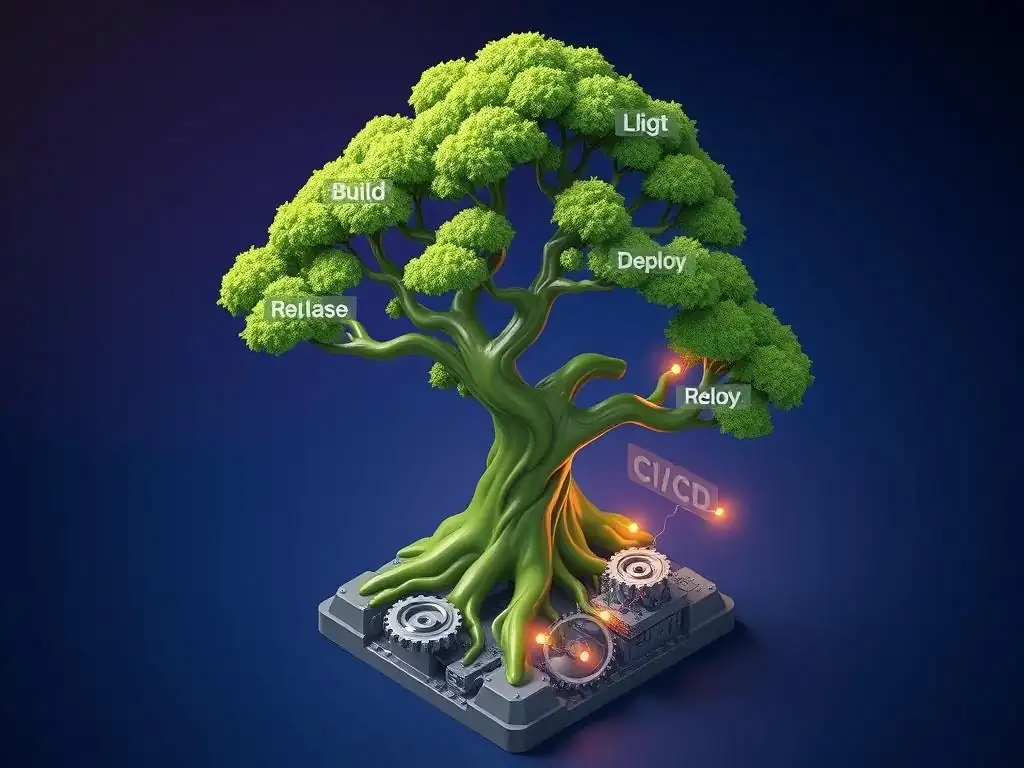
Welcome to the Git and Version Control Hub!
Dive into the world of streamlined development and robust workflows. Are you ready to unlock the power of CI/CD and long-lived branches? This article explores how to craft a resilient pipeline that thrives even with extended development cycles. Discover the strategies, best practices, and potential pitfalls of implementing CI/CD with Long-Lived Branches, and learn how to optimize your team's collaboration and productivity. Eager to learn how to bridge the gap between long-term feature development and continuous integration? Let's get started!
- Introduction: Understanding the Challenges of CI/CD with Long-Lived Branches
- Defining Long-Lived Branches and Their Impact on CI/CD
- Common Problems with CI/CD Integration in Long-Lived Branch Environments
- Strategies for Effective CI/CD with Long-Lived Branches
- Tools and Technologies for Enhancing CI/CD with Long-Lived Branches
- Case Study: Implementing CI/CD with Long-Lived Branches
- Best Practices for Maintaining a Healthy CI/CD Pipeline with Long-Lived Branches
- Conclusion: Mastering CI/CD with Long-Lived Branches for Efficient Software Delivery
-
Frequently Asked Questions
- What are long-lived branches, and why are they used in software development?
- How does CI/CD integrate with long-lived branches?
- What are the key considerations when setting up a CI/CD pipeline for long-lived branches?
- What are some potential challenges when using long-lived branches with CI/CD?
- How can developers ensure code quality and stability when using CI/CD with long-lived branches?
- Final Reflection: Embracing Continuous Evolution
- Level Up Your CI/CD with Long-Lived Branches
Introduction: Understanding the Challenges of CI/CD with Long-Lived Branches
The Role of Long-Lived Branches in Software Development Workflows
Long-lived branches have been a cornerstone in many software development workflows, particularly in larger, more complex projects. These branches, such as develop or release, persist over extended periods, often representing different stages of development or versions of the software. Historically, they have served to isolate ongoing feature development from the stable main branch, allowing teams to work on significant changes without directly impacting the production codebase. This isolation provides a safety net, enabling developers to iterate on features, conduct thorough testing, and prepare for major releases in a controlled environment. Long-lived branches are frequently used to manage parallel development streams, versioning, and hotfixes, providing a structured approach to handling different aspects of the software lifecycle.
In organizations that adopt a long-lived branch strategy, it's common to see branches dedicated to specific release cycles, where features are accumulated and stabilized before being merged into the main branch for deployment. This model can be beneficial for projects with strict release schedules or those requiring extensive validation and testing phases. For instance, a large enterprise application might utilize a release branch to rigorously test and harden a version over several weeks before it's deemed ready for production. Furthermore, long-lived branches can facilitate collaboration among larger teams, allowing different sub-teams to work on independent features concurrently, minimizing immediate integration conflicts within the main codebase. However, this approach introduces its own set of challenges, especially when integrating with modern Continuous Integration and Continuous Delivery (CI/CD) practices.
Why CI/CD Implementation Becomes Complex with Long-Lived Branches
Implementing CI/CD pipelines in environments that heavily rely on long-lived branches presents unique complexities compared to workflows using short-lived branches. The inherent nature of long-lived branches, persisting for weeks or even months, often leads to significant divergence from the main branch. This divergence creates a breeding ground for integration issues and merge conflicts, which are amplified over time.
As features accumulate in these branches, the codebase can drift considerably from the state of the main branch, making the eventual merge process cumbersome, time-consuming, and prone to errors. This directly contradicts the core principles of CI/CD, which advocate for frequent integration and rapid feedback loops.
Furthermore, the delayed integration inherent in long-lived branch strategies can hinder the rapid iteration and deployment cycles that CI/CD aims to achieve. The longer features remain isolated in their respective branches, the later potential problems are discovered in relation to the larger system. This delayed feedback loop can result in bugs and architectural mismatches going unnoticed until late in the development cycle, making them more costly and difficult to resolve.
Specifically within a CI/CD context, long-lived branches can complicate automated testing and deployment processes. Pipelines designed for rapid and frequent deployments are often challenged by the large and potentially unstable nature of long-lived branches, requiring careful planning and specialized strategies to maintain pipeline efficiency and reliability.
Article Overview: Building a Resilient CI/CD Pipeline for Long-Lived Branch Strategies
This article delves into the intricacies of building a robust CI/CD pipeline specifically tailored for development workflows that incorporate long-lived branches. We will explore the common pitfalls and challenges encountered when attempting to integrate CI/CD practices with long-lived branch strategies, including integration conflicts, delayed feedback, and scalability issues. Crucially, we will outline effective strategies and best practices to mitigate these challenges. This includes the use of feature flags to decouple deployment from release, optimized branching methodologies, and automated testing approaches tailored for long-lived environments.
Furthermore, we will examine essential tools and technologies that can enhance CI/CD pipelines in the context of long-lived branches. This will encompass a review of popular CI/CD platforms, version control system best practices, and code quality tools that are particularly valuable in managing the complexities introduced by long-lived development cycles.
Through real-world case studies and actionable advice, this article aims to equip development teams with the knowledge and techniques necessary to successfully implement and maintain efficient CI/CD pipelines, even when working with long-lived branches. Our goal is to demonstrate that, despite the inherent challenges, it is possible to achieve a high degree of agility and reliability in software delivery, even within development workflows that utilize long-lived branch strategies.
Defining Long-Lived Branches and Their Impact on CI/CD
What Are Long-Lived Branches?
Long-lived branches, in the context of version control systems like Git, are branches that exist for an extended period, typically weeks, months, or even years. They are deliberately designed to diverge significantly from the main or trunk branch and serve as a persistent space for development, feature accumulation, or release stabilization. Unlike short-lived branches, which are created for specific, small tasks and merged back quickly, long-lived branches represent a continuous stream of work that evolves independently over time. Common examples include develop, release, and hotfix branches in the Gitflow workflow, and version-specific maintenance branches.
The primary purpose of long-lived branches is to provide isolation and stability. For instance, a develop branch is often used to accumulate features for an upcoming release, shielding the main branch from potentially unstable or incomplete code changes. Similarly, release branches are created to stabilize a specific version of the software prior to deployment, allowing for final testing and bug fixes without disrupting ongoing development. Maintenance branches are used to support older versions of the software, providing a dedicated space for applying critical patches and security updates without affecting the current development efforts. While offering benefits in terms of organization and stability, long-lived branches inherently introduce challenges for CI/CD due to their prolonged existence and divergence from the main codebase.
Key Differences Between Short-Lived and Long-Lived Branch Strategies
The fundamental difference between short-lived and long-lived branch strategies lies in their lifespan and integration frequency. Short-lived branches, such as feature branches or task branches, are designed to be ephemeral. They are created for small, focused tasks – a new feature, a bug fix, or a refactoring – and are typically merged back into the main branch or a long-lived integration branch within a few days, or at most a week. This rapid integration is a cornerstone of modern CI/CD practices, promoting continuous feedback and minimizing integration conflicts.
In contrast, long-lived branches are characterized by their extended lifespan and infrequent integration. They exist for weeks, months, or even years, accumulating a substantial amount of changes before being merged back, if at all, into the main branch. This infrequent integration pattern is a significant departure from the principles of CI/CD, which emphasizes continuous integration.
The extended lifespan of long-lived branches increases the risk of merge conflicts, code divergence, and delayed feedback loops. Short-lived branches facilitate a faster, more iterative development cycle, whereas long-lived branches, while providing isolation and stability, can hinder agility and slow down the overall software delivery process, particularly when attempting to implement robust CI/CD pipelines.
The Implications of Long-Lived Branches on CI/CD Pipeline Design
The adoption of long-lived branches profoundly impacts the design and implementation of CI/CD pipelines. Pipelines designed for short-lived branches often rely on the assumption of frequent, small changes being integrated into the main branch. These pipelines are typically optimized for speed and rapid feedback, with automated tests and deployments triggered on every commit or merge request to the main branch. However, when long-lived branches are involved, these assumptions no longer hold, and the CI/CD pipeline must be adapted to accommodate the unique characteristics of these branches.
One major implication is the increased complexity of managing integration and merge processes within the CI/CD pipeline. Pipelines must be configured to handle potentially large and complex merges from long-lived branches into the main branch, including robust conflict detection and resolution mechanisms. Furthermore, the longer development cycles associated with long-lived branches necessitate adjustments to testing strategies within the pipeline.
Testing needs to be more comprehensive and potentially include longer-running integration and end-to-end tests to validate the stability and functionality of features developed in isolation over extended periods. Deployment strategies also need to be reconsidered. Direct and frequent deployments from long-lived branches to production are generally discouraged due to the inherent risks.
Instead, pipelines for long-lived branches may focus on deployment to staging or pre-production environments for thorough testing and stabilization before eventual merging and deployment to production from the main branch. In essence, CI/CD pipelines in long-lived branch environments require careful design to mitigate the risks of delayed integration and maintain a balance between stability and agility.
Common Problems with CI/CD Integration in Long-Lived Branch Environments
Integration Conflicts and Merge Resolution
One of the most prominent challenges when integrating CI/CD with long-lived branches is the increased frequency and complexity of integration conflicts and merge resolution. As long-lived branches diverge significantly from the main branch over time, the likelihood of encountering conflicting changes increases dramatically. These conflicts arise when different developers modify the same lines of code or when changes in one branch create inconsistencies with changes in another. In workflows using short-lived branches, integration conflicts are typically smaller and easier to resolve due to the shorter lifespan and smaller scope of changes.
However, with long-lived branches, conflicts can become substantial and intricate, requiring significant developer time and effort to resolve. The longer a branch lives, the more opportunities there are for code to diverge, leading to complex three-way merge scenarios. Resolving these conflicts manually can be error-prone and time-consuming, potentially delaying releases and disrupting the CI/CD pipeline.
Furthermore, unresolved or poorly resolved merge conflicts can introduce bugs and instability into the codebase, undermining the benefits of continuous integration and continuous delivery. Effective strategies for mitigating these issues include frequent rebasing or merging of long-lived branches with the main branch to minimize divergence, and implementing robust conflict resolution processes and tools within the CI/CD pipeline.
Delayed Feedback Loops and Increased Risk of Bugs
Long-lived branches inherently contribute to delayed feedback loops, which is a significant impediment to effective CI/CD implementation. In a CI/CD environment, rapid feedback on code changes is crucial for identifying and fixing issues early in the development cycle. Short-lived branches and trunk-based development facilitate this by integrating code frequently, running automated tests, and providing developers with immediate feedback on the impact of their changes.
Conversely, with long-lived branches, the integration of code changes and the resulting feedback are delayed until the branch is eventually merged back. This delay means that bugs, integration issues, and performance problems may remain undetected for extended periods. By the time these issues are discovered during the merge process or in later testing stages, they may have become deeply entrenched and more difficult to resolve.
The delayed feedback loop increases the risk of accumulating technical debt and introducing significant bugs into the codebase. This contradicts the core principle of CI/CD, which is to identify and address issues as early and frequently as possible. Strategies such as more frequent integration of long-lived branches with the main branch, and more comprehensive automated testing within the branch itself, can help to shorten feedback loops and mitigate the risk of delayed bug detection.
Difficulty in Maintaining Code Quality and Stability
Maintaining code quality and stability becomes considerably more challenging when CI/CD pipelines are integrated with long-lived branches. The extended lifespan of these branches and the potential for significant code divergence can lead to a gradual degradation of code quality over time. As developers work in isolation on long-lived branches, they may introduce coding style inconsistencies, architectural drift, and technical debt without immediate visibility to the wider team. The lack of frequent integration and code reviews, typical in long-lived branch workflows, can exacerbate this issue.
Furthermore, the sheer volume of changes accumulated in long-lived branches makes it harder to ensure overall system stability. Testing large, integrated features at the end of a long development cycle can be more complex and less effective than testing smaller, incremental changes frequently. Bugs introduced in one part of a long-lived branch might interact unexpectedly with changes in other parts, leading to emergent and hard-to-diagnose issues.
To counteract this, CI/CD pipelines in long-lived branch environments need to incorporate robust code quality checks, static analysis tools, and comprehensive automated testing suites that can effectively assess the quality and stability of code within these branches and upon integration. Regular code reviews and refactoring efforts are also crucial to maintain code health over the lifespan of long-lived branches.
Scalability Challenges in the CI/CD Process
Integrating CI/CD with long-lived branches can introduce scalability challenges to the CI/CD process itself. The infrastructure and resources required to build, test, and deploy long-lived branches may differ significantly from those needed for short-lived branches. Long-lived branches often contain a larger volume of code changes and may require more extensive testing, including longer-running integration and end-to-end tests. This increased workload can strain CI/CD infrastructure, leading to longer pipeline execution times and potential bottlenecks.
Moreover, the concurrent development on multiple long-lived branches, common in larger projects, can further amplify these scalability challenges. Each active long-lived branch may require its own set of build and test environments within the CI/CD pipeline, increasing resource consumption and complexity.
Managing and scaling these resources effectively becomes critical to maintain pipeline performance and avoid delays in the software delivery process. Strategies such as optimizing build and test processes, leveraging containerization and cloud-based CI/CD platforms for elastic scalability, and implementing efficient resource management practices are essential to address these scalability challenges and ensure that the CI/CD pipeline can handle the demands of long-lived branch workflows.
Strategies for Effective CI/CD with Long-Lived Branches
Feature Flags: Decoupling Deployment from Release
Feature flags are a powerful technique to mitigate the risks associated with deploying code from long-lived branches, particularly in a CI/CD environment. They allow developers to decouple code deployment from feature release, enabling the deployment of new features to production without immediately making them visible or accessible to end-users. Essentially, feature flags are conditional toggles in the code that control whether a particular feature is active or inactive. This provides a mechanism to deploy code changes incrementally and safely, even from long-lived branches, without disrupting the user experience.
Implementing Feature Flags in your codebase
Implementing feature flags involves wrapping new feature code within conditional statements that check the status of a flag. These flags can be controlled through various mechanisms, such as configuration files, environment variables, or dedicated feature flag management platforms. For example, in a simple scenario, a feature flag might be a boolean variable that is checked before executing a block of new feature code. When the flag is set to false, the new feature code is effectively disabled, even though it is deployed to production. When the flag is switched to true, the feature is activated, making it available to users.
More sophisticated implementations might use different types of flags, such as percentage-based flags for gradual rollout to a subset of users, or user-group flags to enable features only for specific user segments. Libraries and frameworks in various programming languages provide support for feature flag implementation, simplifying the process of integrating them into existing codebases. Choosing a robust feature flag management strategy is crucial for effective CI/CD with long-lived branches, allowing for controlled releases and reducing the risk of deploying incomplete or unstable features to production.
Managing Feature Flag lifecycle
Effective management of feature flags is as important as their implementation. Flags should be treated as temporary constructs, not permanent fixtures in the codebase. A well-defined lifecycle for feature flags is essential to prevent code clutter and performance degradation. Once a feature has been fully released and stabilized, the corresponding feature flag should be removed from the codebase. This "flag cleanup" process is crucial for maintaining code clarity and avoiding technical debt.
Furthermore, a robust system for managing feature flag configurations is necessary, especially in complex CI/CD environments. This includes mechanisms for creating, updating, and deleting flags, as well as for controlling flag states across different environments (development, staging, production).
Dedicated feature flag management platforms can provide centralized control, auditing, and governance over feature flags, simplifying their management and reducing the risk of misconfiguration. Regularly reviewing and cleaning up feature flags should be a part of the development process to ensure that the codebase remains clean, maintainable, and performant, even when using feature flags extensively in conjunction with long-lived branches and CI/CD.
Branching Strategies Optimized for CI/CD
Branching strategies play a critical role in enabling effective CI/CD, especially when dealing with long-lived branches. While long-lived branches themselves can present challenges to CI/CD, certain branching methodologies can help to mitigate these issues and optimize the pipeline. Two prominent branching strategies often discussed in the context of CI/CD and long-lived branches are Gitflow and Trunk-Based Development.
Gitflow Workflow Considerations for CI/CD
Gitflow is a branching model that heavily relies on long-lived branches, such as develop and release branches. While Gitflow can provide structure and organization for larger projects, its inherent complexity and reliance on long-lived branches can pose challenges for CI/CD. In a Gitflow workflow, features are typically developed in short-lived feature branches, but these are integrated into the long-lived develop branch, which then serves as the basis for releases. The release branch is created from develop for stabilization and eventual deployment.
To optimize Gitflow for CI/CD, it's crucial to shorten the lifespan of feature branches and integrate them into develop more frequently. Automated CI/CD pipelines should be configured to build, test, and potentially deploy from both feature branches and the develop branch. However, direct deployment to production from long-lived branches like develop or release is generally discouraged due to the potential for instability. Instead, deployments from these branches should typically target staging or pre-production environments for thorough testing. Production deployments are often triggered from the main branch after merging a stable release branch. Careful consideration and adaptation are needed to effectively integrate Gitflow with CI/CD practices, focusing on minimizing the lifespan of branches and maximizing automation.
Trunk-Based Development as an Alternative
Trunk-Based Development (TBD) offers a contrasting approach to Gitflow, emphasizing a single, long-lived branch (the "trunk" or main branch) as the central point of integration. In TBD, developers work in short-lived feature branches that are frequently merged back into the trunk, ideally multiple times a day. This frequent integration minimizes branch divergence and integration conflicts, aligning well with the principles of CI/CD. While TBD primarily advocates for short-lived branches, it can be adapted to accommodate long-lived release branches when necessary.
In a CI/CD context, TBD simplifies pipeline design as the focus is primarily on the trunk branch. Automated CI/CD pipelines are triggered on every commit to the trunk, ensuring rapid feedback and continuous deployment. Feature flags are often used in conjunction with TBD to manage feature releases and decouple deployment from release.
While long-lived feature branches are discouraged in pure TBD, release branches can be created from the trunk to stabilize a specific version for deployment, but these release branches are typically kept short-lived. TBD, with its emphasis on frequent integration and short-lived branches, is generally considered more CI/CD-friendly than Gitflow, but both strategies can be adapted with careful planning and automation to achieve effective CI/CD pipelines.
Automated Testing and Continuous Integration Best Practices
Automated testing is the backbone of any robust CI/CD pipeline, and it becomes even more critical when working with long-lived branches. Comprehensive automated testing ensures that code changes are thoroughly validated, reducing the risk of introducing bugs and maintaining code quality. For long-lived branch environments, a multi-layered testing strategy is essential, encompassing unit, integration, and end-to-end tests.
Comprehensive Test Suites: Unit, Integration, and End-to-End Tests
A well-rounded test suite should include different types of tests that target various levels of the application. Unit tests focus on verifying the functionality of individual components or modules in isolation. They are fast to execute and provide granular feedback on code changes. Integration tests validate the interactions between different components or services, ensuring that they work correctly together. End-to-end tests simulate user workflows and test the entire application stack, from the user interface to the backend systems. These tests are typically slower and more complex but provide the most comprehensive validation of the system's functionality.
For long-lived branches, it's crucial to have a balanced mix of these test types. Unit tests provide rapid feedback on individual code changes within the branch. Integration tests become increasingly important as the branch diverges and accumulates more features, ensuring that different parts of the system still integrate correctly. End-to-end tests are essential for validating the overall functionality and stability of the features developed in long-lived branches before they are merged and deployed. Regular execution of these comprehensive test suites within the CI/CD pipeline is vital for maintaining code quality and confidence in deployments from long-lived branches.
Automated Code Review and Static Analysis
In addition to automated testing, automated code review and static analysis tools play a crucial role in maintaining code quality and stability, especially in long-lived branch environments. Static analysis tools automatically scan the codebase for potential bugs, security vulnerabilities, code style violations, and performance issues without actually executing the code. Tools like SonarQube, ESLint, and Checkstyle can be integrated into the CI/CD pipeline to perform static analysis on every commit or merge request.
Automated code review can be partially achieved through these static analysis tools, as they provide automated feedback on code quality. More advanced automated code review tools can also analyze code changes for logical errors, architectural violations, and potential maintainability issues. Integrating these tools into the CI/CD pipeline provides developers with early feedback on code quality, helping to prevent defects and maintain coding standards throughout the development process in long-lived branches. This proactive approach to code quality is particularly beneficial in mitigating the risks associated with the extended lifespan and potential code divergence of long-lived branches.
Early and Frequent Integration Testing
While long-lived branches inherently delay integration, striving for early and frequent integration testing within the branch itself can significantly mitigate the risks of delayed feedback and integration issues. This involves periodically merging or rebasing the long-lived branch with the main branch or a designated integration branch and running integration tests to detect potential conflicts and integration problems as early as possible. This practice helps to shorten feedback loops and prevent integration issues from accumulating over the lifespan of the long-lived branch.
For example, in a Gitflow workflow with a long-lived develop branch, it's beneficial to regularly merge main into develop and run integration tests on develop. Similarly, feature branches that are expected to be long-lived should also be periodically rebased or merged with develop to ensure they remain reasonably in sync and to detect integration issues early. This approach does not eliminate the long-lived nature of the branches but introduces more frequent integration points and feedback loops, improving the overall CI/CD process and reducing the risks associated with delayed integration in long-lived branch environments.
Efficient Build and Deployment Processes for Long-Lived Branches
Efficient build and deployment processes are critical for maintaining a responsive and reliable CI/CD pipeline, particularly when dealing with the potentially larger and more complex codebases associated with long-lived branches. Optimizing these processes can significantly reduce pipeline execution times, improve resource utilization, and enhance the overall efficiency of software delivery.
Incremental Builds and Deployments
Incremental builds focus on building only the changed parts of the application, rather than rebuilding everything from scratch on each commit. This significantly reduces build times, especially for large projects, making the CI/CD pipeline faster and more efficient. Build tools like Maven, Gradle, and Make support incremental builds by tracking file changes and recompiling only the necessary components. Implementing incremental builds is particularly beneficial for long-lived branches, where the codebase may be larger and build times can be substantial.
Similarly, incremental deployments aim to deploy only the changes since the last deployment, rather than deploying the entire application every time. Techniques like delta deployments or container image layering enable incremental deployments, reducing deployment times and minimizing disruption to the production environment. Incremental builds and deployments are essential optimizations for CI/CD pipelines, especially when working with long-lived branches, as they contribute to faster feedback loops and more efficient resource utilization.
Containerization (Docker) and Orchestration (Kubernetes) for Scalability
Containerization, using technologies like Docker, and orchestration, using platforms like Kubernetes, are powerful tools for enhancing the scalability and reliability of CI/CD pipelines, particularly in long-lived branch environments. Docker allows packaging applications and their dependencies into containers, ensuring consistent execution across different environments. This eliminates "works on my machine" issues and simplifies deployment processes. Kubernetes provides a platform for orchestrating and managing containerized applications at scale, automating deployment, scaling, and management of containers.
In a CI/CD pipeline, Docker containers can be used to create consistent build and test environments, ensuring repeatability and reliability. Kubernetes can be used to dynamically scale CI/CD infrastructure based on demand, handling the increased workload associated with long-lived branches and concurrent development. Furthermore, containerized deployments simplify rollback and disaster recovery processes. Containerization and orchestration are crucial technologies for building scalable and resilient CI/CD pipelines that can effectively handle the complexities of long-lived branch workflows.
Automated Rollbacks and Disaster Recovery
Automated rollbacks and disaster recovery mechanisms are essential components of a robust CI/CD pipeline, especially when deploying from long-lived branches, which may carry a higher risk of introducing issues. Automated rollbacks enable quickly reverting to a previous stable version of the application in case of deployment failures or critical bugs detected in production. This minimizes downtime and reduces the impact of faulty deployments. Strategies for automated rollbacks include blue/green deployments, canary deployments, and database rollback scripts.
Disaster recovery plans and automated procedures are necessary to ensure business continuity in the event of major infrastructure failures or data loss. This includes regular backups, automated failover mechanisms, and documented recovery procedures. In a CI/CD context, automated rollback and disaster recovery capabilities are vital for maintaining system stability and user trust, especially when dealing with the potential risks associated with deploying changes from long-lived branches. These mechanisms provide a safety net, allowing for faster and more confident deployments, even in complex long-lived branch environments.
Tools and Technologies for Enhancing CI/CD with Long-Lived Branches
CI/CD Platforms: Jenkins, GitLab CI, CircleCI, GitHub Actions
Selecting the right CI/CD platform is crucial for building an effective pipeline, especially one that supports long-lived branch strategies. Several popular CI/CD platforms are available, each with its strengths and weaknesses. Jenkins is a widely used open-source automation server offering extensive plugin ecosystem and flexibility. GitLab CI is integrated directly into GitLab, providing a seamless CI/CD experience for GitLab users. CircleCI is a cloud-based CI/CD platform known for its ease of use and fast setup. GitHub Actions is a CI/CD platform integrated with GitHub, offering tight integration with GitHub repositories and workflows.
Comparison of CI/CD Tools for Long-Lived Branch Support
When choosing a CI/CD platform for long-lived branch support, several factors should be considered. Branching and merging support is essential, ensuring the platform can effectively handle complex branching workflows, including long-lived branches. Customizability and extensibility are important for tailoring the pipeline to specific needs and integrating with other tools. Scalability and performance are critical for handling the potentially larger workloads associated with long-lived branches. Ease of use and configuration can impact the setup time and maintainability of the pipeline. Cost is also a factor, especially for cloud-based platforms.
Jenkins, with its extensive plugin ecosystem, offers high customizability and support for complex workflows, making it suitable for long-lived branch environments, but it can be more complex to set up and manage. GitLab CI provides tight integration with GitLab and good support for branching, but its extensibility may be less than Jenkins. CircleCI is known for its ease of use and speed, but its customization options might be more limited.
GitHub Actions provides excellent integration with GitHub and a growing ecosystem, but it's a relatively newer platform compared to Jenkins or GitLab CI. The best choice depends on the specific requirements and priorities of the development team and project.
Version Control Systems (VCS): Git and Long-Lived Branch Management
Git is the dominant version control system and is inherently well-suited for managing branching, including long-lived branches. Git's branching model is lightweight and efficient, allowing for easy creation, merging, and management of branches. Features like branch protection rules in platforms like GitHub and GitLab can help enforce branching strategies and maintain the integrity of long-lived branches. Git's distributed nature also facilitates collaboration and allows developers to work on branches independently.
For effective CI/CD with long-lived branches, it's crucial to leverage Git's capabilities for branch management. This includes adopting a clear branching strategy, such as Gitflow or a modified TBD approach, and using Git commands and tools to manage branches effectively. Understanding Git workflows for merging, rebasing, and conflict resolution is essential for developers working with long-lived branches. Furthermore, using Git hosting platforms like GitHub, GitLab, or Bitbucket provides features like pull requests, code review tools, and branch permissions, which enhance collaboration and code quality in long-lived branch environments.
Code Quality and Static Analysis Tools: SonarQube, ESLint
Maintaining code quality in long-lived branch environments requires proactive measures, and code quality and static analysis tools are invaluable in this regard. SonarQube is a popular open-source platform for continuous code quality inspection. It performs static analysis on code, detecting bugs, security vulnerabilities, code smells, and code style violations. SonarQube can be integrated into CI/CD pipelines to automatically analyze code changes on every commit or merge request, providing developers with immediate feedback on code quality.
ESLint is a widely used static analysis tool for JavaScript and TypeScript code. It enforces code style consistency and detects potential errors in JavaScript code. Similar tools exist for other programming languages, such as Checkstyle for Java, Pylint for Python, and StyleCop for C#. Integrating these static analysis tools into the CI/CD pipeline helps to automate code quality checks, ensuring that code in long-lived branches adheres to coding standards and best practices. This proactive approach to code quality reduces the risk of introducing bugs and technical debt, particularly in the context of long-lived development cycles.
Feature Flag Management Platforms
Managing feature flags effectively, especially in complex CI/CD environments with long-lived branches, often necessitates dedicated feature flag management platforms. These platforms provide centralized control, governance, and auditing of feature flags. They offer features like a user-friendly interface for creating and managing flags, targeting specific user segments, gradual rollout capabilities, and real-time flag updates without code deployments.
Examples of feature flag management platforms include LaunchDarkly, Split, and Optimizely Rollouts. These platforms integrate with various programming languages and CI/CD pipelines, simplifying the process of implementing and managing feature flags. Using a feature flag management platform can significantly improve the efficiency and safety of feature releases, especially when working with long-lived branches and striving for continuous delivery. They provide a robust and scalable solution for managing feature flags throughout their lifecycle, from development to release and cleanup.
Case Study: Implementing CI/CD with Long-Lived Branches
Background and Challenges Faced
Acme Corporation, a large e-commerce company, traditionally used a Gitflow workflow with long-lived develop and release branches. Their CI/CD pipeline was initially designed for infrequent deployments from the release branch, leading to slow release cycles and large, risky deployments. They faced several challenges: lengthy merge processes from feature branches to develop, delayed feedback loops, and increasing integration conflicts as the develop branch diverged significantly over release cycles spanning several months. Deployments were often stressful and prone to errors due to the large number of accumulated changes. Their existing CI/CD pipeline was struggling to keep pace with the growing demands for faster feature delivery and more frequent releases.
The development team at Acme Corporation recognized that their reliance on long-lived branches was hindering their ability to adopt modern CI/CD practices effectively. They aimed to improve their release cadence, reduce deployment risks, and enhance overall development agility. However, completely abandoning long-lived branches and switching to a trunk-based development model was deemed too disruptive and risky for their large, established codebase and team structure in the short term. They needed a solution that could improve their CI/CD pipeline while still accommodating their existing long-lived branch workflow.
Solution Implemented
Acme Corporation decided to incrementally improve their CI/CD pipeline while retaining their long-lived develop branch as the primary integration branch. They implemented several key changes:
- Feature Flags: They adopted feature flags to decouple deployment from release. New features were deployed to production behind feature flags, allowing them to deploy code more frequently without immediate user exposure. They chose LaunchDarkly as their feature flag management platform.
- Enhanced Automated Testing: They significantly expanded their automated test suite, adding more integration and end-to-end tests. They integrated SonarQube into their CI/CD pipeline for automated code quality checks and static analysis.
- Improved Branch Integration: They implemented a policy of more frequent integration of feature branches into the
developbranch and regular merging ofmainintodevelopto minimize divergence and detect integration issues earlier. - Optimized CI/CD Pipeline: They optimized their CI/CD pipeline using GitLab CI. They implemented incremental builds and containerized their application using Docker and Kubernetes for improved scalability and faster deployments. They also automated rollback procedures.
- Developer Training: They provided training to developers on feature flag implementation, improved Git workflows, and best practices for CI/CD in a long-lived branch environment.
Results and Improvements Achieved
After implementing these changes, Acme Corporation experienced significant improvements in their software delivery process. Their release cycle time was reduced from months to weeks, and deployments became less risky and more predictable. The use of feature flags allowed them to deploy code more frequently and decouple releases from deployments, enabling faster experimentation and iterative feature rollout. Enhanced automated testing and code quality checks improved code stability and reduced the number of bugs reaching production.
More frequent branch integration and optimized CI/CD pipeline reduced merge conflicts and improved feedback loops. Deployment times were significantly reduced due to incremental builds and containerization. Automated rollbacks provided a safety net, increasing confidence in deployments. Overall, Acme Corporation successfully improved their CI/CD pipeline while working with long-lived branches, demonstrating that it is possible to achieve agility and efficiency even in environments that retain long-lived branch strategies with the right tools, processes, and practices.
Best Practices for Maintaining a Healthy CI/CD Pipeline with Long-Lived Branches
Monitoring and Alerting for Pipeline Health
Continuous monitoring and alerting are crucial for maintaining a healthy and reliable CI/CD pipeline, especially when dealing with the complexities of long-lived branches. Pipeline monitoring involves tracking key metrics such as build times, test execution times, deployment frequencies, and error rates. This provides visibility into pipeline performance and helps identify potential bottlenecks or issues. Tools like Prometheus, Grafana, and platform-specific monitoring dashboards can be used to visualize pipeline metrics and track trends over time.
Alerting systems should be configured to notify teams immediately when critical pipeline failures or performance degradations occur. Alerts can be triggered based on predefined thresholds for metrics such as build failure rates, deployment errors, or pipeline execution times exceeding acceptable limits. Timely alerts enable teams to proactively address pipeline issues, minimize downtime, and ensure the smooth operation of the CI/CD process. Robust monitoring and alerting are essential for maintaining a healthy CI/CD pipeline and quickly responding to problems in long-lived branch environments.
Regular Code Reviews and Refactoring
Regular code reviews and refactoring are essential practices for maintaining code quality and preventing technical debt accumulation, particularly in long-lived branch environments. Code reviews involve having other developers examine code changes before they are merged, providing a valuable opportunity to catch bugs, improve code quality, and share knowledge. Code reviews should be conducted regularly for all code changes in long-lived branches to ensure code quality is maintained throughout the development cycle.
Refactoring involves restructuring existing code without changing its external behavior to improve its design, readability, and maintainability. Regular refactoring is crucial for preventing codebases from becoming overly complex and difficult to maintain over time, especially in long-lived branches where code can evolve significantly. Scheduling dedicated time for refactoring and incorporating it into the development workflow helps to keep the codebase healthy and adaptable to future changes, mitigating the risks associated with long-lived development cycles.
Continuous Improvement and Optimization of the CI/CD Process
The CI/CD process should be viewed as an evolving system that requires continuous improvement and optimization. Regularly reviewing the CI/CD pipeline, identifying areas for improvement, and implementing optimizations are crucial for maintaining efficiency and adapting to changing needs. This includes analyzing pipeline performance metrics, gathering feedback from development teams, and staying up-to-date with best practices and new technologies in CI/CD.
Optimization efforts can focus on various aspects of the pipeline, such as reducing build times, improving test efficiency, streamlining deployment processes, and enhancing monitoring and alerting capabilities. Continuous improvement should be an ongoing activity, with teams regularly dedicating time to review and optimize their CI/CD pipeline. This iterative approach ensures that the CI/CD process remains efficient, reliable, and effective in supporting software delivery, even in complex long-lived branch environments.
Documentation and Training for Development Teams
Comprehensive documentation and effective training are vital for ensuring that development teams understand and adhere to CI/CD processes and best practices, especially when working with long-lived branches. Documentation should cover all aspects of the CI/CD pipeline, including branching strategies, build and deployment processes, testing procedures, and rollback mechanisms. Clear and up-to-date documentation ensures that all team members have a shared understanding of the CI/CD process and can effectively contribute to it.
Training programs should be provided to onboard new team members and to keep existing team members updated on changes to the CI/CD pipeline and best practices. Training should cover topics such as Git workflows for long-lived branches, feature flag implementation, automated testing strategies, and pipeline monitoring and troubleshooting. Well-documented CI/CD processes and adequately trained development teams are essential for the successful and sustainable implementation of CI/CD, particularly in environments that utilize long-lived branch strategies.
Conclusion: Mastering CI/CD with Long-Lived Branches for Efficient Software Delivery
Key Takeaways for Building Robust CI/CD Pipelines
Building a robust CI/CD pipeline that effectively supports long-lived branches requires careful planning, strategic tool selection, and adherence to best practices. Key takeaways include:
- Feature Flags are Essential: Decoupling deployment from release using feature flags is crucial for enabling frequent deployments and managing risk in long-lived branch environments.
- Comprehensive Automated Testing is Non-Negotiable: A multi-layered test suite, including unit, integration, and end-to-end tests, is vital for maintaining code quality and stability.
- Optimize Branch Integration: Strive for more frequent integration of long-lived branches with the main branch to minimize divergence and reduce merge conflicts.
- Invest in CI/CD Tooling: Choose CI/CD platforms, code quality tools, and feature flag management platforms that effectively support long-lived branch workflows.
- Continuous Monitoring and Improvement are Key: Implement robust monitoring and alerting, and continuously review and optimize the CI/CD pipeline.
- Documentation and Training are Paramount: Ensure clear documentation and provide adequate training to development teams on CI/CD processes and best practices.
By focusing on these key takeaways, organizations can build effective CI/CD pipelines that mitigate the challenges associated with long-lived branches and enable efficient and reliable software delivery.
The Future of CI/CD and Long-Lived Branch Strategies
The trend in software development is moving towards faster release cycles and more agile methodologies. While trunk-based development and short-lived branches are increasingly favored for CI/CD, long-lived branches are likely to remain relevant in certain contexts, particularly in large, complex projects with strict release management requirements or regulatory constraints. The future of CI/CD and long-lived branch strategies will likely involve a hybrid approach.
Organizations may adopt strategies that combine the benefits of both short-lived and long-lived branches. For example, they might use trunk-based development for the majority of feature development and introduce short-lived release branches for final stabilization and hotfixes. Feature flags will continue to play a crucial role in decoupling deployment from release, enabling continuous delivery even in environments that utilize long-lived branches.
Automation, AI-powered testing, and more sophisticated CI/CD platforms will further enhance the efficiency and reliability of CI/CD pipelines, regardless of the branching strategy adopted. The key will be to adapt CI/CD practices and tools to the specific needs of the project and organization, finding the right balance between agility and stability in software delivery.
Frequently Asked Questions
What are long-lived branches, and why are they used in software development?
Long-lived branches are branches that exist for an extended period, often representing major features or releases. They are used to isolate development efforts and prevent frequent integration conflicts with the main branch.
How does CI/CD integrate with long-lived branches?
CI/CD integrates by automatically building, testing, and deploying code from long-lived branches. This ensures that changes are validated and ready for integration when the branch is eventually merged or released.
What are the key considerations when setting up a CI/CD pipeline for long-lived branches?
Key considerations include branch naming conventions, automated testing strategies tailored to long-lived features, and merge conflict resolution processes. Careful planning avoids integration headaches.
What are some potential challenges when using long-lived branches with CI/CD?
Some challenges include merge conflicts, code divergence, and delayed feedback if integration is infrequent. Mitigation strategies are crucial for success.
How can developers ensure code quality and stability when using CI/CD with long-lived branches?
Developers can ensure quality by implementing rigorous automated testing, code reviews, and frequent integration with the main branch whenever possible. This helps catch issues early.
Final Reflection: Embracing Continuous Evolution
The journey through the intricacies of CI/CD with long-lived branches reveals a fundamental truth: software development is an ongoing evolution, not a series of isolated events. The strategies and best practices discussed are not merely theoretical concepts; they are vital tools for navigating the complexities of modern software development, ensuring stability, and fostering innovation in a world demanding constant improvement.
The impact of embracing CI/CD with long-lived branches extends far beyond efficient deployment. It fosters a culture of collaboration, reduces risk, and empowers developers to iterate with confidence. This approach, while requiring careful planning and discipline, ultimately unlocks the potential for faster, more reliable software releases, directly impacting user experience and business outcomes. The only constant in life is change.
- Heraclitus. This ancient wisdom resonates deeply with the principles of continuous integration and continuous delivery, reminding us that adaptability is key to survival and success in the ever-evolving landscape of technology.
As you reflect on the principles outlined in this article, consider how you can integrate these strategies into your own development workflows. Embrace the challenge of building a robust CI/CD pipeline, and witness the transformative power it holds. Let the lessons learned here inspire you to cultivate a culture of continuous improvement, where every commit, every build, and every deployment contributes to a more resilient, innovative, and ultimately, more successful software product.
Level Up Your CI/CD with Long-Lived Branches
Thank you for reading about how long-lived branches can improve your CI/CD pipeline. You've gained valuable insights into streamlining your development workflow and enhancing project stability. Ready to apply this knowledge?
Here's how to transform your CI/CD process:
- Assess your current branching strategy. Identify branches suitable for a long-lived approach and document your reasons.
- Integrate automated testing into your long-lived branch CI/CD pipelines to detect issues early.
- Share this article with your team to discuss adopting long-lived branches and improving team workflows.
What challenges do you foresee when implementing long-lived branches in your CI/CD setup? Let's discuss in the comments!