
CI/CD Bottleneck Breakdown: Identify and Eliminate Performance Drain

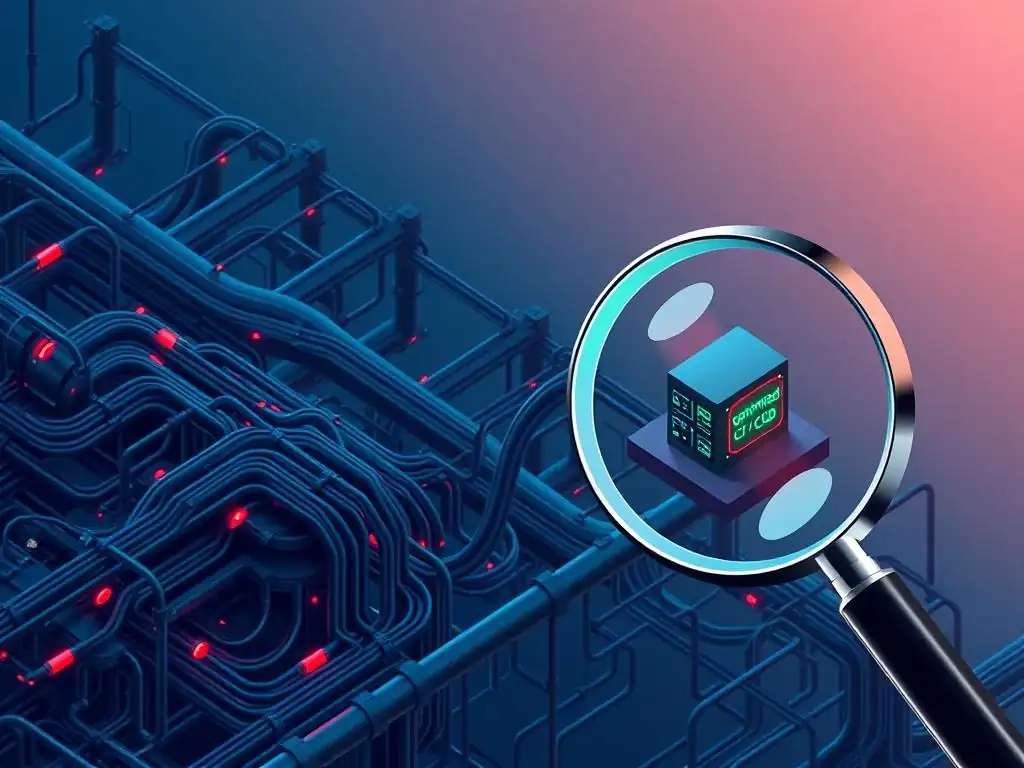
Welcome to the Git and Version Control Hub, your central resource for all things Git and version control!
Are your CI/CD pipelines grinding to a halt? Feeling the frustration of slow builds and deployments? Dive into our latest article, " CI/CD Bottleneck Breakdown: Identify and Eliminate Performance Drain," and discover actionable strategies to optimize your workflows. This is essential knowledge for Mastering Git Best Practices for Professional Development and ensuring a smoother, faster development cycle. Uncover the hidden bottlenecks and unlock the true potential of your CI/CD process. Ready to speed things up? Let's get started!
CI/CD Bottleneck Breakdown: Identify and Eliminate Performance Drain
- Understanding CI/CD Pipeline Performance Bottlenecks
-
Frequently Asked Questions
- What is a CI/CD performance bottleneck?
- Why is it important to identify and eliminate CI/CD bottlenecks?
- What are some common causes of CI/CD performance bottlenecks?
- How can I monitor my CI/CD pipeline for performance bottlenecks?
- What are some potential solutions for CI/CD performance bottlenecks?
- Final Reflection: Optimizing the Flow of Innovation
- Conquer Your CI/CD Challenges: Unleash Your Pipeline's Potential!
Understanding CI/CD Pipeline Performance Bottlenecks
What is a CI/CD Pipeline Bottleneck? Identifying the Root Cause
A CI/CD pipeline bottleneck is a point in your Continuous Integration and Continuous Delivery pipeline that slows down the entire process, hindering the speed and efficiency of software delivery. It's analogous to a traffic jam on a highway; even if other parts of the road are clear, the bottleneck restricts the flow, causing delays and backups.
Identifying the root cause of these bottlenecks is crucial for optimizing your CI/CD pipeline and achieving faster release cycles. These bottlenecks can manifest in various stages, from code integration and building to testing and deployment, and understanding their origin is the first step towards implementing effective CI/CD performance bottleneck solutions.
To effectively address these issues, it's essential to differentiate between symptoms and root causes. For instance, slow build times might be a symptom, but the root cause could be inefficient build scripts, under-resourced build agents, or excessive dependency downloads. Similarly, lengthy test execution might be a symptom, while the root cause could be poorly optimized tests, insufficient test infrastructure, or a lack of parallelization. A thorough investigation, often involving monitoring and profiling tools, is necessary to pinpoint the actual source of the bottleneck and implement targeted CI/CD performance bottleneck solutions.
Impact of CI/CD Bottlenecks on Development Speed and Time-to-Market
CI/CD bottlenecks significantly impact development speed and time-to-market, directly affecting a company's ability to innovate and respond to market demands. When bottlenecks exist, the feedback loop for developers is elongated, meaning it takes longer to identify and fix bugs, slowing down the entire development process. This delay can lead to frustration among development teams, decreased productivity, and ultimately, a slower pace of innovation. In today's fast-paced software landscape, where agility and speed are paramount, these delays can be detrimental to a company's competitive edge.
Furthermore, bottlenecks directly translate to increased time-to-market for new features and products. If the CI/CD pipeline is slow, the time from code commit to deployment is extended. For example, a bottleneck that adds just a few hours to each deployment cycle can accumulate to days or even weeks of delay over several releases.
This extended time-to-market can be particularly damaging in industries where speed is crucial, such as e-commerce or SaaS, where rapid feature delivery and responsiveness to customer needs are vital for success. Addressing CI/CD performance bottleneck solutions is therefore not just about technical efficiency, but also about achieving business objectives related to speed and agility.
Common Culprits: Examples of CI/CD Performance Issues
-
Slow Build Times: A Case Study with Large Language Model Training Pipelines
Slow build times are a frequent bottleneck, particularly in projects involving complex builds or large codebases. Consider the case of Large Language Model (LLM) training pipelines. These pipelines often involve compiling massive datasets, preprocessing significant amounts of text and code, and building complex model architectures.
A typical LLM training pipeline build process might involve steps like data ingestion (taking hours to process terabytes of data), feature engineering (which can be computationally intensive), and model compilation (which can also be time-consuming depending on model complexity). In such scenarios, build times can stretch to several hours, or even days, significantly delaying the iteration cycle for data scientists and machine learning engineers. Optimizing build scripts, leveraging distributed build systems, and employing caching mechanisms are crucial CI/CD performance bottleneck solutions in these contexts.
For instance, companies training models like GPT-3 or LaMDA often face build processes that can take upwards of 24 hours for a single iteration if not properly optimized. This long build duration drastically limits the number of experiments and model improvements that can be performed within a given timeframe.
By implementing parallel processing for data preprocessing steps and utilizing specialized hardware for compilation, these organizations can drastically reduce build times, potentially from days to hours, or even hours to minutes for smaller, more frequent iterations. This acceleration directly impacts the speed at which new model improvements can be tested and deployed, showcasing the critical need for CI/CD performance bottleneck solutions focused on build optimization in data-intensive applications.
-
Testing Bottlenecks: The E-commerce Website Performance Scenario
Testing bottlenecks arise when the testing phase of the CI/CD pipeline becomes a significant time constraint. This is especially common in projects with extensive test suites or when testing environments are slow or under-resourced. Imagine an e-commerce website undergoing feature updates for a peak shopping season like Black Friday.
The testing pipeline needs to ensure not only functional correctness but also performance and resilience under high user loads. This might involve running thousands of unit tests, hundreds of integration tests, and complex performance and load tests to simulate peak traffic. If the testing infrastructure is inadequate or the tests are not optimized, the testing phase can become a major bottleneck, delaying releases and potentially leading to critical issues in production during peak load.
For example, a large e-commerce platform might have a test suite that, if run sequentially, takes 8-12 hours to complete. This extended testing time significantly slows down the release cycle, especially if multiple code changes are being integrated daily. To address this CI/CD performance bottleneck, strategies such as parallel testing, where tests are run concurrently across multiple machines or containers, are essential.
Furthermore, optimizing test data setup and teardown, and focusing on faster, more targeted tests, can significantly reduce test execution time. Investing in scalable testing infrastructure and adopting efficient test automation frameworks are key CI/CD performance bottleneck solutions for ensuring rapid and reliable releases in demanding environments like e-commerce.
-
Deployment Delays: Analyzing the Kubernetes Cluster Updates Example
Deployment delays occur when the process of deploying code to production environments becomes a bottleneck. This is often seen in complex deployment scenarios, such as updating applications running on Kubernetes clusters. Consider a microservices architecture deployed on Kubernetes.
Updating a service might involve building new container images, pushing them to registries, and then orchestrating the deployment across multiple nodes in the Kubernetes cluster. This process can involve updating deployment configurations, performing rolling updates to minimize downtime, and running post-deployment health checks. If the deployment pipeline is not optimized, or if the Kubernetes cluster itself is under-resourced or misconfigured, deployments can become slow and error-prone, leading to significant delays and potential downtime.
Specifically, deploying a complex application update across a large Kubernetes cluster, perhaps involving dozens of microservices, could take several hours if not properly orchestrated. Factors contributing to this delay can include slow image pulls from container registries, inefficient application startup times within containers, network latency within the cluster, and limitations in the Kubernetes control plane's capacity to handle rapid deployments.
To address these deployment delays, CI/CD performance bottleneck solutions include optimizing container image sizes, using efficient deployment strategies like blue/green or canary deployments, and ensuring the Kubernetes cluster is properly scaled and configured for performance. Infrastructure as Code (IaC) tools like Terraform and automated deployment pipelines using tools like Argo CD or Flux are also vital for streamlining and accelerating Kubernetes deployments and eliminating this common bottleneck.
-
Infrastructure Limitations: Scaling Microservices with AWS
Infrastructure limitations can become a significant bottleneck as applications scale, particularly in microservices architectures. Consider a company rapidly scaling its microservices-based application on AWS to meet growing user demand. As the number of microservices and their instances increases, the underlying infrastructure needs to scale accordingly to handle the increased load during CI/CD processes. For example, build agents might become overloaded, leading to longer build queue times and slower feedback loops.
Testing environments might lack the capacity to handle the increased scale of integration and performance tests. Deployment infrastructure might struggle to provision resources quickly enough to support rapid scaling of microservices. These infrastructure limitations can become critical CI/CD performance bottlenecks, hindering the company's ability to scale and deliver new features effectively.
In a real-world scenario, a company experiencing exponential user growth might find its CI/CD pipeline struggling to keep pace. If their build agents are running on under-powered EC2 instances, build times will increase as the codebase grows. If their testing environments are not automatically scaled based on load, test execution times will become a bottleneck.
If their deployment pipeline relies on manual provisioning of infrastructure, deployments will become slow and error-prone as the application scales. To overcome these infrastructure-related CI/CD performance bottlenecks, solutions involve adopting cloud-native CI/CD practices, leveraging the scalability and elasticity of cloud platforms like AWS, and implementing Infrastructure as Code (IaC) to automate infrastructure provisioning and scaling. Utilizing containerization with Docker and orchestration with Kubernetes further enhances scalability and resource utilization, providing essential CI/CD performance bottleneck solutions for rapidly growing applications.
Frequently Asked Questions
What is a CI/CD performance bottleneck?
A CI/CD performance bottleneck is a point in the pipeline that slows down the entire process, hindering the speed and efficiency of software delivery. It can stem from various issues like slow tests or inefficient resource allocation.
Why is it important to identify and eliminate CI/CD bottlenecks?
Identifying and eliminating bottlenecks is crucial for faster release cycles, improved developer productivity, and reduced time-to-market for new features and bug fixes. It directly impacts the overall software development lifecycle.
What are some common causes of CI/CD performance bottlenecks?
Common causes include slow or unreliable tests, resource constraints (CPU, memory), network latency, and inefficient build processes. These can create delays and hinder overall pipeline efficiency.
How can I monitor my CI/CD pipeline for performance bottlenecks?
You can monitor your CI/CD pipeline using monitoring tools that track build times, test execution times, and resource utilization. Look for patterns of delays or resource exhaustion to pinpoint problem areas.
What are some potential solutions for CI/CD performance bottlenecks?
Potential solutions include optimizing tests, scaling resources, parallelizing tasks, and improving network infrastructure. Consider code analysis tools to identify performance issues early.
Final Reflection: Optimizing the Flow of Innovation
The relentless pursuit of faster software delivery has made CI/CD performance bottleneck solutions not just a technical necessity, but a strategic imperative for modern businesses. The insights shared throughout this article highlight the critical need to identify and eliminate these performance drains, ensuring a smooth and efficient flow from code commit to production deployment. Ignoring these bottlenecks risks stifling innovation and losing competitive advantage in today's rapidly evolving landscape.
The impact of optimized CI/CD pipelines extends far beyond mere speed; it fosters a culture of agility and responsiveness, enabling teams to iterate faster and deliver value more frequently. This continuous improvement, driven by a deep understanding of our CI/CD processes, is essential for sustained success. The goal is to automate the software release process so that it becomes boring, so you can focus on the real work of building great software.
- Jez Humble, co-author of Continuous Delivery. This quote encapsulates the essence of what we strive for: a seamless, automated pipeline that empowers developers to focus on innovation.
As you reflect on the strategies and solutions presented, consider how you can apply them to your own CI/CD pipelines. Don't be afraid to experiment, to challenge the status quo, and to continuously seek ways to optimize your processes. By embracing a culture of continuous improvement and prioritizing the elimination of bottlenecks, you can unlock the full potential of your development teams and drive innovation forward. The future of software delivery lies in our ability to create seamless, efficient, and high-performing CI/CD pipelines.
Conquer Your CI/CD Challenges: Unleash Your Pipeline's Potential!
Thanks for reading our article on identifying and eliminating CI/CD bottlenecks! We hope this guide provided actionable strategies to optimize your development pipeline and boost your team's efficiency. Now, it's time to put that knowledge into practice and take control of your CI/CD performance.
Here are a few next steps:
- Immediately implement one of the bottleneck identification techniques discussed. Choose the method best suited to your current setup and conduct an initial assessment.
- Share your analysis with your team and collaboratively brainstorm solutions. Teamwork is crucial for optimizing your CI/CD pipeline.
- Document a key aspect of your deployment pipeline to track its evolution across different versions.
Ready to transform your CI/CD pipeline from a bottleneck to a powerhouse? What's the first issue you'll address? Share your plans in the comments below!