
Beyond Code: Cultivating a Vibrant Open Source Community Around Your Git Repository

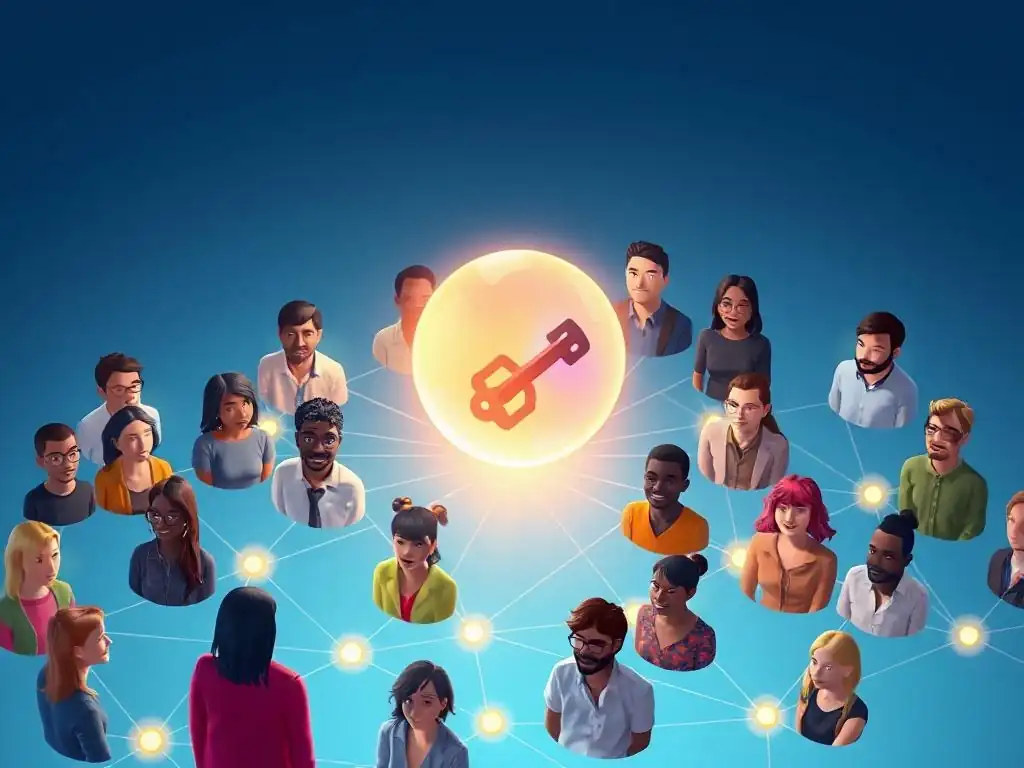
Welcome to Git and Version Control Hub!
Are you ready to go beyond just code and unlock the true potential of your Git repository? This is your go-to resource for mastering Git and version control. Dive into our latest article, "Beyond Code: Cultivating a Vibrant Open Source Community Around Your Git Repository," where we explore the essential strategies for building an open source community with Git, transforming your project into a collaborative hub. Discover how to attract contributors, foster engagement, and create a thriving ecosystem around your code. Curious how to make it happen? Read on and let's build together!
- Introduction: Why Building an Open Source Community Around Your Git Project Matters
- Laying the Groundwork: Preparing Your Git Repository for Community Engagement
-
Frequently Asked Questions
- How can I attract contributors to my open source Git project?
- What are some best practices for managing contributions in my Git repository?
- How can I use Git and GitHub/GitLab to foster collaboration within my open source community?
- What role does documentation play in building an open source community around Git?
- How can I measure the success of my open source Git community?
- Final Reflection: The Enduring Power of Collaborative Creation
- Ignite Your Open Source Community: Get Involved!
Introduction: Why Building an Open Source Community Around Your Git Project Matters
The Power of Community in Open Source Development
Open source development thrives on the power of community. It's more than just making code publicly available; it's about fostering a collaborative environment where individuals with diverse skills and perspectives come together to build something greater than they could alone. In the open source world, a community acts as the lifeblood of a project, providing continuous feedback, diverse contributions, and collective ownership.
This shared responsibility not only accelerates development but also enhances the overall quality and resilience of the software. Think of projects like Linux or Apache; their longevity and widespread adoption are directly attributable to the vibrant and active communities that support them. These communities are not just passive users; they are active participants, shaping the direction and future of the project.
Furthermore, a strong open source community provides a built-in support network. Instead of relying solely on a small core team, users can find answers to their questions, troubleshoot issues, and learn from each other. This peer-to-peer support system reduces the burden on project maintainers and empowers users to become more self-sufficient and contribute back to the project. The collective knowledge within a community is far more extensive and readily available than any single individual or small team could possess. This collaborative knowledge pool becomes a valuable resource, accelerating learning and problem-solving within the open source ecosystem.
Git Repository as the Foundation for Collaboration
Your Git repository serves as the central nervous system for your open source project's community. It's not merely a place to store code; it's the primary platform for collaboration, communication, and contribution. Git's distributed nature, combined with platforms like GitHub and GitLab, democratizes access to the codebase and provides the tools necessary for effective teamwork across geographical boundaries.
Every commit, branch, and pull request becomes a point of interaction, fostering transparency and allowing community members to observe and participate in the project's evolution. The Git repository, therefore, transcends its technical function to become a social hub for your open source community.
Consider the workflow facilitated by Git. Branching allows developers to experiment and contribute features without disrupting the main codebase. Pull requests provide a structured mechanism for code review and feedback, ensuring quality and knowledge sharing. Issue trackers, integrated within Git platforms, serve as a central point for bug reporting, feature requests, and discussions. These features collectively transform a simple code repository into a dynamic environment where community members can engage in meaningful collaboration. By effectively utilizing the tools Git provides, you can transform your repository into a thriving center for your open source community.
Increased Contributions, Faster Bug Fixes, Enhanced Innovation
Building an open source community around your Git project yields tangible benefits, most notably increased contributions, faster bug fixes, and enhanced innovation. A larger and more engaged community translates directly to more eyes on the code, leading to a greater likelihood of identifying and fixing bugs quickly. Many hands make light work, and in open source, this adage holds particularly true. With a diverse community, bug reports are often more comprehensive, and solutions are found and implemented at a much faster pace than in projects relying on a limited number of developers.
Beyond bug fixes, a vibrant community fuels innovation. Diverse perspectives bring fresh ideas and approaches to problem-solving. Community members often contribute features, improvements, and even entirely new directions for the project that might not have been considered by the original developers. This collaborative innovation leads to a more robust, feature-rich, and adaptable project over time. Furthermore, community contributions can extend beyond code to include documentation, translations, testing, and community support, enriching the overall project ecosystem and ensuring its long-term viability and success in the competitive landscape of open source software.
Laying the Groundwork: Preparing Your Git Repository for Community Engagement
Choosing the Right Open Source License for Your Project (and Community)
Selecting the appropriate open source license is a foundational step in preparing your Git repository for community engagement. The license you choose dictates how others can use, modify, and distribute your project, directly impacting the openness and collaborative potential of your community. Licenses range from permissive licenses like MIT and BSD, which grant broad freedoms with minimal restrictions, to more copyleft licenses like GPL, which aim to ensure that derivative works also remain open source. The "right" license is not universal; it depends on your project's goals and the type of community you wish to foster.
For instance, if your primary goal is widespread adoption and minimal restrictions on how your code is used, a permissive license might be ideal. These licenses encourage commercial use and integration, potentially leading to a larger user base and community. On the other hand, if you prioritize ensuring that all contributions and derivative works remain open source, a copyleft license might be more appropriate.
Understanding the nuances of different licenses and aligning your choice with your community-building objectives is crucial. Websites like choosealicense.com offer valuable resources to help you navigate the various options and select a license that best suits your project and vision for your open source community.
Structuring Your Git Repository for Easy Contribution
A well-structured Git repository is paramount for facilitating easy contributions and attracting a thriving community. Imagine a newcomer wanting to contribute to your project; a disorganized repository can be immediately discouraging. Clear organization makes it intuitive for contributors to navigate the codebase, understand the project's architecture, and identify areas where they can contribute effectively. This includes logical directory structures, separation of concerns, and well-defined modules. A structured repository significantly lowers the barrier to entry for new contributors, encouraging participation and fostering a more welcoming environment for your community.
Think about established open source projects; they often have meticulously organized repositories. For example, a typical project might separate source code ( src), documentation ( docs), examples ( examples), and tests ( tests) into distinct top-level directories. Within src, further subdivisions might exist based on modules or components. This clarity not only aids contribution but also simplifies maintenance and long-term project management. Investing time in structuring your Git repository upfront pays dividends in terms of community engagement and the overall health and maintainability of your open source project.
Clear README.md: Project Overview, Contribution Guidelines, and Setup Instructions
The README.md file is often the first point of contact for anyone visiting your Git repository, acting as the project's welcome mat. A clear, comprehensive, and inviting README.md is essential for onboarding new community members and setting the stage for successful contributions. It should provide a concise overview of the project's purpose, functionality, and target audience. Think of it as your project's elevator pitch, quickly conveying its value and relevance to potential contributors and users.
Beyond a project overview, a good README.md must include clear contribution guidelines. This section should outline the process for contributing, including coding style conventions, branching strategies, and how to submit pull requests. Providing concrete examples and step-by-step instructions makes the contribution process less daunting for newcomers. Crucially, the README.md should also contain setup instructions, detailing how to build, install, and run the project. A well-documented setup process minimizes friction and allows contributors to quickly get their development environment running, enabling them to focus on contributing code rather than wrestling with setup issues. By investing in a detailed and welcoming README.md, you significantly enhance the accessibility and appeal of your open source project to a wider community.
Consistent Code Style and Documentation
Maintaining a consistent code style and comprehensive documentation are crucial, yet often underestimated, aspects of building a thriving open source community around Git. Consistent code style, enforced through linters and formatters, ensures readability and maintainability across the entire codebase. Imagine trying to contribute to a project where every file has a different indentation style and variable naming convention; it would be a confusing and error-prone experience. A unified code style reduces cognitive load, makes code reviews easier, and promotes a sense of professionalism and quality within the project.
Similarly, thorough and up-to-date documentation is indispensable for community engagement. Documentation serves as the project's user manual, API reference, and knowledge base, empowering users and contributors alike. Well-documented code is easier to understand, use, and extend, fostering a more inclusive and collaborative environment. This includes not just API documentation, but also tutorials, examples, and architectural overviews. Investing in both consistent code style and comprehensive documentation demonstrates a commitment to quality and community accessibility, significantly enhancing the attractiveness and long-term viability of your open source project.
Setting Up a Code of Conduct for a Respectful Community
Establishing a Code of Conduct is a vital step in fostering a respectful and inclusive environment within your open source community. A Code of Conduct explicitly outlines expected behaviors and unacceptable actions within the community, setting clear boundaries and promoting a culture of civility and professionalism. It's not just about preventing harassment; it's about creating a space where everyone feels welcome, safe, and valued, regardless of their background, experience, or identity. A well-defined Code of Conduct signals to potential contributors that your project prioritizes inclusivity and respect, making it a more attractive and welcoming community to join.
Implementing a Code of Conduct demonstrates a proactive commitment to community health. It provides a framework for addressing conflicts and inappropriate behavior, ensuring that issues are handled fairly and consistently. Many excellent templates are available, such as the Contributor Covenant, which are widely adopted and respected in the open source community. Adopting and clearly displaying a Code of Conduct in your Git repository, typically in a CODE_OF_CONDUCT.md file, is a powerful signal that you are serious about building a positive and supportive open source community. This proactive approach can significantly contribute to attracting and retaining contributors, fostering a more productive and enjoyable collaborative environment.
Frequently Asked Questions
How can I attract contributors to my open source Git project?
Attracting contributors involves several strategies. Start by creating a welcoming environment, including clear contribution guidelines and actively responding to issues and pull requests. Promote your project on relevant platforms and showcase its unique value proposition.
What are some best practices for managing contributions in my Git repository?
Enforce a code of conduct to ensure respectful interactions. Implement a clear pull request review process, providing constructive feedback. Consider using branching strategies to isolate new features and bug fixes.
How can I use Git and GitHub/GitLab to foster collaboration within my open source community?
Leverage Git's branching and merging capabilities for collaborative development. Utilize GitHub/GitLab's issue trackers and pull request features to manage contributions effectively. Encourage discussions and knowledge sharing through community forums and documentation.
What role does documentation play in building an open source community around Git?
Comprehensive and accessible documentation is crucial. It helps new users understand the project's purpose, usage, and contribution guidelines. Well-maintained documentation reduces the barrier to entry and fosters a sense of ownership among contributors.
How can I measure the success of my open source Git community?
Track metrics such as the number of contributors, the frequency of contributions, and the responsiveness to issues. Monitor community engagement through forums and social media. Analyze code contributions to assess the quality and impact of community involvement.
Final Reflection: The Enduring Power of Collaborative Creation
The journey of building an open-source community around a Git repository extends far beyond lines of code; it's about fostering collaboration, shared ownership, and a collective pursuit of innovation. This commitment to community-driven development is more crucial than ever in today's interconnected world, where software solutions are increasingly complex and require diverse perspectives to thrive. The principles outlined in this article are not merely theoretical; they represent a practical roadmap for creating sustainable and impactful open-source projects.
The ripple effect of a thriving open-source community is profound, shaping not only the software itself but also the individuals involved and the broader technological landscape. Witnessing the evolution of a project from a solitary endeavor to a vibrant ecosystem of contributors is a deeply rewarding experience. It underscores the power of shared knowledge and the transformative potential of collaborative creation. If I have seen further it is by standing on the shoulders of giants.
- Isaac Newton. This quote perfectly encapsulates the spirit of open-source, where each contribution builds upon the work of others, propelling innovation forward.
As you embark on your own journey of building an open-source community, remember that the true measure of success lies not just in the code produced, but in the relationships forged and the knowledge shared. Cultivate a welcoming and inclusive environment, empower contributors to take ownership, and celebrate the collective achievements. Embrace the spirit of collaboration, and you will unlock the boundless potential of open-source. Let's build a future where innovation is accessible to all, driven by the collective intelligence of a global community.
Ignite Your Open Source Community: Get Involved!
Thanks for exploring the world of open source community building. We hope you've learned valuable strategies for fostering a thriving ecosystem around your Git repository. Now it's time to put your knowledge into practice!
Here's how to cultivate a vibrant community:
- Create a comprehensive contributor onboarding guide within your repository's README.md to streamline the contribution process for newcomers. This is a crucial first step.
- Actively engage in discussions on your repository's issues and pull requests, demonstrating responsiveness and building trust. Schedule dedicated time each week for this.
- Organize a fun "Bug Hunt" event, offering small rewards (like recognition or GitAndVersionControlHub swag) for identifying and reporting minor issues. This encourages active participation and creates a positive atmosphere.
What's one small step you can take today to make your repository more welcoming to contributors? Share your ideas in the comments below!