
GitDriven CI/CD: Building Robust Pipelines for Continuous Integration and Delivery

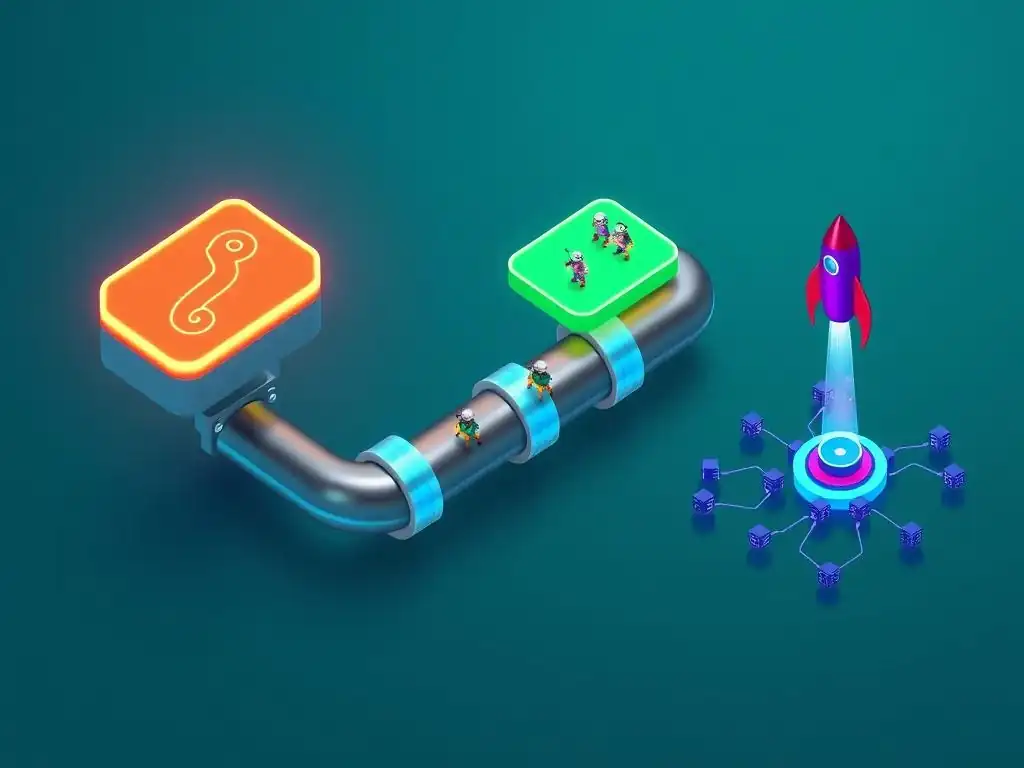
Welcome to Git and Version Control Hub, your definitive resource for mastering the power of Git!
Ever wondered how to seamlessly integrate your code changes and automate your deployments? Dive into our comprehensive Git CI/CD pipeline tutorial and unlock the secrets to building robust pipelines for continuous integration and delivery. Explore the future of software development and discover how Git can revolutionize your workflow, enhance collaboration, and streamline your release process. Ready to transform your development lifecycle? Let's get started!
- The Power of Git for Continuous Integration and Continuous Delivery (CI/CD)
-
Frequently Asked Questions
- How can Git be used to trigger a CI/CD pipeline?
- What are the key benefits of using Git for CI/CD pipelines?
- What are some popular CI/CD tools that integrate well with Git?
- What are the essential components of a Git-driven CI/CD pipeline?
- How do you handle secrets and credentials in a Git-based CI/CD pipeline?
- Final Reflection: Embracing the Git-Powered Future of Software Delivery
- Supercharge Your Workflow: Master Git-Driven CI/CD Now!
The Power of Git for Continuous Integration and Continuous Delivery (CI/CD)
Understanding CI/CD Pipelines and Their Importance in Modern Software Development
Continuous Integration and Continuous Delivery, commonly known as CI/CD, represent a cornerstone of modern software development practices. At its core, a CI/CD pipeline is an automated sequence of steps that software changes undergo on their path to production. This pipeline encompasses building, testing, and deploying applications, aiming to accelerate the delivery of software updates while minimizing errors.
The importance of CI/CD stems from the need for rapid iteration and deployment in today's fast-paced technology landscape. Companies that adopt CI/CD can release new features and bug fixes more frequently, gaining a competitive edge by quickly responding to market demands and user feedback.
The traditional software development lifecycle often involved lengthy development cycles followed by large, infrequent releases, which were prone to integration issues and difficult to debug. CI/CD addresses these challenges by breaking down the development process into smaller, manageable chunks that are continuously integrated and validated. This approach reduces the risk of integration conflicts and allows for earlier detection of bugs, leading to higher software quality and increased team velocity.
Moreover, by automating repetitive tasks like testing and deployment, CI/CD frees up developers to focus on writing code and innovating, rather than being bogged down by manual processes. The adoption of CI/CD pipelines is not just a trend, but a fundamental shift towards efficient, reliable, and agile software delivery.
How Git Facilitates Efficient CI/CD Workflows: A Developer's Perspective
Git, as a distributed version control system, plays a pivotal role in enabling and enhancing CI/CD workflows from a developer's perspective. Its branching and merging capabilities are fundamental to parallel development and feature isolation, which are crucial for continuous integration. Developers can work on features in separate branches, ensuring that changes are isolated and do not disrupt the main codebase. Once a feature is complete and tested, Git's merging capabilities allow for a seamless integration of these changes back into the main branch, triggering the CI/CD pipeline to automatically build, test, and deploy the updated software.
Furthermore, Git's commit history provides a detailed audit trail of all changes made to the codebase, which is invaluable for debugging and rollback purposes in a CI/CD environment. Each commit acts as a snapshot of the code at a specific point in time, allowing teams to easily revert to previous versions if issues arise after deployment.
The distributed nature of Git also ensures that each developer has a full copy of the repository, enhancing collaboration and resilience. Developers can work offline, commit changes locally, and then synchronize with the remote repository when they are back online.
This flexibility, combined with Git's robust version control features, makes it an indispensable tool for building and operating efficient and reliable CI/CD pipelines. The tight integration between Git platforms like GitHub and GitLab with CI/CD tools further streamlines the developer experience, making it easier to define and manage automated workflows directly within the version control system.
Frequently Asked Questions
How can Git be used to trigger a CI/CD pipeline?
Git triggers CI/CD pipelines by monitoring changes in the repository. When a new commit is pushed, or a pull request is created, the CI/CD system detects the change and automatically starts the pipeline. This automation is crucial for continuous integration.
What are the key benefits of using Git for CI/CD pipelines?
Using Git for CI/CD enables version control of your entire pipeline configuration. This means you can track changes, rollback to previous versions, and ensure that your deployments are consistent and reliable. It also promotes collaboration and code review.
What are some popular CI/CD tools that integrate well with Git?
Several tools integrate seamlessly with Git, including GitHub Actions, GitLab CI, and Jenkins. These tools can be configured to respond to Git events and execute your defined pipeline steps.
What are the essential components of a Git-driven CI/CD pipeline?
A Git-driven CI/CD pipeline typically includes source code management (Git), build automation, automated testing, and deployment orchestration. Each component plays a vital role in ensuring the quality and reliability of your software.
How do you handle secrets and credentials in a Git-based CI/CD pipeline?
It's crucial to securely manage secrets and credentials within your pipeline. This often involves using environment variables, secret management tools (like HashiCorp Vault), and ensuring that sensitive information is never committed directly to your Git repository.
Final Reflection: Embracing the Git-Powered Future of Software Delivery
The journey through building robust Git-driven CI/CD pipelines, as explored in this article, isn't just about automating tasks; it's about transforming the very fabric of software development. In today's fast-paced tech landscape, where agility and speed are paramount, understanding and implementing these pipelines is no longer a luxury, but a necessity for teams striving for continuous improvement and rapid innovation. The ability to seamlessly integrate, test, and deploy code directly from Git repositories unlocks unparalleled efficiency and reliability.
The impact of Git CI/CD extends far beyond mere automation. It fosters a culture of collaboration, transparency, and accountability within development teams. Witnessing the evolution of software development from manual processes to automated workflows has been transformative, highlighting the power of Git as more than just a version control system, but as the central nervous system of modern software delivery. Continuous integration doesn't get rid of bugs, but it does make them dramatically easier to find and remove.
- Martin Fowler. This quote encapsulates the essence of Git CI/CD: a proactive approach to quality assurance and a commitment to delivering exceptional software.
Now, as you close this tutorial, consider the power you now wield. The knowledge of building Git CI/CD pipelines is a key to unlocking your team's potential and accelerating your software development lifecycle. Take the lessons learned, experiment with different configurations, and tailor your pipelines to meet the unique needs of your projects. Embrace the Git-powered future of software delivery and build pipelines that not only automate your workflow but also empower your team to create exceptional software, faster and more reliably than ever before.
Okay, I'm ready to craft a compelling CTA for your GitDriven CI/CD article on GitAndVersionControlHub.com. Here it is:
Supercharge Your Workflow: Master Git-Driven CI/CD Now!
Thank you for diving into the world of Git-Driven CI/CD! We hope this article has given you valuable insights into building robust pipelines and streamlining your development process. Now it's time to put that knowledge into action and elevate your workflow.
Ready to take the next step? Here's how:
- Implement a basic Git-Driven CI/CD pipeline using your preferred tool – start small and iterate!
- Explore integrating automated security scans into your pipeline for proactive vulnerability detection.
- Share your favorite CI/CD tips and tricks with the GitAndVersionControlHub.com community in the comments below.
What's one small Git-Driven CI/CD improvement you'll commit to implementing this week to see immediate results?